99%+ Purity
COA Included
Sealed Vials
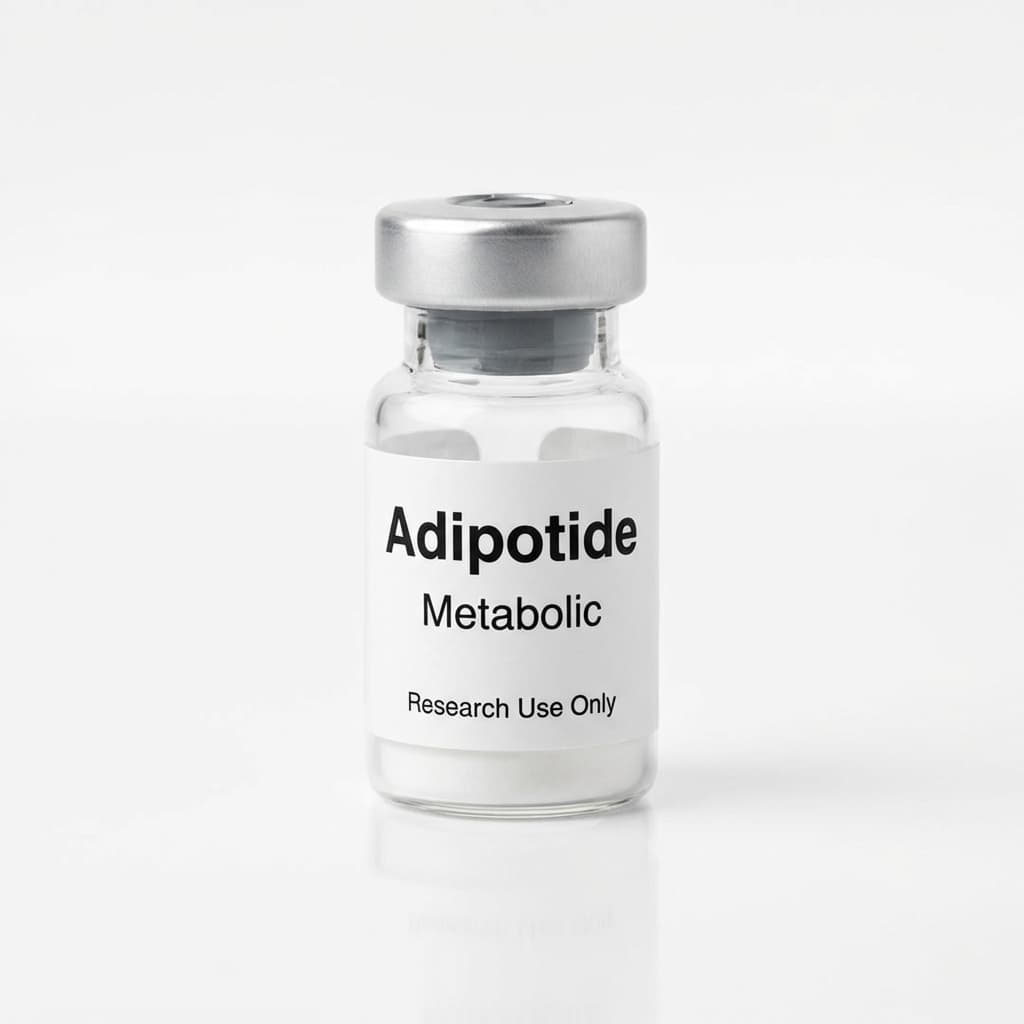
Adipotide
Fat cell apoptosis peptide
Fat cell apoptosis peptide
Want to purchase this peptide?
Target Stubborn Fat Cells Where They Actually Live
Most fat loss approaches work on the surface—calorie deficits, thermogenics, hormone manipulation. But what if you could signal fat cells themselves to break down from within? That's the difference between fighting your metabolism and actually reprogramming how your body handles stored fat.
Adipose tissue vascularization / Fat cell apoptosis pathway
About Adipotide
Adipotide is a research peptide that targets the blood supply to fat tissue, essentially signaling fat cells to undergo programmed cell death. Unlike traditional fat loss compounds that work through metabolic stimulation, this peptide works at the cellular level within adipose tissue itself.
Who It's For
This is for researchers investigating advanced body composition protocols who understand that stubborn fat requires different approaches than general weight loss. Adipotide represents a fundamentally different strategy—targeting fat storage at its source rather than trying to outrun poor fat distribution through diet and cardio alone.
Dosing Protocol
| Level | Dose | |
|---|---|---|
Beginner | 0.25 mg | |
Intermediate | 0.50 mg | |
Advanced | 1 mg 5x/week | |
Maximum | 2 mg |
Select a dosing level and click Calculate to plan your protocol.
Vials Required
2
18.0 mg needed ÷ 10 per vial
Total Investment
$165
$82.50 per vial
Per Dose
0.05 mL
5 units on U-100 syringe
Doses per Vial
20
10 ÷ 0.50 mg/dose
* Calculations based on standard reconstitution protocols. Consult research guidelines for specific applications.
Educational Resources
Download educational materials and research documentation for Adipotide.
Adipotide Cheat Sheet
Dosing protocols, reconstitution & storage guide
Featured in These Stacks
Weight Loss ULTIMATE SHRED
Weight Loss
This is not a “fat burner stack.” It is a layered metabolic architecture designed to systematically control intake, improve nutrient partitioning, increase mitochondrial output, mobilize stored fat, and preserve lean mass — in that order. 1️⃣ Foundation: Insulin & Appetite Control Retatrutide anchors the system. By targeting GLP-1, GIP, and glucagon pathways simultaneously, it reduces appetite, improves glucose handling, and increases energy expenditure. If insulin is unstable, nothing downstream works efficiently. This layer reduces fat-storage signaling and improves nutrient partitioning so calories are directed toward muscle instead of adipose tissue. 2️⃣ Mitochondrial Output Layer The Mito Blend (SS-31, MOTS-c, 5-Amino-1MQ), combined with SLU-PP-332 and BAM15, upgrades cellular energy mechanics. SS-31 improves mitochondrial membrane efficiency. MOTS-c enhances glucose utilization and metabolic flexibility. 5-Amino-1MQ supports NAD+ preservation and metabolic turnover. SLU-PP-332 activates PGC-1α to mimic endurance training at the cellular level. BAM15 increases calorie burn through controlled mitochondrial uncoupling. This layer ensures liberated fat is oxidized instead of recycled. It increases baseline metabolic throughput without relying on stimulants. 3️⃣ Growth Hormone Axis Optimization Tesamorelin or CJC-1295/Ipamorelin restores physiologic GH pulsatility. Proper GH signaling preferentially targets visceral fat while supporting sleep quality, connective tissue repair, and lean mass preservation. This is not replacement therapy — it is rhythm restoration. The GH layer enhances lipolysis and improves recovery so training output can increase without overtraining. 4️⃣ Direct Lipolytic Signaling HGH Frag 176-191 and AOD-9604 act downstream of GH, signaling adipose tissue to release stored fat. These compounds do not meaningfully elevate systemic IGF-1, making them targeted fat-mobilization tools rather than full hormonal modifiers. This layer increases the rate of fat release, especially when paired with fasted cardio or Zone 2 work. 5️⃣ Structural Fat Reduction (Advanced) Adipotide is reserved for aggressive protocols. It targets adipose vasculature and signals structural fat-mass reduction. This is cycle-based and monitored carefully, used when cosmetic or visceral fat is stubborn. 6️⃣ Muscle Preservation & Anabolic Signaling IGF-1 LR3 is layered during caloric deficit to protect lean tissue. When calories drop and fat loss accelerates, muscle loss risk increases. IGF-1 LR3 provides anabolic signaling to preserve training output and structural mass. 7️⃣ Behavioral Compliance Layer MT2 acts as secondary appetite suppression and behavioral support. It is not foundational but improves adherence during aggressive phases. System Logic This stack works because it addresses every bottleneck: Appetite & insulin control Mitochondrial inefficiency GH rhythm decline Fat mobilization rate Muscle preservation Compliance under deficit Each layer solves a specific constraint. When deployed sequentially rather than simultaneously, the system creates compound leverage. Strategic Outcome When structured correctly, this architecture: Reduces visceral and subcutaneous fat Preserves or improves lean mass Enhances recovery and sleep Increases metabolic flexibility Maintains endocrine integrity It is aggressive but organized. Not chaotic, not redundant, not stimulant-driven. The result is controlled, measurable recomposition — not just weight loss.
Includes
Compliance & Disclaimer
This product is intended for laboratory research purposes only. Not for human consumption. All products are sold with the understanding that the purchaser will comply with all applicable local, state, and federal laws regarding the purchase and use of research chemicals. Certificate of Analysis available upon request.