
Vasoactive intestinal peptide
Vasoactive intestinal peptide
| Level | Dose | Frequency | Notes |
|---|---|---|---|
| Beginner | 25 mcg | Daily (divided doses) | — |
| Intermediate | 50 mcg | Daily (divided doses) | — |
| Advanced | 50 mcg 2x/day | Daily (divided doses) | — |
| Maximum | 100 2x/day | Daily (divided doses) | — |
Pharmacodynamics
Vasoactive intestinal peptide (VIP) exerts its biological effects primarily through activation of two G-protein coupled receptors: VPAC1 and VPAC2 (vasoactive intestinal peptide receptors 1 and 2). Both receptors are coupled to adenylyl cyclase via Gαs proteins, leading to increased intracellular cyclic adenosine monophosphate (cAMP) levels upon VIP binding. This elevation in cAMP activates protein kinase A (PKA), which subsequently phosphorylates the cAMP response element-binding protein (CREB), ultimately leading to transcription of various target genes. VIP also activates phospholipase C pathways in certain cell types, resulting in increased intracellular calcium and protein kinase C activation. The peptide demonstrates high affinity binding to both receptor subtypes, with VPAC1 receptors showing broader tissue distribution including lung, liver, and immune cells, while VPAC2 receptors are more abundant in smooth muscle, pancreas, and central nervous system. At the cellular level, VIP activation leads to smooth muscle relaxation through multiple mechanisms including reduced intracellular calcium, activation of potassium channels, and decreased myosin light chain phosphorylation. In immune cells, VIP promotes anti-inflammatory responses by inhibiting pro-inflammatory cytokine production and promoting regulatory T-cell differentiation. The vasodilatory effects occur within minutes of administration and involve both direct smooth muscle relaxation and endothelium-dependent mechanisms. VIP also stimulates adenylyl cyclase in various secretory tissues, leading to increased secretion of water, electrolytes, and hormones.
Pharmacokinetics
VIP exhibits rapid clearance and short half-life characteristics typical of small peptide hormones. When administered intravenously, VIP demonstrates a biphasic elimination pattern with an initial rapid distribution phase (half-life of 1-2 minutes) followed by a slower elimination phase (half-life of approximately 5-7 minutes in humans). The peptide is rapidly metabolized by multiple enzymatic pathways, including dipeptidyl peptidase IV, neutral endopeptidase, and other peptidases present in plasma and tissues. This extensive enzymatic degradation contributes to its short duration of action and necessitates continuous infusion for sustained therapeutic effects. VIP distributes widely throughout body tissues, with particular accumulation in highly vascularized organs including lungs, liver, and kidneys. The peptide does not significantly bind to plasma proteins, allowing for rapid tissue penetration and clearance. Due to its hydrophilic nature and susceptibility to enzymatic degradation, oral bioavailability is negligible, requiring parenteral administration routes. Inhalation delivery has been investigated for pulmonary applications, showing local tissue penetration with minimal systemic exposure. Renal elimination of intact VIP is minimal due to rapid metabolic degradation, with metabolites primarily cleared through renal and hepatic pathways.
Clinical Data
Preclinical studies have extensively characterized VIP's therapeutic potential across multiple disease models. In animal models of pulmonary arterial hypertension, VIP administration demonstrated significant reduction in pulmonary vascular resistance and right heart pressures, with improved survival outcomes in several species. Inflammatory bowel disease models showed that VIP treatment reduced intestinal inflammation, improved barrier function, and promoted mucosal healing through its anti-inflammatory and cytoprotective properties. Neurological studies in animal models of stroke and neurodegeneration indicated neuroprotective effects, including reduced neuronal apoptosis and improved functional recovery. Human clinical experience with VIP has been limited but informative. Early phase clinical trials in pulmonary arterial hypertension patients showed hemodynamic improvements including reduced pulmonary vascular resistance and increased cardiac output, though the short half-life necessitated continuous intravenous infusion. Small studies in inflammatory conditions suggested anti-inflammatory benefits, but development challenges related to peptide stability and delivery have limited clinical progression. Currently, VIP is not approved as a therapeutic agent by major regulatory agencies, though it remains an active area of research. Ongoing research focuses on developing stabilized analogs and improved delivery systems to overcome the pharmacokinetic limitations. Several pharmaceutical companies are investigating VIP receptor agonists and modified VIP formulations for various therapeutic applications, particularly in pulmonary, gastrointestinal, and inflammatory disorders.
References
- Vasoactive intestinal peptide receptors: molecular targets for drug development — Laburthe M et al., Trends in Pharmacological Sciences (2007)
- Vasoactive intestinal peptide and pituitary adenylate cyclase-activating polypeptide receptors: actions on the cardiovascular system — Said SI et al., European Journal of Pharmacology (2011)
- VIP and tolerance: the role of VIP in the induction and maintenance of peripheral tolerance — Delgado M et al., Trends in Immunology (2004)
- Vasoactive intestinal peptide in pulmonary arterial hypertension — Petkov V et al., Pharmacology & Therapeutics (2003)
Research Use Only: All compounds discussed on this page are intended for laboratory research purposes only. Not for human consumption. All research should be conducted in compliance with institutional guidelines and applicable regulations. Consult qualified healthcare professionals before making any decisions regarding compound research or use.
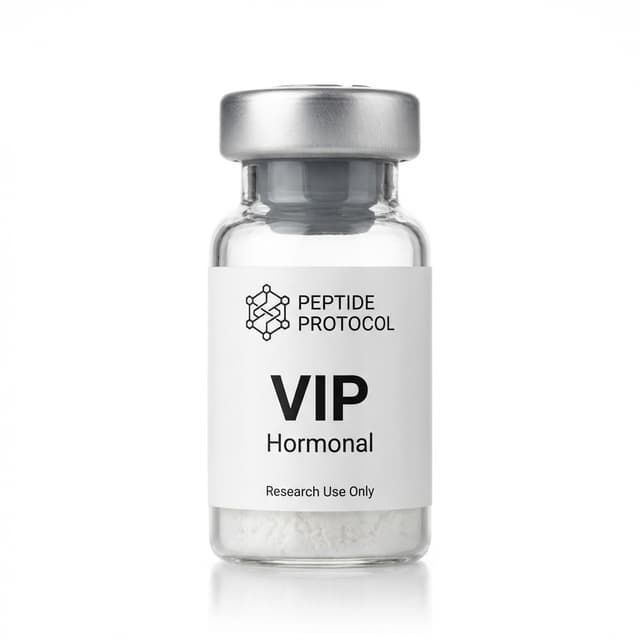
VIP
Quick Reference
- Default Dose
- 25 mcg
- Frequency
- Daily (divided doses)
- Timing
- AM or as directed
- Dilution
- 1 mL (nasal)
Storage
- Lyophilized
- -20°C
- Reconstituted
- 2-8°C
For Practitioners
Interested in offering research-grade compounds through your practice? Learn about our affiliate program for qualified practitioners.
Find a ProviderPractitioner Information