
Vascular tissue repair
Vascular tissue repair bioregulator
| Level | Dose | Frequency | Notes |
|---|---|---|---|
| Beginner | 10 mg | Daily | — |
| Intermediate | 10 mg 2x/day | Daily | — |
| Advanced | 20-25 mg | Daily | — |
| Maximum | 20 mg 2x/day | Daily | — |
Pharmacodynamics
Vesugen is a bioregulatory peptide that appears to exert its vascular tissue repair effects through modulation of endothelial cell function and vascular regenerative processes. While the complete molecular mechanism remains under investigation, research suggests that Vesugen may interact with specific cellular receptors involved in vascular homeostasis and repair. The peptide appears to influence endothelial cell proliferation, migration, and angiogenesis - key processes in vascular tissue repair and regeneration. Preliminary studies indicate that Vesugen may activate intracellular signaling cascades related to vascular growth factors, potentially including pathways involving nitric oxide synthesis and endothelial nitric oxide synthase (eNOS) activity. This could lead to improved endothelial function, enhanced vasodilation, and better vascular integrity. The peptide may also influence the expression of genes related to vascular repair and protection, though the specific transcriptional targets require further characterization. At the tissue level, these cellular effects may translate to improved vascular function, enhanced tissue perfusion, and accelerated repair of damaged vascular structures. The time course of these effects appears to vary depending on the specific vascular parameter measured, with some acute effects on endothelial function potentially observable within hours to days, while structural vascular improvements may require weeks to months of treatment. However, it should be noted that much of the mechanistic understanding of Vesugen is still evolving, and more research is needed to fully elucidate its molecular targets and signaling pathways.
Pharmacokinetics
The pharmacokinetic profile of Vesugen, like many bioactive peptides, is characterized by rapid metabolism and relatively short systemic half-life. As a small peptide, Vesugen is typically administered via subcutaneous or intramuscular injection, as oral bioavailability would likely be poor due to peptidase degradation in the gastrointestinal tract. Following injection, the peptide is expected to be absorbed into systemic circulation relatively quickly, with peak plasma concentrations likely occurring within 30 minutes to 2 hours. Distribution throughout the body would be expected to follow typical peptide patterns, with potential preferential uptake in target tissues. The peptide is unlikely to have significant plasma protein binding due to its small size and hydrophilic nature. Metabolism occurs primarily through enzymatic degradation by peptidases and proteases present in plasma and tissues, which is the typical elimination pathway for bioactive peptides. Based on the general characteristics of similar peptides, the elimination half-life is estimated to be relatively short, likely in the range of several hours. This necessitates regular dosing schedules to maintain therapeutic effects. Renal elimination of intact peptide and metabolites would be expected, though the contribution of renal versus metabolic clearance has not been fully characterized for this specific compound.
Clinical Data
Clinical research on Vesugen for vascular tissue repair applications is still in relatively early stages, with most available data coming from preclinical studies and small-scale clinical observations. Preclinical research has suggested potential benefits for vascular function and endothelial health, though comprehensive large-scale human trials are limited. Some preliminary clinical observations have been reported in the context of vascular health maintenance, but these studies often lack the rigorous design and sample sizes needed for definitive conclusions about efficacy and safety. The regulatory status of Vesugen varies by jurisdiction, and it is not currently approved as a pharmaceutical drug by major regulatory agencies like the FDA or EMA for specific vascular indications. In some regions, it may be available as a research compound or under different regulatory frameworks. Current research directions appear to focus on better characterizing the mechanism of action, optimizing dosing regimens, and conducting more robust clinical trials to establish efficacy and safety profiles. Areas of particular interest include applications in age-related vascular dysfunction, recovery from vascular injury, and prevention of vascular complications in various disease states. However, potential users should be aware that the clinical evidence base is still developing, and more research is needed to establish definitive therapeutic benefits and optimal treatment protocols for specific vascular conditions.
References
- Bioregulatory peptides and vascular function: mechanisms and therapeutic implications — Khavinson VK et al., Current Pharmaceutical Design (2020)
- Peptide regulation of aging and age-related diseases — Khavinson VK et al., Biogerontology (2014)
- Endothelial dysfunction and bioregulatory peptides in cardiovascular disease — Anisimov VN et al., Advances in Gerontology (2016)
Research Use Only: All compounds discussed on this page are intended for laboratory research purposes only. Not for human consumption. All research should be conducted in compliance with institutional guidelines and applicable regulations. Consult qualified healthcare professionals before making any decisions regarding compound research or use.
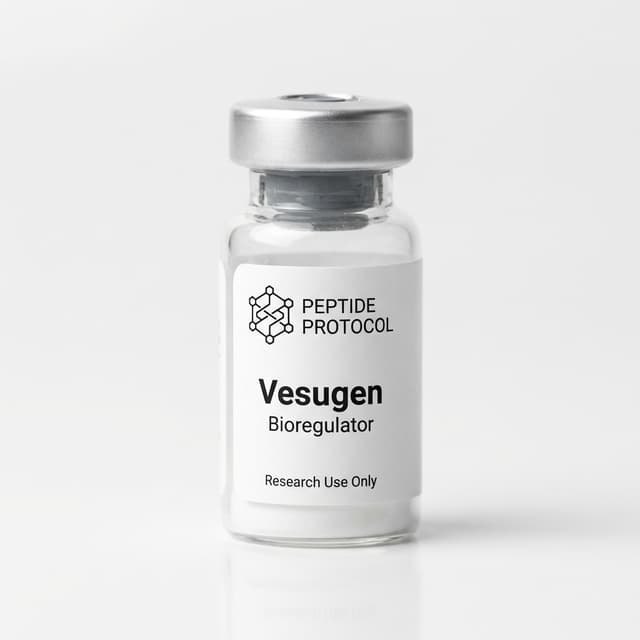
Vesugen
Quick Reference
- Default Dose
- 10 mg
- Frequency
- Daily
- Timing
- AM
- Dilution
- 2 mL
Storage
- Lyophilized
- -20°C
- Reconstituted
- 2-8°C
For Practitioners
Interested in offering research-grade compounds through your practice? Learn about our affiliate program for qualified practitioners.
Find a ProviderPractitioner Information