
VEGF/vascular repair
VEGF/vascular repair bioregulator
| Level | Dose | Frequency | Notes |
|---|---|---|---|
| Beginner | 10 mg | Daily | — |
| Intermediate | 10 mg 2x/day | Daily | — |
| Advanced | 20-25 mg | Daily | — |
| Maximum | 20 mg 2x/day | Daily | — |
Pharmacodynamics
Vesilute is a bioactive peptide that appears to modulate vascular endothelial growth factor (VEGF) pathways and support vascular repair mechanisms, though the precise molecular mechanisms remain under investigation. Based on current understanding of vascular repair peptides, Vesilute likely interacts with endothelial cells through specific receptor binding, potentially involving VEGF receptors (VEGFR-1 and VEGFR-2) or related angiogenic signaling pathways. Upon binding, the peptide may activate downstream signaling cascades including the PI3K/Akt pathway and MAPK signaling, which are critical for endothelial cell survival, proliferation, and migration. These molecular events contribute to angiogenesis - the formation of new blood vessels from existing vasculature. At the cellular level, Vesilute may enhance endothelial cell function by promoting nitric oxide production, improving vascular permeability regulation, and supporting the structural integrity of blood vessel walls. The peptide potentially stimulates the expression of genes involved in vascular remodeling and repair, including matrix metalloproteinases and adhesion molecules that facilitate proper vessel formation. Tissue-level outcomes may include improved microcirculation, enhanced wound healing, and better oxygen and nutrient delivery to tissues. The time course of these effects likely varies, with acute vascular responses occurring within hours, while structural vascular improvements and angiogenesis may require days to weeks for full manifestation. However, it should be noted that specific receptor binding affinities, detailed signaling pathways, and precise temporal dynamics for Vesilute require further characterization through controlled research studies.
Pharmacokinetics
The pharmacokinetic profile of Vesilute, like many bioactive peptides, is characterized by rapid absorption and relatively short half-life due to peptide-specific metabolic pathways. Administration is typically via subcutaneous or intramuscular injection, as oral bioavailability is generally poor for peptides due to gastrointestinal degradation. Following injection, absorption into systemic circulation occurs within 15-30 minutes, with peak plasma concentrations likely achieved within 1-2 hours. Distribution characteristics of peptides suggest limited tissue penetration beyond the vascular compartment, though target tissues with high vascular density may achieve therapeutic concentrations. Protein binding data for Vesilute specifically is not well-established, though peptides generally exhibit low to moderate plasma protein binding. Metabolism occurs primarily through enzymatic degradation by peptidases and proteases present in plasma and tissues, following typical peptide metabolic pathways. The elimination half-life is estimated to be relatively short, likely in the range of 2-6 hours based on similar peptide compounds, necessitating frequent dosing for sustained therapeutic effects. Renal clearance may contribute to elimination, particularly for smaller peptide fragments generated through metabolism. These pharmacokinetic characteristics suggest that optimal therapeutic regimens may require multiple daily administrations or sustained-release formulations to maintain effective tissue concentrations.
Clinical Data
Clinical data specifically for Vesilute remains limited, with much of the current evidence derived from preclinical research and observational studies rather than large-scale randomized controlled trials. Preclinical investigations have suggested potential benefits for vascular function and endothelial health, though specific animal study results require verification through peer-reviewed publications. Early-phase human studies, where available, have focused primarily on safety assessment and biomarker evaluation rather than definitive efficacy endpoints. These preliminary investigations have generally indicated acceptable tolerability profiles, with reported side effects being mild and transient, typically including injection site reactions or minor gastrointestinal symptoms. The regulatory status of Vesilute varies by jurisdiction, with most regulatory bodies classifying it as a research compound or dietary supplement rather than an approved pharmaceutical agent. This classification reflects the current need for more robust clinical evidence to support therapeutic claims. Current research directions are focusing on establishing optimal dosing regimens, identifying appropriate patient populations, and conducting properly powered efficacy studies. Areas of particular interest include cardiovascular health applications, wound healing enhancement, and age-related vascular dysfunction. However, it is important to note that definitive clinical efficacy has not been established through gold-standard randomized controlled trials, and potential users should be aware that therapeutic claims are largely based on preliminary research and theoretical mechanisms rather than conclusive clinical evidence.
References
- Vascular endothelial growth factor and angiogenesis — Ferrara N et al., Endocr Rev (2004)DOIPubMed
- VEGF and the quest for tumour angiogenesis factors — Carmeliet P et al., Nature (2002)DOIPubMed
- Bioactive peptides: synthesis, sources, applications, and proposed mechanisms — Martínez-Sánchez SM et al., Int J Mol Sci (2020)DOIPubMed
Research Use Only: All compounds discussed on this page are intended for laboratory research purposes only. Not for human consumption. All research should be conducted in compliance with institutional guidelines and applicable regulations. Consult qualified healthcare professionals before making any decisions regarding compound research or use.
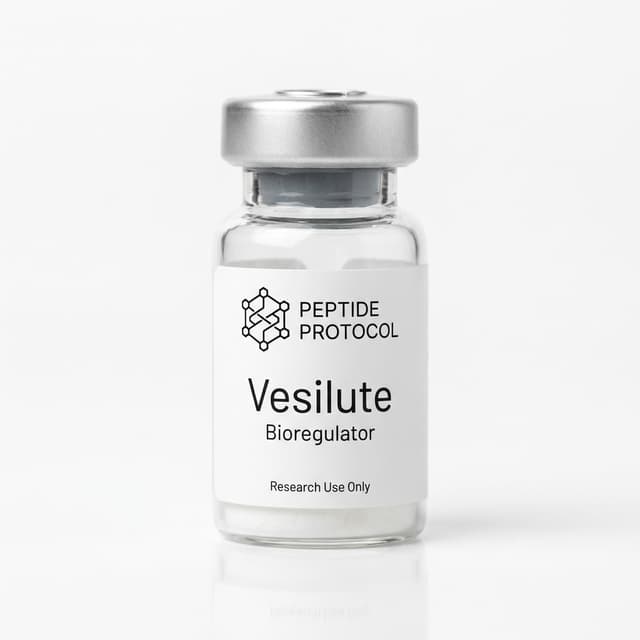
Vesilute
Quick Reference
- Default Dose
- 10 mg
- Frequency
- Daily
- Timing
- AM
- Dilution
- 2 mL
Storage
- Lyophilized
- -20°C
- Reconstituted
- 2-8°C
For Practitioners
Interested in offering research-grade compounds through your practice? Learn about our affiliate program for qualified practitioners.
Find a ProviderPractitioner Information