
GLP/GIP dual agonist
Dual GLP-1/GIP agonist for enhanced metabolic control
| Level | Dose | Frequency | Notes |
|---|---|---|---|
| Beginner | 2.5 mg/wk | Weekly | — |
| Intermediate | 5 mg/wk | Weekly | — |
| Advanced | 5-15 mg/wk | Weekly | — |
| Maximum | 15-20mg/wk | Weekly | — |
Pharmacodynamics
Tirzepatide is a dual agonist peptide that targets both the glucose-dependent insulinotropic polypeptide (GIP) receptor and the glucagon-like peptide-1 (GLP-1) receptor, representing a novel approach to metabolic regulation. The peptide exhibits high binding affinity for both receptors, with balanced activation profiles that trigger complementary signaling cascades. Upon GLP-1 receptor binding, tirzepatide activates adenylyl cyclase through Gs protein coupling, leading to increased intracellular cAMP levels and subsequent activation of protein kinase A (PKA). This cascade promotes glucose-dependent insulin secretion from pancreatic beta cells while simultaneously inhibiting glucagon release from alpha cells when glucose levels are elevated. The GIP receptor activation follows similar cAMP-mediated pathways but provides additional metabolic benefits including enhanced insulin sensitivity and potential direct effects on adipose tissue metabolism. At the cellular level, dual receptor activation results in improved beta-cell function and survival through enhanced expression of genes involved in insulin biosynthesis and cell protection. The glucose-dependent nature of insulin stimulation minimizes hypoglycemic risk, as the insulinotropic effects diminish when glucose levels normalize. Tirzepatide also demonstrates significant effects on gastric motility, delaying gastric emptying through central and peripheral mechanisms, which contributes to satiety and reduced food intake. The dual agonism appears to provide synergistic benefits over single receptor targeting, with enhanced glycemic control and more pronounced weight loss effects. The time course of action includes rapid onset of glucose-dependent insulin release within minutes of administration, while the satiety and gastric motility effects develop over hours and can persist throughout the dosing interval.
Pharmacokinetics
Tirzepatide is administered via subcutaneous injection, as the peptide structure would be degraded by gastrointestinal proteases if given orally. Following subcutaneous administration, the peptide demonstrates sustained absorption characteristics with peak plasma concentrations typically achieved within 8-72 hours post-injection. The compound exhibits extensive protein binding, primarily to albumin, which contributes to its extended half-life and reduced renal clearance. Distribution studies indicate that tirzepatide has limited tissue penetration beyond the vascular compartment, with the bound fraction serving as a circulating reservoir that provides sustained receptor activation. The peptide undergoes proteolytic degradation primarily through dipeptidyl peptidase-4 (DPP-4) and neutral endopeptidases, though the molecular design includes modifications that confer resistance to these degradation pathways compared to native incretin hormones. Renal elimination accounts for a small fraction of total clearance, with most drug removal occurring through proteolytic metabolism. The elimination half-life of tirzepatide is approximately 5 days, enabling once-weekly dosing schedules. This extended pharmacokinetic profile is achieved through fatty acid side chain modifications that promote albumin binding and structural modifications that enhance proteolytic stability. Clearance appears to be dose-proportional across the therapeutic range, and no significant accumulation occurs with weekly dosing regimens.
Clinical Data
Preclinical studies in diabetic rodent models demonstrated that tirzepatide produced superior glycemic control and weight reduction compared to selective GLP-1 or GIP receptor agonists, supporting the dual agonist approach. Animal studies also revealed improvements in beta-cell function, insulin sensitivity, and hepatic glucose output. Phase I human studies established the safety profile and confirmed the extended pharmacokinetic properties that enable weekly dosing. The SURPASS clinical trial program, comprising multiple Phase III studies, has demonstrated significant efficacy in type 2 diabetes management, with tirzepatide showing superior HbA1c reduction compared to established treatments including semaglutide, insulin degludec, and insulin glargine. Notable findings include mean HbA1c reductions of 1.9-2.4% across different doses and substantial weight loss averaging 7-12 kg depending on the dose. The SURMOUNT trials are evaluating tirzepatide specifically for obesity management in non-diabetic populations, with preliminary results showing promising weight reduction outcomes. Tirzepatide received FDA approval in May 2022 for the treatment of type 2 diabetes under the brand name Mounjaro, marking it as the first dual GIP/GLP-1 receptor agonist approved for clinical use. Current regulatory status includes approval in multiple countries for diabetes treatment, with obesity indications under review. Ongoing research focuses on cardiovascular outcomes, potential applications in non-alcoholic fatty liver disease, and long-term safety monitoring. The clinical development program continues to explore optimal dosing strategies and potential combination therapies.
References
- Tirzepatide versus Semaglutide Once Weekly in Patients with Type 2 Diabetes — Frías JP et al., New England Journal of Medicine (2021)DOIPubMed
- A glucose-dependent insulinotropic polypeptide and glucagon-like peptide-1 receptor dual agonist with balanced activation and improved therapeutic properties — Coskun T et al., Molecular Metabolism (2018)DOIPubMed
- Efficacy and safety of tirzepatide, a dual glucose-dependent insulinotropic polypeptide and glucagon-like peptide-1 receptor agonist in patients with type 2 diabetes: a randomised, placebo-controlled, phase 2 study — Rosenstock J et al., The Lancet (2021)DOIPubMed
- Pharmacokinetics and pharmacodynamics of tirzepatide, a dual GIP and GLP-1 receptor agonist, after single ascending doses in healthy subjects — Urva S et al., Clinical Pharmacokinetics (2021)DOIPubMed
Research Use Only: All compounds discussed on this page are intended for laboratory research purposes only. Not for human consumption. All research should be conducted in compliance with institutional guidelines and applicable regulations. Consult qualified healthcare professionals before making any decisions regarding compound research or use.
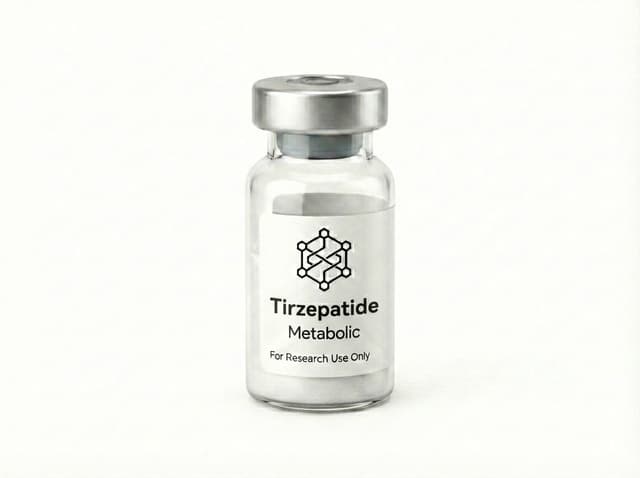
Tirzepatide
Quick Reference
- Default Dose
- 2.5 mg/wk
- Frequency
- Weekly
- Timing
- Any
- Dilution
- 1 mL
Storage
- Lyophilized
- -20°C
- Reconstituted
- 2-8°C
For Practitioners
Interested in offering research-grade compounds through your practice? Learn about our affiliate program for qualified practitioners.
Find a ProviderPractitioner Information