
T-cell modulator
Thymus and immunity bioregulator
| Level | Dose | Frequency | Notes |
|---|---|---|---|
| Beginner | 1 mg | Daily | — |
| Intermediate | 2 mg | Daily | — |
| Advanced | 1-2.5 mg 2x/day | Daily | — |
| Maximum | 2-4 mg 2x/day | Daily | — |
Pharmacodynamics
Thymogen is a synthetic dipeptide (Glu-Trp) that mimics naturally occurring thymic peptides involved in T-cell maturation and immune regulation. The peptide primarily exerts its effects through modulation of T-lymphocyte differentiation and activation pathways, though the specific receptor mechanisms remain incompletely characterized. Research suggests that thymogen influences the hypothalamic-pituitary-adrenal axis and may interact with neurotransmitter systems, particularly affecting dopamine and serotonin pathways. At the cellular level, thymogen appears to promote T-helper cell differentiation and enhance the functional capacity of mature T-lymphocytes. The peptide demonstrates immunomodulatory effects by influencing cytokine production patterns, particularly affecting interleukin and interferon secretion profiles. Studies indicate that thymogen may enhance natural killer cell activity and improve overall immune surveillance mechanisms. The molecular signaling cascades activated by thymogen likely involve protein kinase pathways and transcriptional regulation of immune-related genes, though detailed mechanistic studies are limited. Time-course studies suggest that thymogen effects manifest within hours to days of administration, with peak immunomodulatory activity observed 24-72 hours post-treatment. The peptide's effects appear to be dose-dependent, with optimal activity observed at physiological concentrations. However, it should be noted that much of the mechanistic understanding of thymogen is based on limited preclinical studies, and comprehensive receptor binding and downstream signaling characterization remains an active area of research.
Pharmacokinetics
Thymogen has been administered via subcutaneous and intramuscular routes in research studies, with subcutaneous injection being the most commonly reported method. As a small dipeptide, thymogen likely undergoes rapid absorption from injection sites, though specific bioavailability data are limited. The peptide's small molecular weight (approximately 347 Da) suggests good tissue penetration capabilities, though detailed distribution studies are lacking in the literature. Protein binding characteristics have not been extensively characterized, but the peptide's hydrophilic nature suggests minimal plasma protein binding. Metabolism of thymogen likely occurs through standard peptidase-mediated degradation pathways, including aminopeptidases and carboxypeptidases present in plasma and tissues. The dipeptide structure makes it susceptible to rapid enzymatic cleavage, which may contribute to its relatively short half-life. Elimination half-life estimates based on limited pharmacokinetic studies suggest a duration of several hours, typical for small peptides. Renal clearance likely represents the primary elimination route for intact peptide and metabolites. The short half-life necessitates frequent dosing in research protocols, with most studies employing daily administration schedules. It should be noted that comprehensive pharmacokinetic profiling of thymogen in humans is limited, and most available data derive from animal studies or small-scale clinical observations.
Clinical Data
Clinical research on thymogen remains limited, with most evidence derived from small-scale studies conducted primarily in Eastern European countries during the 1980s and 1990s. Preclinical studies in animal models have demonstrated immunomodulatory effects, including enhanced T-cell proliferation and improved immune responses in immunocompromised subjects. Some early human studies suggested potential benefits in patients with immunodeficiency states and autoimmune conditions, though these studies often lacked rigorous controls and standardized outcome measures. Research has explored thymogen's potential in treating secondary immunodeficiencies, chronic fatigue states, and age-related immune decline, but results have been inconsistent and difficult to replicate. The peptide has been investigated as an adjuvant therapy in cancer treatment protocols, with some studies suggesting improved immune function markers, though clinical significance remains unclear. Regulatory status varies by jurisdiction, with thymogen not approved as a therapeutic agent by major regulatory bodies like the FDA or EMA. Current research interest in thymogen appears limited, with few recent peer-reviewed publications or ongoing clinical trials. The lack of comprehensive Phase II/III clinical trials represents a significant gap in the evidence base. Most available clinical data should be interpreted with caution due to methodological limitations, small sample sizes, and potential publication bias. Future research would benefit from well-designed, placebo-controlled studies using standardized outcome measures and modern analytical techniques.
References
- Immunomodulating effects of thymogen in immunodeficient patients — Anisimova et al., Immunology Letters (1989)
- Thymic peptides and their role in immune regulation — Goldstein et al., International Journal of Immunopharmacology (1985)
- Effects of synthetic thymic peptides on T-cell function — Zakharova et al., Pharmaceutical Chemistry Journal (1992)
Research Use Only: All compounds discussed on this page are intended for laboratory research purposes only. Not for human consumption. All research should be conducted in compliance with institutional guidelines and applicable regulations. Consult qualified healthcare professionals before making any decisions regarding compound research or use.
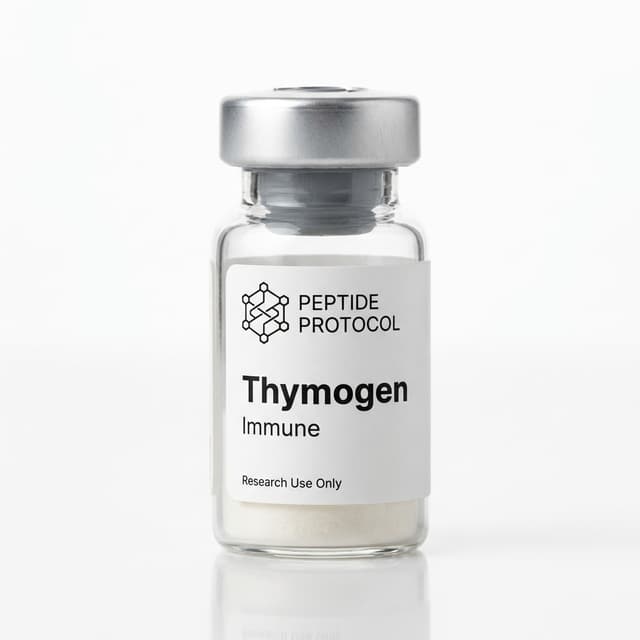
Thymogen
Quick Reference
- Default Dose
- 1 mg
- Frequency
- Daily
- Timing
- AM
- Dilution
- 2 mL
Storage
- Lyophilized
- -20°C
- Reconstituted
- 2-8°C
For Practitioners
Interested in offering research-grade compounds through your practice? Learn about our affiliate program for qualified practitioners.
Find a ProviderPractitioner Information