
PTH analog for bone growth
PTH analog for bone growth
| Level | Dose | Frequency | Notes |
|---|---|---|---|
| Beginner | 5 mcg | Daily | — |
| Intermediate | 10 mcg | Daily | — |
| Advanced | 20 mcg | Daily | — |
| Maximum | 30 mcg | Daily | — |
Pharmacodynamics
Teriparatide is a synthetic analog of the first 34 amino acids of human parathyroid hormone (PTH), which exerts its bone-building effects primarily through activation of the PTH/PTH-related protein receptor (PTH1R). This G-protein coupled receptor is highly expressed on osteoblasts, osteocytes, and osteoclasts within bone tissue. Upon binding to PTH1R, teriparatide activates multiple intracellular signaling cascades, predominantly the cyclic adenosine monophosphate (cAMP) pathway through Gs protein coupling, and to a lesser extent, the protein kinase C pathway via Gq/11 proteins. The cAMP-mediated signaling leads to activation of protein kinase A, which phosphorylates the transcription factor CREB (cAMP response element-binding protein). Phosphorylated CREB then promotes transcription of genes involved in osteoblast differentiation and function, including RUNX2, osterix, and alkaline phosphatase. At the cellular level, teriparatide stimulates osteoblast proliferation, differentiation, and survival while reducing osteoblast apoptosis. It also enhances the transition of bone lining cells to active osteoblasts. Notably, the anabolic versus catabolic effects of PTH signaling depend critically on the pattern of exposure: intermittent administration (as with therapeutic teriparatide) promotes bone formation, while continuous exposure leads to bone resorption. The tissue-level outcomes include increased trabecular bone volume, improved trabecular architecture, and enhanced cortical bone thickness. These effects typically become apparent within weeks of treatment initiation, with peak anabolic effects observed during the first 6-12 months of therapy.
Pharmacokinetics
Teriparatide is administered via subcutaneous injection due to its peptide nature, which would be degraded by gastrointestinal proteases if given orally. Following subcutaneous administration, the peptide is rapidly absorbed with peak serum concentrations achieved within 30 minutes. The bioavailability is approximately 95% via this route. Distribution is primarily to highly perfused organs, with the peptide showing affinity for bone tissue where PTH1 receptors are abundant. Protein binding in plasma is minimal, allowing for rapid tissue penetration. The metabolism of teriparatide occurs primarily through non-specific proteolytic cleavage by peptidases in the liver, kidneys, and peripheral tissues, similar to endogenous PTH. The primary metabolic pathway involves enzymatic degradation rather than hepatic cytochrome P450 metabolism. Elimination occurs rapidly with a serum half-life of approximately 1 hour following subcutaneous administration, though the biological effects on bone persist much longer due to downstream signaling cascade activation. The peptide and its metabolites are cleared primarily through renal filtration and tubular uptake, with dose adjustments potentially necessary in patients with severe renal impairment. The short pharmacokinetic half-life supports the intermittent dosing regimen that is crucial for maintaining the anabolic rather than catabolic effects on bone tissue.
Clinical Data
Preclinical studies in ovariectomized rats and other animal models of osteoporosis consistently demonstrated that intermittent teriparatide administration significantly increases bone mineral density, improves trabecular architecture, and enhances bone strength. These studies established the critical importance of intermittent versus continuous dosing for achieving anabolic effects. Human clinical trials have been extensive and robust, with the pivotal Fracture Prevention Trial being a randomized, double-blind, placebo-controlled study in postmenopausal women with osteoporosis. This landmark study demonstrated significant reductions in vertebral fractures (65% reduction) and non-vertebral fragility fractures (53% reduction) compared to placebo. Additional clinical studies have shown substantial increases in bone mineral density at both spine and hip sites, typically ranging from 8-13% increases at the lumbar spine after 18-24 months of treatment. Teriparatide received FDA approval in 2002 and EMA approval in 2003 for the treatment of osteoporosis in postmenopausal women and men at high risk for fracture. The approved formulation (Forteo) is indicated for daily subcutaneous injection, with treatment typically limited to 24 months due to preclinical findings of osteosarcoma in long-term rat studies, though this finding has not been observed in human populations. Current regulatory status includes approval in over 60 countries worldwide. Ongoing research focuses on combination therapies with antiresorptive agents, extended treatment regimens, and applications in other metabolic bone diseases.
References
- Effect of parathyroid hormone (1-34) on fractures and bone mineral density in postmenopausal women with osteoporosis — Neer RM et al., New England Journal of Medicine (2001)DOIPubMed
- Teriparatide (human parathyroid hormone (1-34)) reverses the inhibitory effect of hydroxyapatite on osteoblast proliferation — Qin L et al., Bone (2004)DOIPubMed
- Pharmacokinetics and pharmacodynamics of teriparatide in postmenopausal women with osteoporosis — Dobnig H et al., Calcified Tissue International (2004)DOIPubMed
- Molecular mechanisms of parathyroid hormone action — Potts JT Jr, Endocrinology and Metabolism Clinics of North America (2017)DOIPubMed
Research Use Only: All compounds discussed on this page are intended for laboratory research purposes only. Not for human consumption. All research should be conducted in compliance with institutional guidelines and applicable regulations. Consult qualified healthcare professionals before making any decisions regarding compound research or use.
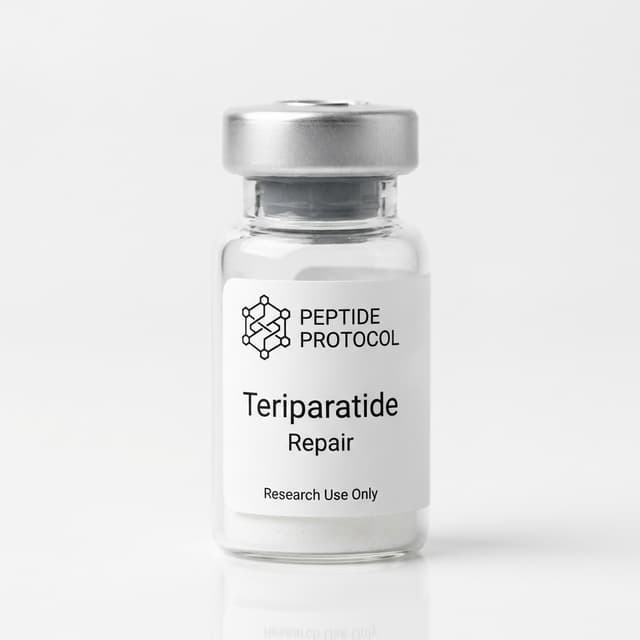
Teriparatide
Quick Reference
- Default Dose
- 5 mcg
- Frequency
- Daily
- Timing
- AM
- Dilution
- 1 mL
Storage
- Lyophilized
- -20°C
- Reconstituted
- 2-8°C
For Practitioners
Interested in offering research-grade compounds through your practice? Learn about our affiliate program for qualified practitioners.
Find a ProviderPractitioner Information