
Active fragment of TB-500
Active fragment of TB-500
| Level | Dose | Frequency | Notes |
|---|---|---|---|
| Beginner | 1 mg | 2-3x/week | — |
| Intermediate | 2.5 mg | 2-3x/week | — |
| Advanced | 3mg | 2-3x/week | — |
| Maximum | 5 mg | 2-3x/week | — |
Pharmacodynamics
TB-500 fragment represents the active sequence of thymosin beta-4 (Tβ4), a naturally occurring 43-amino acid peptide that plays crucial roles in cellular repair and tissue regeneration. The primary mechanism of action involves binding to and sequestering G-actin monomers, preventing their polymerization into F-actin filaments. This actin-binding property is mediated through the conserved LKKTET sequence within the peptide structure. By regulating actin dynamics, TB-500 fragment influences cytoskeletal reorganization, which is fundamental to cell migration, wound healing, and angiogenesis. The peptide activates several downstream signaling pathways, including the PI3K/Akt pathway, which promotes cell survival and proliferation. Additionally, it upregulates the expression of various growth factors and cytokines, including VEGF (vascular endothelial growth factor), which stimulates angiogenesis and endothelial cell migration. TB-500 fragment also demonstrates anti-inflammatory properties by modulating immune cell activation and reducing pro-inflammatory cytokine production. At the tissue level, these molecular interactions translate to enhanced wound healing, improved tissue repair, and potential cardioprotective effects. The peptide appears to promote the migration of endothelial cells, keratinocytes, and other cell types involved in tissue repair processes. Time course studies suggest that effects on cell migration can be observed within hours of treatment, while tissue-level healing benefits may require days to weeks of consistent exposure, depending on the injury type and severity.
Pharmacokinetics
TB-500 fragment, being a peptide therapeutic, faces typical challenges associated with protein drug delivery. The peptide can be administered via subcutaneous, intramuscular, or intravenous routes, with subcutaneous injection being most commonly studied for research applications. Absorption following subcutaneous administration is generally rapid, with peak plasma concentrations typically achieved within 1-3 hours. The peptide demonstrates good tissue penetration due to its relatively small size compared to larger proteins, allowing distribution to target tissues including injured muscle, skin, and cardiovascular tissue. Protein binding characteristics are not extensively characterized, though the peptide likely exhibits minimal plasma protein binding due to its hydrophilic nature. Metabolism occurs primarily through proteolytic degradation by various peptidases and proteases found in plasma and tissues, which represents the major clearance mechanism. The elimination half-life is estimated to be relatively short, typically in the range of 2-4 hours based on similar peptide therapeutics, necessitating frequent dosing to maintain therapeutic levels. Renal clearance may contribute to elimination, particularly for any intact peptide that escapes proteolytic degradation. The short half-life and peptide nature suggest that sustained therapeutic effects likely result from downstream cellular changes rather than prolonged peptide presence.
Clinical Data
Research on TB-500 fragment has been primarily focused on preclinical studies, with limited human clinical data available in peer-reviewed literature. Animal studies have demonstrated promising results in various models of tissue injury and repair. In rodent wound healing models, topical and systemic administration of TB-500 fragment has shown accelerated wound closure, improved tissue organization, and enhanced angiogenesis. Cardiac injury models have indicated potential cardioprotective effects, including reduced infarct size and improved cardiac function following ischemic injury. Studies in animal models of muscle injury have suggested enhanced muscle repair and reduced inflammatory response. However, it's important to note that controlled human clinical trials specifically examining TB-500 fragment are limited in the published literature. Most human data comes from case reports or small observational studies rather than randomized controlled trials. The regulatory status of TB-500 fragment varies by jurisdiction, and it is not currently approved as a therapeutic agent by major regulatory agencies like the FDA or EMA for specific medical indications. Current research directions focus on better understanding optimal dosing regimens, delivery methods, and potential applications in various injury models. There is ongoing interest in its potential applications for wound healing, tissue repair, and possibly cardiovascular protection, though more rigorous clinical studies are needed to establish safety and efficacy profiles in human populations.
References
- Thymosin beta4: a multi-functional regenerative peptide. Basic properties and clinical applications — Goldstein AL et al., Expert Opinion on Biological Therapy (2012)DOIPubMed
- Thymosin β4 accelerates wound healing — Malinda KM et al., Journal of Investigative Dermatology (1999)DOIPubMed
- Thymosin beta4 promotes dermal healing — Philp D et al., FASEB Journal (2003)DOIPubMed
- Thymosin β4 and its degradation product, Ac-SDKP, are novel reparative factors in cardiac fibroblasts — Sopko N et al., Annals of the New York Academy of Sciences (2012)DOIPubMed
Research Use Only: All compounds discussed on this page are intended for laboratory research purposes only. Not for human consumption. All research should be conducted in compliance with institutional guidelines and applicable regulations. Consult qualified healthcare professionals before making any decisions regarding compound research or use.
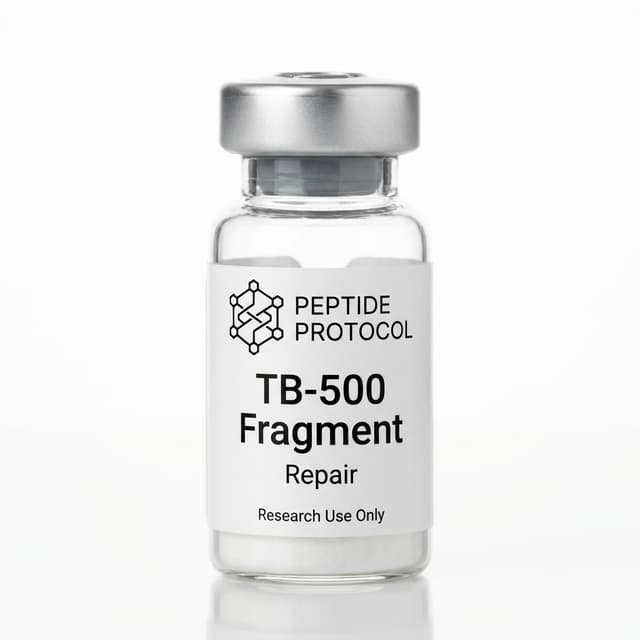
TB-500 Fragment
Quick Reference
- Default Dose
- 1 mg
- Frequency
- 2-3x/week
- Timing
- Any
- Dilution
- 2 mL
Storage
- Lyophilized
- -20°C
- Reconstituted
- 2-8°C
For Practitioners
Interested in offering research-grade compounds through your practice? Learn about our affiliate program for qualified practitioners.
Find a ProviderPractitioner Information