
GHRH analog for GH release
GHRH analog for GH release
| Level | Dose | Frequency | Notes |
|---|---|---|---|
| Beginner | 150 mcg | 5 days on, 2 off | — |
| Intermediate | 250 mcg | 5 days on, 2 off | — |
| Advanced | 500 mcg | 5 days on, 2 off | — |
| Maximum | 500 mcg | Twice daily | AM/PM |
Pharmacodynamics
Sermorelin functions as a synthetic analog of growth hormone-releasing hormone (GHRH), specifically corresponding to the first 29 amino acids of the native 44-amino acid GHRH sequence. This truncated peptide retains full biological activity and binds selectively to GHRH receptors located on somatotroph cells within the anterior pituitary gland. Upon binding to these G-protein coupled receptors, sermorelin activates adenylyl cyclase through Gs protein coupling, leading to increased intracellular cyclic adenosine monophosphate (cAMP) levels. The elevated cAMP activates protein kinase A (PKA), which subsequently phosphorylates the transcription factor CREB (cAMP response element-binding protein). Phosphorylated CREB promotes transcription of growth hormone genes and stimulates the synthesis and secretion of growth hormone from pituitary somatotrophs. The physiological release of growth hormone following sermorelin administration maintains the natural pulsatile secretion pattern, preserving the body's feedback mechanisms. Growth hormone released in response to sermorelin stimulation acts on target tissues through both direct effects and indirect effects mediated by insulin-like growth factor-1 (IGF-1) production in the liver. The time course of action typically shows peak growth hormone levels occurring 15-60 minutes after administration, with effects lasting several hours. This mechanism preserves the hypothalamic-pituitary axis feedback regulation, allowing for more physiological growth hormone release patterns compared to direct growth hormone administration.
Pharmacokinetics
Sermorelin is administered via subcutaneous injection due to its peptide nature, which makes it susceptible to degradation in the gastrointestinal tract if given orally. Following subcutaneous administration, the peptide is absorbed into systemic circulation with bioavailability estimates varying but generally considered moderate due to some local degradation at the injection site. The peptide distributes primarily to extracellular fluid compartments, with limited tissue penetration due to its hydrophilic nature and relatively large molecular size. Protein binding characteristics have not been extensively characterized, but like most peptide hormones, sermorelin likely exhibits minimal plasma protein binding. Metabolism occurs primarily through enzymatic cleavage by peptidases and proteases, particularly dipeptidyl peptidase-4 (DPP-4) and other endopeptidases that recognize and cleave peptide bonds. The liver and kidneys are primary sites of metabolic degradation. Elimination follows first-order kinetics with a plasma half-life estimated at approximately 10-20 minutes for the intact peptide, though biological effects persist longer due to downstream signaling cascades. Renal clearance contributes to elimination of both intact peptide and metabolic fragments. The short half-life necessitates daily administration for therapeutic applications, typically administered in the evening to align with natural growth hormone secretion patterns.
Clinical Data
Preclinical studies in animal models have demonstrated sermorelin's ability to stimulate growth hormone release in a dose-dependent manner while maintaining physiological feedback regulation. Early human studies focused primarily on diagnostic applications, using sermorelin as a growth hormone stimulation test to assess pituitary function in children and adults suspected of growth hormone deficiency. The FDA approved sermorelin acetate (Geref) for diagnostic use as a growth hormone stimulation test, though this approval was later withdrawn due to manufacturing discontinuation rather than safety concerns. Clinical investigations have explored sermorelin's potential therapeutic applications in growth hormone deficiency, with some studies suggesting benefits in pediatric patients with documented deficiency. Research has also examined its effects in aging adults, where natural growth hormone decline occurs, though results have been mixed and regulatory approval for anti-aging applications has not been obtained. Safety profiles from clinical studies generally show good tolerability with injection site reactions being the most common adverse effect. Some studies have reported transient facial flushing, nausea, or headache following administration. Current regulatory status includes off-label prescribing in some jurisdictions, though it lacks broad regulatory approval for most therapeutic indications. Ongoing research continues to investigate optimal dosing regimens and potential applications in specific patient populations with documented growth hormone deficiency.
References
- Growth hormone-releasing factor: structure-function relationships — Guillemin R et al., Recent Progress in Hormone Research (1984)PubMed
- Pharmacokinetics and pharmacodynamics of growth hormone-releasing hormone and its analogs — Thorner MO et al., Journal of Clinical Endocrinology and Metabolism (1985)PubMed
- Growth hormone responses to growth hormone-releasing hormone in children and adults: relation to age and sex — Martha PM Jr et al., Journal of Clinical Endocrinology and Metabolism (1988)PubMed
- Clinical applications of growth hormone releasing hormone and its analogs — Vance ML et al., Advances in Neuroimmunology (1991)PubMed
Research Use Only: All compounds discussed on this page are intended for laboratory research purposes only. Not for human consumption. All research should be conducted in compliance with institutional guidelines and applicable regulations. Consult qualified healthcare professionals before making any decisions regarding compound research or use.
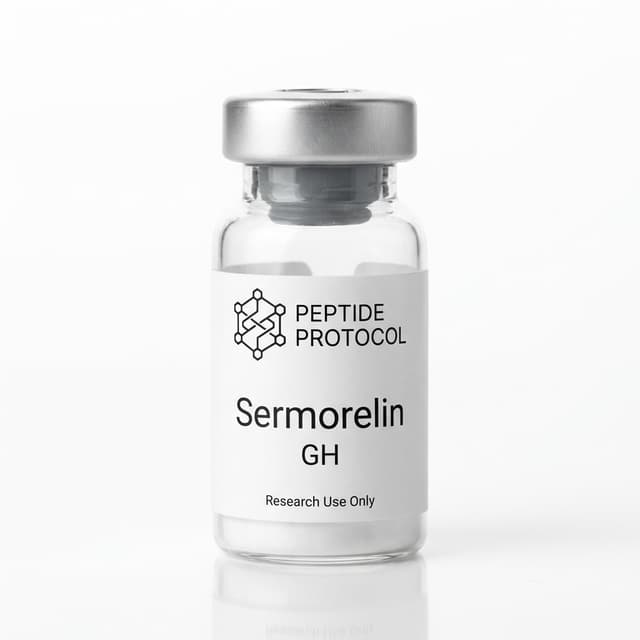
Sermorelin
Quick Reference
- Default Dose
- 150 mcg
- Frequency
- 5 days on, 2 off
- Timing
- PM
- Dilution
- 1 mL
Storage
- Lyophilized
- -20°C
- Reconstituted
- 2-8°C
For Practitioners
Interested in offering research-grade compounds through your practice? Learn about our affiliate program for qualified practitioners.
Find a ProviderPractitioner Information