
GLP-1 appetite suppression
GLP-1 receptor agonist for appetite suppression and weight management
| Level | Dose | Frequency | Notes |
|---|---|---|---|
| Beginner | 0.25 mg/wk | Weekly | — |
| Intermediate | 0.5-1 mg/wk | Weekly | — |
| Advanced | 2 mg/wk | Weekly | — |
| Maximum | 2.5-5 mg/wk | Weekly | — |
Pharmacodynamics
Semaglutide is a glucagon-like peptide-1 (GLP-1) receptor agonist that exerts its appetite suppressing effects through selective binding to GLP-1 receptors located throughout the body. The primary mechanism involves high-affinity binding to GLP-1 receptors in the hypothalamus, particularly in the arcuate nucleus and paraventricular nucleus, which are critical brain regions for appetite regulation and energy homeostasis. Upon receptor binding, semaglutide activates adenylyl cyclase through Gα(s) protein coupling, leading to increased intracellular cyclic adenosine monophosphate (cAMP) levels. This triggers activation of protein kinase A (PKA) and subsequent phosphorylation of cAMP response element-binding protein (CREB), ultimately modulating the expression of appetite-regulating neuropeptides. In peripheral tissues, semaglutide binding to GLP-1 receptors in the gastrointestinal tract promotes satiety signaling through the vagus nerve to the brainstem. The compound also delays gastric emptying by relaxing gastric smooth muscle and reducing gastric motility, contributing to prolonged satiation. Additionally, semaglutide enhances glucose-dependent insulin secretion from pancreatic beta cells while suppressing inappropriate glucagon release from alpha cells, which indirectly supports metabolic regulation. The peptide demonstrates high selectivity for GLP-1 receptors over other incretin receptors, with binding affinity similar to native GLP-1. The onset of appetite suppression typically occurs within hours of administration, with peak effects observed 1-3 days post-injection for the once-weekly formulation.
Pharmacokinetics
Semaglutide is administered via subcutaneous injection, demonstrating excellent bioavailability (89%) with slow absorption kinetics that support once-weekly dosing. The peptide's extended half-life of approximately 165-184 hours results from several structural modifications that enhance stability, including fatty acid acylation that promotes albumin binding (>99% protein bound) and amino acid substitutions that confer resistance to dipeptidyl peptidase-4 (DPP-4) degradation. Following subcutaneous administration, peak plasma concentrations are reached within 1-3 days. Distribution is primarily to highly perfused organs, with the compound crossing the blood-brain barrier to access central GLP-1 receptors. Metabolism occurs through proteolytic cleavage and beta-oxidation of the fatty acid side chain, similar to endogenous protein catabolism. The primary elimination pathway is through renal excretion of metabolites, with minimal unchanged drug eliminated in urine or feces. Clearance is approximately 0.05 L/h, contributing to the sustained therapeutic levels that enable once-weekly administration. Hepatic or mild-to-moderate renal impairment does not significantly alter pharmacokinetics, though dose adjustments may be considered in severe renal impairment.
Clinical Data
Preclinical studies in rodent models demonstrated that semaglutide treatment resulted in significant reductions in food intake, body weight, and fat mass through central and peripheral GLP-1 receptor activation. Animal studies showed dose-dependent appetite suppression with corresponding improvements in metabolic parameters. Large-scale human clinical trials, including the STEP program, have extensively validated semaglutide's efficacy for weight management. The STEP 1 trial demonstrated that participants receiving 2.4 mg weekly semaglutide achieved an average weight loss of 14.9% compared to 2.4% with placebo over 68 weeks. Additional trials (STEP 2-5) confirmed efficacy across diverse populations, including individuals with type 2 diabetes and those requiring lifestyle intervention support. Semaglutide received FDA approval in 2021 for chronic weight management at the 2.4 mg dose (marketed as Wegovy), representing the first GLP-1 receptor agonist specifically approved for obesity treatment. The compound was previously approved at lower doses (0.5-1.0 mg) for type 2 diabetes management. Current regulatory status includes approvals in multiple countries for both diabetes and obesity indications. Ongoing research focuses on cardiovascular outcomes, long-term safety profiles, and potential applications in other metabolic disorders. Post-marketing surveillance continues to monitor real-world effectiveness and safety across diverse patient populations.
References
- Semaglutide and cardiovascular outcomes in patients with obesity — Lincoff AM et al., New England Journal of Medicine (2023)DOI
- Once-Weekly Semaglutide in Adults with Overweight or Obesity — Wilding JPH et al., New England Journal of Medicine (2021)DOIPubMed
- Semaglutide reduces energy intake and food cravings in a randomized controlled trial — Blundell J et al., Diabetes, Obesity and Metabolism (2017)DOI
- Pharmacokinetics, pharmacodynamics, and tolerability of semaglutide in subjects with hepatic impairment — Flint A et al., Journal of Clinical Pharmacology (2017)DOI
Research Use Only: All compounds discussed on this page are intended for laboratory research purposes only. Not for human consumption. All research should be conducted in compliance with institutional guidelines and applicable regulations. Consult qualified healthcare professionals before making any decisions regarding compound research or use.
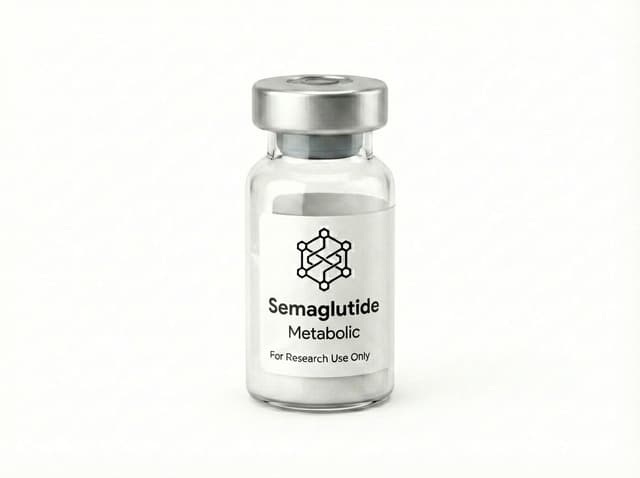
Semaglutide
Quick Reference
- Default Dose
- 0.25 mg/wk
- Frequency
- Weekly
- Timing
- Any
- Dilution
- 1 mL
Storage
- Lyophilized
- -20°C
- Reconstituted
- 2-8°C
For Practitioners
Interested in offering research-grade compounds through your practice? Learn about our affiliate program for qualified practitioners.
Find a ProviderPractitioner Information