
Anxiolytic
Anxiolytic peptide for stress reduction
| Level | Dose | Frequency | Notes |
|---|---|---|---|
| Beginner | 250 mcg | Daily | — |
| Intermediate | 200-500 mcg | Daily | — |
| Advanced | 250-500 mcg 2x/day | Daily | — |
| Maximum | 750-1500 mcg | Daily | — |
Pharmacodynamics
Selank exerts its anxiolytic and nootropic effects through multiple interconnected mechanisms. As a synthetic analog of tuftsin, it modulates GABAergic neurotransmission by enhancing GABA-A receptor function without directly binding to benzodiazepine sites, resulting in anxiolysis without sedation or cognitive impairment. The peptide influences monoaminergic systems by normalizing serotonin and dopamine metabolism, particularly under stress conditions, which contributes to improved mood regulation and cognitive performance. Selank demonstrates significant neurotrophic properties by upregulating brain-derived neurotrophic factor (BDNF) expression, promoting neuroplasticity and synaptic strength. The peptide also modulates the enkephalin system by inhibiting enkephalin-degrading enzymes, thereby enhancing endogenous opioid activity and stress resilience. At the cellular level, Selank influences gene expression patterns related to neurotransmitter synthesis and synaptic function. Its immunomodulatory effects involve shifting cytokine production from pro-inflammatory (IL-6, TNF-α) toward anti-inflammatory profiles (IL-10), which may contribute to its neuroprotective properties. The peptide appears to activate intracellular signaling cascades involving cAMP and protein kinase pathways. Effects typically manifest within 15-30 minutes of administration and can persist for several hours, with anxiolytic effects often lasting 2-6 hours depending on dosage and individual factors.
Pharmacokinetics
Selank is typically administered via intranasal or subcutaneous routes due to poor oral bioavailability caused by gastrointestinal peptidase degradation. Intranasal administration allows for direct nose-to-brain transport, potentially bypassing the blood-brain barrier and achieving therapeutic CNS concentrations within minutes. The peptide demonstrates good tissue penetration, particularly into neural tissues, though specific protein binding data remains limited. Selank undergoes enzymatic degradation primarily through peptidases and aminopeptidases, with the liver serving as a major site of metabolism. The peptide's stability is enhanced compared to natural tuftsin due to its synthetic modifications. Elimination appears to follow first-order kinetics with an estimated half-life ranging from 20-30 minutes in plasma, though CNS effects persist longer, suggesting tissue retention or active metabolite formation. Renal excretion plays a role in clearance of degradation products. The relatively short plasma half-life necessitates multiple daily dosing for sustained effects, though some studies suggest that neuroplastic changes may provide benefits beyond the peptide's direct presence.
Clinical Data
Preclinical research in animal models has demonstrated Selank's anxiolytic efficacy in various stress paradigms, including elevated plus maze and forced swim tests, showing comparable effectiveness to traditional benzodiazepines without associated sedation or tolerance development. Rodent studies have confirmed its ability to enhance learning and memory consolidation while reducing anxiety-like behaviors. Limited human clinical data exists, with small-scale studies conducted primarily in Russia suggesting anxiolytic benefits in patients with generalized anxiety and neurasthenic conditions. These preliminary human trials indicated improvements in anxiety scores and cognitive performance measures, though larger, controlled studies are needed for definitive clinical validation. Currently, Selank lacks regulatory approval from major agencies like the FDA or EMA and is primarily available through research channels. The peptide's regulatory status varies by country, with some jurisdictions permitting its use as a research compound. Ongoing research focuses on optimizing delivery methods, establishing standardized dosing protocols, and conducting more rigorous clinical trials to meet international regulatory standards. Future studies are investigating its potential applications in post-traumatic stress disorder, cognitive enhancement in healthy populations, and combination therapies for treatment-resistant anxiety disorders.
References
- Selank, a synthetic analogue of tuftsin, protects mice against experimental endotoxin shock — Semenova T.P. et al., European Journal of Pharmacology (2009)
- Effects of selank on behavioral and biochemical parameters in chronic mild stress model of depression in rats — Volkova A.S. et al., Bulletin of Experimental Biology and Medicine (2016)
- Anxiolytic activity of selank peptide — Kozlovskaya M.M. et al., Bulletin of Experimental Biology and Medicine (2001)
Research Use Only: All compounds discussed on this page are intended for laboratory research purposes only. Not for human consumption. All research should be conducted in compliance with institutional guidelines and applicable regulations. Consult qualified healthcare professionals before making any decisions regarding compound research or use.
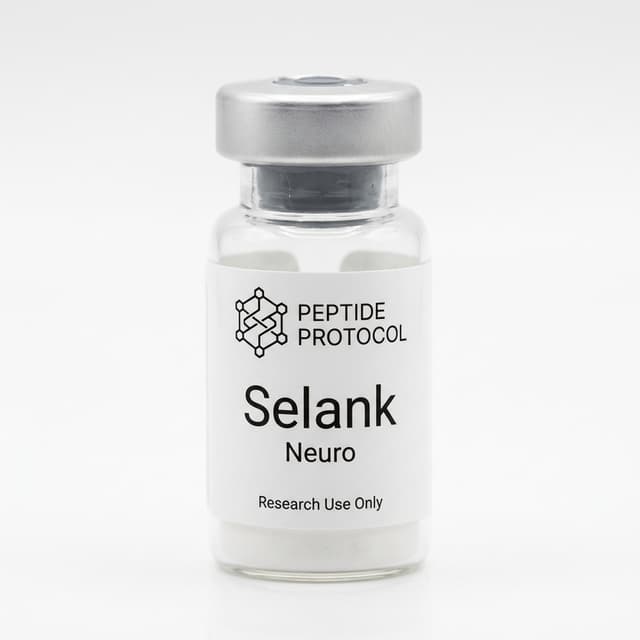
Selank
Quick Reference
- Default Dose
- 250 mcg
- Frequency
- Daily
- Timing
- AM
- Dilution
- 2 mL
Storage
- Lyophilized
- -20°C
- Reconstituted
- 2-8°C
For Practitioners
Interested in offering research-grade compounds through your practice? Learn about our affiliate program for qualified practitioners.
Find a ProviderPractitioner Information