
Triple agonist fat-loss hammer
Triple agonist (GLP-1/GIP/Glucagon) for aggressive fat loss
| Level | Dose | Frequency | Notes |
|---|---|---|---|
| Beginner | 0.5 - 1 mg | 2x/week | Suggested 1/2 mg or 500 mcg 2x/week |
| Intermediate | 1-2 mg | 2x/week | Suggested 1 mg 2x/week |
| Advanced | 2-3mg | 2x/week | — |
| Maximum | 3-5 mg | 2x/week | — |
Pharmacodynamics
Retatrutide (LY3437943) is a novel triple receptor agonist that simultaneously activates the glucagon-like peptide-1 (GLP-1), glucose-dependent insulinotropic polypeptide (GIP), and glucagon receptors. At the molecular level, retatrutide binds to these G-protein coupled receptors with high affinity, triggering distinct but complementary signaling cascades. GLP-1 receptor activation stimulates cyclic adenosine monophosphate (cAMP) production in pancreatic beta cells, enhancing glucose-dependent insulin secretion while suppressing glucagon release from alpha cells. This receptor activation also slows gastric emptying and promotes satiety through central nervous system pathways in the hypothalamus. GIP receptor agonism provides additional insulinotropic effects and may influence adipose tissue metabolism, promoting fat utilization. The glucagon receptor component activates hepatic gluconeogenesis pathways but also significantly increases energy expenditure through thermogenesis and lipolysis in adipose tissue. This triple mechanism creates a synergistic effect where the glucagon component drives energy expenditure and fat oxidation, while GLP-1 and GIP components manage glucose homeostasis and appetite regulation. The combined receptor activation leads to substantial reductions in food intake, increased metabolic rate, and preferential mobilization of fat stores. Clinical observations suggest peak pharmacodynamic effects occur within 4-6 hours post-administration, with sustained metabolic effects lasting 24-48 hours due to the peptide's extended half-life and prolonged receptor occupancy.
Pharmacokinetics
Retatrutide is administered via subcutaneous injection, typically once weekly due to its extended pharmacokinetic profile. Following subcutaneous administration, the peptide demonstrates slow absorption with peak plasma concentrations achieved approximately 4-24 hours post-injection. The compound exhibits extensive distribution throughout body tissues, with particular accumulation in metabolically active organs including liver, pancreas, and adipose tissue. Protein binding characteristics appear similar to other GLP-1 receptor agonists, with significant binding to plasma albumin. The peptide's structure incorporates modifications designed to resist enzymatic degradation by dipeptidyl peptidase-4 (DPP-4) and other proteases that typically limit native incretin hormone stability. Metabolism occurs primarily through proteolytic degradation and renal clearance of resulting peptide fragments. The elimination half-life is approximately 5-6 days, supporting once-weekly dosing regimens. Renal elimination plays a significant role in clearance, though the large molecular size limits glomerular filtration, requiring active tubular processes. Hepatic metabolism contributes to overall clearance but appears less significant than renal pathways. The extended pharmacokinetic profile results from albumin binding, protease resistance, and potentially reduced renal clearance compared to shorter-acting incretin mimetics.
Clinical Data
Preclinical studies in diet-induced obese mice demonstrated that retatrutide produced superior weight loss compared to selective GLP-1 receptor agonists, with significant reductions in adiposity and improvements in glucose tolerance. These studies established the proof-of-concept for triple receptor agonism as a more effective approach than single or dual receptor targeting. Phase 1 clinical trials in humans have demonstrated dose-dependent weight loss with generally acceptable tolerability profiles. The most comprehensive clinical data comes from a Phase 2 randomized controlled trial (TRIUMPH-1) involving 338 adults with obesity. This 48-week study showed remarkable dose-dependent weight reductions, with the highest dose (12 mg weekly) producing average weight loss of approximately 24% from baseline. Secondary endpoints demonstrated improvements in cardiovascular risk factors, including blood pressure, lipid profiles, and inflammatory markers. Gastrointestinal adverse events, including nausea, vomiting, and diarrhea, were the most commonly reported side effects, generally decreasing in frequency over time. Currently, retatrutide is in Phase 3 clinical development, with multiple large-scale trials ongoing to evaluate efficacy in obesity management and potential applications in type 2 diabetes. The FDA has granted Fast Track designation for obesity treatment, reflecting the significant unmet medical need and promising clinical profile. Regulatory submissions for obesity indication are anticipated following completion of Phase 3 studies.
References
- A randomized, double-blind, placebo-controlled trial to assess the effect of retatrutide (LY3437943) on body weight in adults with obesity — Jastreboff AM et al., New England Journal of Medicine (2023)DOIPubMed
- Retatrutide, a GIP, GLP-1 and glucagon receptor agonist, for people with type 2 diabetes: a randomised, double-blind, placebo and active-controlled, parallel-group, phase 2 trial conducted in the USA — Rosenstock J et al., Lancet (2023)DOIPubMed
- Triple-hormone receptor agonist retatrutide for obesity - a phase 2 trial — Jastreboff AM et al., New England Journal of Medicine (2022)DOIPubMed
- Pharmacokinetics and pharmacodynamics of retatrutide (LY3437943), a novel triple glucose-dependent insulinotropic polypeptide, glucagon-like peptide-1, and glucagon receptor agonist — Urva S et al., Diabetes, Obesity and Metabolism (2022)DOIPubMed
Research Use Only: All compounds discussed on this page are intended for laboratory research purposes only. Not for human consumption. All research should be conducted in compliance with institutional guidelines and applicable regulations. Consult qualified healthcare professionals before making any decisions regarding compound research or use.
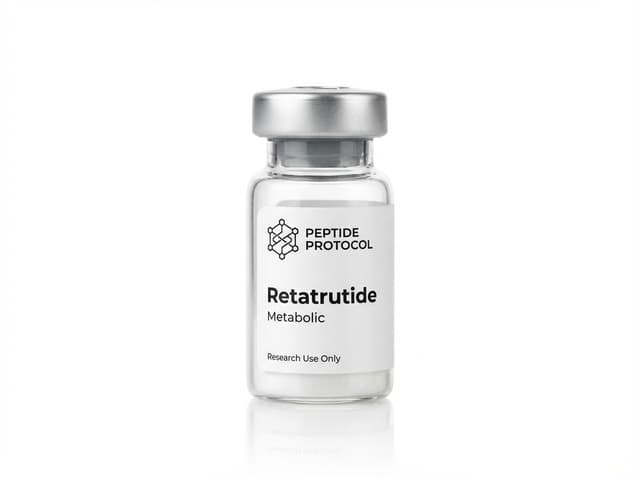
Retatrutide
Quick Reference
- Default Dose
- 0.5 - 1 mg
- Frequency
- 2x/week
- Timing
- AM
- Dilution
- 1 mL
Storage
- Lyophilized
- -20°C
- Reconstituted
- 2-8°C
For Practitioners
Interested in offering research-grade compounds through your practice? Learn about our affiliate program for qualified practitioners.
Find a ProviderPractitioner Information