
Libido
Melanocortin agonist for libido enhancement
| Level | Dose | Frequency | Notes |
|---|---|---|---|
| Beginner | 0.5 mg | As needed (PRN) | — |
| Intermediate | 1 mg | As needed (PRN) | — |
| Advanced | 1.5 mg | As needed (PRN) | — |
| Maximum | 2 mg | As needed (PRN) | — |
Pharmacodynamics
PT-141 (bremelanotide) exerts its effects primarily through selective agonism of melanocortin receptors MC3R and MC4R located in hypothalamic nuclei involved in sexual behavior and arousal. The peptide binds to these G-protein coupled receptors with nanomolar affinity, leading to activation of adenylyl cyclase and subsequent elevation of intracellular cyclic adenosine monophosphate (cAMP) levels. This downstream signaling cascade activates protein kinase A (PKA) and cAMP response element-binding protein (CREB), ultimately modulating gene expression and neuronal excitability in key brain regions including the paraventricular nucleus and medial preoptic area. Unlike peripheral vasodilatory agents, PT-141's mechanism is entirely centrally mediated, working through neural circuits that control sexual motivation and desire rather than genital blood flow. The melanocortin system plays a crucial role in regulating multiple physiological processes including feeding behavior, energy homeostasis, and sexual function. MC4R activation specifically enhances dopaminergic and noradrenergic neurotransmission in reward pathways associated with sexual arousal and motivation. The peptide's effects on sexual desire appear to involve complex interactions between hypothalamic-pituitary pathways and limbic structures. The onset of action typically occurs within 45 minutes to 2 hours following subcutaneous administration, with peak effects observed 1-3 hours post-injection. The duration of enhanced sexual responsiveness can persist for 6-12 hours, though individual variation exists. Notably, PT-141's efficacy is independent of baseline testosterone levels or vascular function, making it particularly valuable for individuals with desire disorders that are not responsive to traditional treatments targeting peripheral mechanisms.
Pharmacokinetics
PT-141 is administered via subcutaneous injection due to poor oral bioavailability, which is common among peptide therapeutics due to enzymatic degradation in the gastrointestinal tract. Following subcutaneous administration, the peptide demonstrates rapid absorption with peak plasma concentrations typically achieved within 30-60 minutes. The bioavailability via subcutaneous route is approximately 100%, ensuring predictable systemic exposure. PT-141 exhibits moderate protein binding in plasma, primarily to albumin, with an estimated binding fraction of 20-30%. The peptide readily crosses the blood-brain barrier, which is essential for its central mechanism of action, likely utilizing specific peptide transport systems. Distribution is relatively rapid, with the peptide accessing target tissues within the central nervous system effectively. Metabolism occurs primarily through enzymatic cleavage by peptidases and proteases, particularly dipeptidyl peptidase and neutral endopeptidases found in plasma and tissues. The elimination half-life is estimated at approximately 2-3 hours, though pharmacodynamic effects persist longer than would be predicted by plasma concentrations alone, suggesting tissue retention or prolonged receptor occupancy. Clearance is predominantly renal, with metabolites and some unchanged drug eliminated through urine. No significant accumulation occurs with intermittent dosing, and no major drug-drug interactions affecting metabolism have been identified in clinical studies.
Clinical Data
Preclinical studies in animal models first established PT-141's pro-sexual effects, demonstrating dose-dependent increases in sexual motivation and copulatory behavior in both male and female rodents and non-human primates. These studies confirmed the central mechanism of action and established the safety profile that supported human clinical development. Phase II and Phase III clinical trials in humans have focused primarily on hypoactive sexual desire disorder (HSDD) in premenopausal women. The pivotal RECONNECT studies enrolled over 1,200 women with acquired, generalized HSDD and demonstrated statistically significant improvements in sexual desire and associated distress compared to placebo. Participants showed meaningful increases in satisfying sexual events and improvements in validated measures of sexual function. Common side effects observed in clinical trials included transient nausea (occurring in approximately 40% of participants), flushing, and headache, which were generally mild to moderate and decreased with continued use. Based on this clinical evidence, PT-141 received FDA approval in June 2019 as Vyleesi for the treatment of acquired, generalized HSDD in premenopausal women. The approved dosing regimen is subcutaneous injection at least 45 minutes before anticipated sexual activity, with no more than one dose per 24 hours and maximum eight doses per month. Post-marketing surveillance continues to monitor long-term safety and effectiveness. Research into potential applications for other sexual dysfunction conditions and in male populations remains ongoing, though regulatory approval currently exists only for the specific indication in premenopausal women with HSDD.
References
- Bremelanotide for the treatment of hypoactive sexual desire disorder: analyses from the RECONNECT studies — Clayton AH et al., Obstetrics & Gynecology (2019)DOIPubMed
- Melanocortin receptors, melanotropic peptides and penile erection — Giuliano F et al., European Urology (2006)DOIPubMed
- Clinical development of bremelanotide for the treatment of female sexual dysfunction — Kingsberg SA et al., Expert Opinion on Investigational Drugs (2019)DOIPubMed
- Role of central melanocortin pathways in energy homeostasis — Cone RD, Annual Review of Physiology (2006)DOIPubMed
Research Use Only: All compounds discussed on this page are intended for laboratory research purposes only. Not for human consumption. All research should be conducted in compliance with institutional guidelines and applicable regulations. Consult qualified healthcare professionals before making any decisions regarding compound research or use.
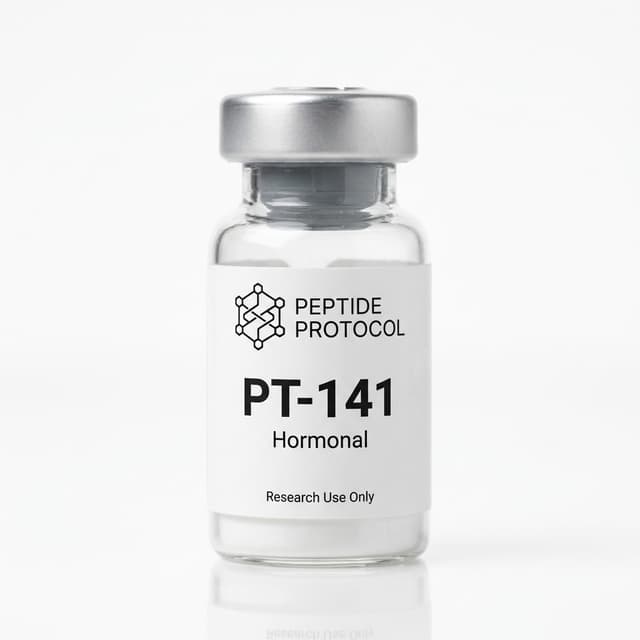
PT-141
Quick Reference
- Default Dose
- 0.5 mg
- Frequency
- As needed (PRN)
- Timing
- 30–60 min pre-activity
- Dilution
- 2 mL
Storage
- Lyophilized
- -20°C
- Reconstituted
- 2-8°C
For Practitioners
Interested in offering research-grade compounds through your practice? Learn about our affiliate program for qualified practitioners.
Find a ProviderPractitioner Information