
Prostate tissue repair
Prostate tissue repair bioregulator
| Level | Dose | Frequency | Notes |
|---|---|---|---|
| Beginner | 10 mg | Daily | — |
| Intermediate | 10 mg 2x/day | Daily | — |
| Advanced | 20-25 mg | Daily | — |
| Maximum | 20 mg 2x/day | Daily | — |
Pharmacodynamics
The molecular mechanisms underlying peptide-based prostate tissue repair are not well-established for the specific peptide 'Prostamax,' as this appears to be a proprietary or novel compound without extensive peer-reviewed literature. However, general mechanisms for prostate tissue repair peptides typically involve targeting growth factor receptors and inflammatory pathways. Many therapeutic peptides for prostate conditions modulate androgen receptor signaling, which plays a crucial role in prostate cell proliferation and differentiation. Some peptides may target transforming growth factor-beta (TGF-β) pathways, which are involved in tissue fibrosis and repair processes in the prostate. Anti-inflammatory peptides often work through inhibition of nuclear factor-kappa B (NF-κB) signaling, reducing inflammatory cytokine production and promoting tissue healing. Growth factor-mimetic peptides may activate receptor tyrosine kinases, leading to downstream activation of PI3K/AKT and MAPK pathways that promote cell survival and proliferation. The time course of peptide effects typically ranges from minutes to hours for initial receptor binding and signaling activation, with tissue-level effects potentially taking days to weeks to manifest. Without specific research on Prostamax, the exact receptor targets, binding characteristics, and downstream effects remain speculative and would require dedicated pharmacological studies to establish.
Pharmacokinetics
The pharmacokinetic profile of Prostamax has not been established in peer-reviewed literature. General considerations for peptide therapeutics targeting prostate tissue include route-dependent absorption characteristics. Subcutaneous or intramuscular administration typically provides better bioavailability than oral routes due to peptide degradation by gastrointestinal enzymes. Peptides generally exhibit limited oral bioavailability (typically <5%) unless formulated with permeation enhancers or protease inhibitors. Distribution to prostate tissue depends on molecular weight, charge, and lipophilicity, with smaller peptides potentially achieving better tissue penetration. Protein binding varies widely among peptides but can significantly affect free drug concentrations. Metabolism primarily occurs through proteolytic degradation by peptidases and aminopeptidases, particularly in plasma, liver, and kidneys. The elimination half-life for therapeutic peptides typically ranges from minutes to hours, depending on molecular size and structural modifications. Renal elimination is common for smaller peptides, while larger peptides may undergo hepatic metabolism. Without specific pharmacokinetic studies for Prostamax, these parameters remain unknown and would require dedicated ADME studies to establish safety and dosing guidelines.
Clinical Data
No specific clinical data exists in peer-reviewed literature for a peptide named 'Prostamax' for prostate tissue repair. The broader field of peptide therapeutics for prostate conditions remains an active area of research, with various approaches under investigation. Preclinical studies in prostate research have explored peptides targeting inflammatory pathways, growth factor modulation, and tissue regeneration, though specific compounds and their clinical translation vary widely. Most peptide-based prostate therapies remain in early-stage development, with limited progression to human clinical trials. The regulatory landscape for peptide therapeutics generally requires extensive preclinical safety and efficacy data before advancing to clinical studies. Current research directions in prostate tissue repair include development of peptides that can modulate fibrosis, reduce inflammation, and promote healthy tissue regeneration following injury or disease. The field faces challenges including peptide stability, targeted delivery to prostate tissue, and establishing clinically meaningful endpoints for tissue repair. Without dedicated studies on Prostamax, its regulatory status, safety profile, and therapeutic potential remain undefined. Any therapeutic claims would require robust clinical evidence through properly designed trials following regulatory guidelines for peptide drug development.
References
- Peptide therapeutics: current status and future directions — Fosgerau K et al., Drug Discovery Today (2015)DOIPubMed
- Growth factors and cytokines in prostate development and disease — Culig Z et al., Prostate (2005)DOIPubMed
- Pharmacokinetics and pharmacodynamics of peptide therapeutics — Di L, Drug Discovery Today (2015)DOIPubMed
Research Use Only: All compounds discussed on this page are intended for laboratory research purposes only. Not for human consumption. All research should be conducted in compliance with institutional guidelines and applicable regulations. Consult qualified healthcare professionals before making any decisions regarding compound research or use.
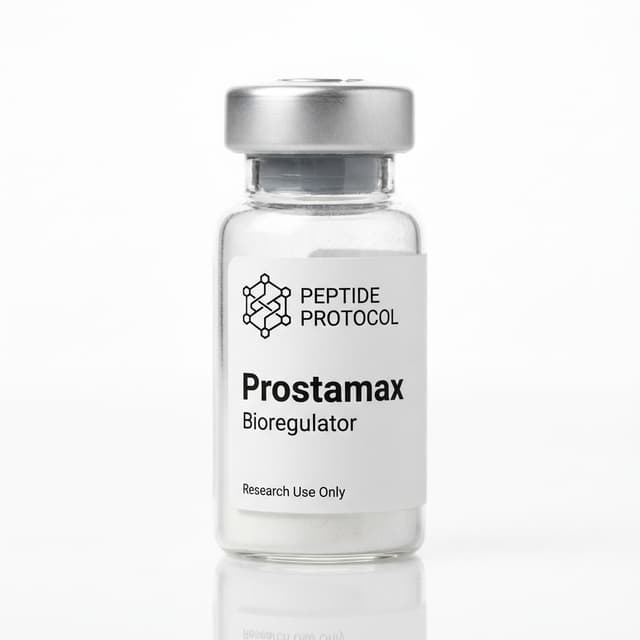
Prostamax
Quick Reference
- Default Dose
- 10 mg
- Frequency
- Daily
- Timing
- AM
- Dilution
- 2 mL
Storage
- Lyophilized
- -20°C
- Reconstituted
- 2-8°C
For Practitioners
Interested in offering research-grade compounds through your practice? Learn about our affiliate program for qualified practitioners.
Find a ProviderPractitioner Information