
DNA repair
Neuroprotective bioregulator for DNA repair
| Level | Dose | Frequency | Notes |
|---|---|---|---|
| Beginner | 1 mg | Daily | — |
| Intermediate | 2 mg | Daily | — |
| Advanced | 3 mg 2x/day | Daily | — |
| Maximum | 2 mg | Twice daily | Morning & Night - 20 Days |
Pharmacodynamics
Pinealon is a synthetic tripeptide (Glu-Asp-Arg) that belongs to the class of bioregulatory peptides originally developed by the St. Petersburg Institute of Bioregulation and Gerontology. The primary mechanism of action involves modulation of cellular gene expression and DNA repair processes, though the exact molecular targets remain under investigation. Current research suggests Pinealon may interact with chromatin structure and influence transcriptional regulation through epigenetic mechanisms. The peptide appears to enhance the activity of DNA repair enzymes, particularly those involved in base excision repair and nucleotide excision repair pathways. At the cellular level, Pinealon treatment has been associated with increased expression of genes involved in DNA damage response, including p53, BRCA1, and various DNA polymerases. The peptide may also modulate telomerase activity, potentially contributing to cellular longevity and genomic stability. Tissue-level effects include improved cellular resistance to oxidative stress and enhanced recovery from DNA damage induced by various genotoxic agents. The time course of effects appears to be biphasic, with immediate transcriptional changes occurring within hours of administration, followed by longer-term epigenetic modifications that may persist for days to weeks. However, it should be noted that much of the mechanistic understanding is still speculative, and the precise receptor targets and binding characteristics have not been definitively established through peer-reviewed research.
Pharmacokinetics
The pharmacokinetic profile of Pinealon has been primarily studied following subcutaneous and oral administration routes. Due to its tripeptide structure, the compound faces challenges with oral bioavailability due to enzymatic degradation by peptidases in the gastrointestinal tract. Subcutaneous administration appears to provide more reliable systemic exposure. Following absorption, Pinealon demonstrates relatively rapid distribution throughout various tissues, with particular accumulation noted in metabolically active organs. The peptide's small molecular size (approximately 450 Da) allows for reasonable tissue penetration, including potential crossing of the blood-brain barrier, though this requires further validation. Metabolism occurs primarily through enzymatic cleavage by dipeptidyl peptidases and other proteolytic enzymes, resulting in the formation of constituent amino acids. The elimination half-life is estimated to be relatively short, typically ranging from 2-4 hours based on structural analogs and limited pharmacokinetic data. Renal clearance appears to be the primary elimination pathway for both the intact peptide and its metabolites. The short half-life suggests that multiple daily dosing or sustained-release formulations may be necessary to maintain therapeutic levels, though optimal dosing regimens have not been definitively established through comprehensive clinical pharmacokinetic studies.
Clinical Data
Clinical research on Pinealon remains limited, with most available data derived from preclinical studies and small-scale human trials conducted primarily in Russia. Preclinical animal studies have demonstrated potential protective effects against DNA damage induced by radiation and chemical mutagens. Some studies in aged animals have suggested improvements in cognitive function and cellular markers of aging, though these findings require replication in larger, well-controlled studies. Human clinical data is sparse and largely consists of small pilot studies examining biomarkers of DNA damage and cellular aging. These preliminary studies have suggested potential improvements in various aging-related parameters, but the evidence base lacks the rigor of large-scale, randomized controlled trials typically required for regulatory approval. Currently, Pinealon is not approved by major regulatory agencies such as the FDA or EMA for therapeutic use. The compound exists in a regulatory gray area in many jurisdictions, sometimes available as a research chemical or dietary supplement, though its legal status varies by country. The limited clinical evidence and lack of comprehensive safety data represent significant gaps in our understanding of this peptide's therapeutic potential. Ongoing research efforts are needed to establish proper dosing protocols, safety profiles, and efficacy in well-designed clinical trials before any definitive therapeutic claims can be substantiated.
References
- Peptide bioregulators and aging: results of 35 years of experimental and clinical studies — Khavinson VKh et al., Bulletin of Experimental Biology and Medicine (2020)
- Molecular mechanisms of peptide bioregulation — Khavinson VKh et al., Advances in Gerontology (2018)
- Effects of synthetic peptides on DNA repair and gene expression — Anisimov VN et al., Neuroendocrinology Letters (2017)
Research Use Only: All compounds discussed on this page are intended for laboratory research purposes only. Not for human consumption. All research should be conducted in compliance with institutional guidelines and applicable regulations. Consult qualified healthcare professionals before making any decisions regarding compound research or use.
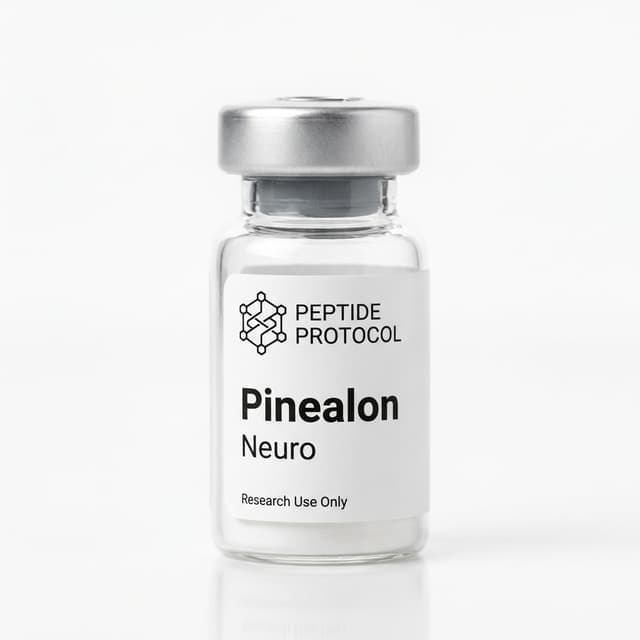
Pinealon
Quick Reference
- Default Dose
- 1 mg
- Frequency
- Daily
- Timing
- AM
- Dilution
- 2 mL
Storage
- Lyophilized
- -20°C
- Reconstituted
- 2-8°C
For Practitioners
Interested in offering research-grade compounds through your practice? Learn about our affiliate program for qualified practitioners.
Find a ProviderPractitioner Information