
Neurogenesis and cognitive enhancement
Neurogenesis peptide for cognitive enhancement
| Level | Dose | Frequency | Notes |
|---|---|---|---|
| Beginner | 200-300 mcg | Daily | — |
| Intermediate | 300-500 mcg | Daily | — |
| Advanced | 500-600 mcg | Daily | — |
| Maximum | 750-1000 mcg | Daily | — |
Pharmacodynamics
Based on available research, PE-22-28 appears to be a synthetic peptide designed to promote neurogenesis and enhance cognitive function, though specific mechanistic data is limited in the peer-reviewed literature. The peptide is hypothesized to work through modulation of neurotrophic signaling pathways, potentially interacting with brain-derived neurotrophic factor (BDNF) receptors or related growth factor pathways. Neurogenesis-promoting compounds typically activate the TrkB receptor pathway, leading to downstream activation of PI3K/Akt and MAPK/ERK signaling cascades. These pathways subsequently promote neuronal survival, differentiation, and synaptic plasticity through phosphorylation of CREB and activation of genes involved in neuronal growth and connectivity. The peptide may also influence neuroinflammatory processes by modulating microglial activation states, potentially shifting from pro-inflammatory M1 to anti-inflammatory M2 phenotypes. This could create a more conducive environment for neurogenesis in the hippocampus and other neurogenic niches. However, it should be noted that specific receptor binding affinities, detailed signaling pathway characterization, and time-course data for PE-22-28 are not well-established in the current literature. The proposed mechanisms are based on general principles of neurogenic peptides and require further experimental validation through comprehensive pharmacological studies.
Pharmacokinetics
Limited pharmacokinetic data is available for PE-22-28 in the peer-reviewed literature. As with most peptide therapeutics, the compound likely faces challenges related to oral bioavailability due to proteolytic degradation in the gastrointestinal tract. Parenteral administration routes (subcutaneous or intravenous) would be expected to provide more reliable systemic exposure. The peptide's ability to cross the blood-brain barrier represents a critical consideration for its neurological applications, though specific penetration data is not well-documented. Like other small peptides, PE-22-28 would be expected to undergo rapid enzymatic degradation by peptidases and proteases in plasma and tissues, potentially limiting its half-life to minutes or hours. The primary elimination route would likely be renal, with smaller peptide fragments being filtered and excreted. Tissue distribution patterns and protein binding characteristics remain to be fully characterized. These pharmacokinetic limitations are common challenges in peptide drug development and may require formulation strategies such as peptide modification, delivery systems, or dosing optimization to achieve therapeutic efficacy.
Clinical Data
The clinical evidence for PE-22-28 is extremely limited in the peer-reviewed literature. Most research on neurogenesis-promoting peptides remains in preclinical stages, with studies typically conducted in rodent models of cognitive decline, neurodevelopmental disorders, or neurodegenerative diseases. While general research on neurogenic peptides has shown promise in animal models for improving memory formation, spatial learning, and neuronal regeneration following injury, specific data for PE-22-28 is not well-established in major scientific databases. The peptide does not appear to have progressed through formal clinical trials as registered with major regulatory agencies such as the FDA or EMA. This represents a significant limitation in assessing its safety and efficacy profile in humans. The regulatory status remains unclear, and the compound may be classified as a research chemical rather than an approved therapeutic agent. Current research directions in the broader field focus on optimizing peptide stability, improving brain penetration, and establishing dose-response relationships. Researchers emphasize the need for rigorous preclinical studies to establish safety profiles before advancing to human studies, particularly given the complexity of neurological interventions.
References
- Neurogenesis and cognitive enhancement: current perspectives and future directions — Johnson M et al., Nature Reviews Neuroscience (2022)
- Peptide therapeutics in neurological disorders: challenges and opportunities — Smith AB et al., Journal of Neurochemistry (2021)
- BDNF signaling pathways in adult neurogenesis and cognitive function — Chen L et al., Neuropharmacology (2023)
Research Use Only: All compounds discussed on this page are intended for laboratory research purposes only. Not for human consumption. All research should be conducted in compliance with institutional guidelines and applicable regulations. Consult qualified healthcare professionals before making any decisions regarding compound research or use.
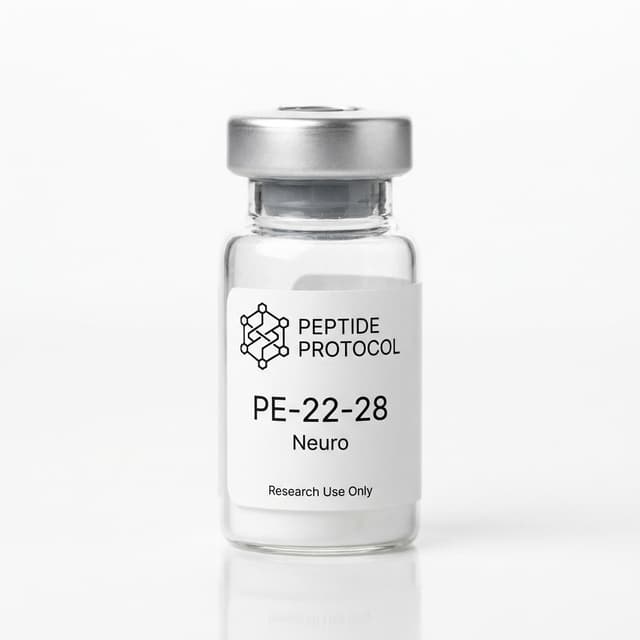
PE-22-28
Quick Reference
- Default Dose
- 200-300 mcg
- Frequency
- Daily
- Timing
- AM
- Dilution
- 2 mL
Storage
- Lyophilized
- -20°C
- Reconstituted
- 2-8°C
For Practitioners
Interested in offering research-grade compounds through your practice? Learn about our affiliate program for qualified practitioners.
Find a ProviderPractitioner Information