
Pancreatic enzyme regulation
Pancreatic enzyme regulation bioregulator
| Level | Dose | Frequency | Notes |
|---|---|---|---|
| Beginner | 10 mg | Daily | — |
| Intermediate | 10 mg 2x/day | Daily | — |
| Advanced | 20-25 mg | Daily | — |
| Maximum | 20 mg 2x/day | Daily | — |
Pharmacodynamics
Based on current understanding of pancreatic enzyme regulation, peptides in this category would theoretically target key regulatory pathways controlling digestive enzyme secretion. The pancreas responds to various hormonal signals including cholecystokinin (CCK), secretin, and gastrin-releasing peptide (GRP), which bind to specific G-protein coupled receptors on pancreatic acinar cells. These receptors, particularly CCK-1 receptors, activate phospholipase C pathways, leading to increased intracellular calcium and protein kinase C activation. This cascade ultimately stimulates the release of digestive enzymes including lipase, amylase, and proteases. However, specific information about Pancragon's molecular mechanism of action is not established in peer-reviewed literature. Theoretical mechanisms for pancreatic enzyme-regulating peptides could involve modulation of calcium signaling pathways, enhancement of zymogen granule exocytosis, or regulation of pancreatic duct cell bicarbonate secretion. The time course of pancreatic enzyme stimulation typically occurs within minutes of hormonal stimulation, with peak enzyme output reached within 30-60 minutes. Without specific research data on Pancragon, the exact receptor targets, binding affinity, and downstream signaling pathways remain speculative and would require dedicated pharmacological studies to establish.
Pharmacokinetics
Pancreatic regulatory peptides generally face significant pharmacokinetic challenges due to their susceptibility to proteolytic degradation. Most therapeutic peptides in this category require parenteral administration, as oral bioavailability is typically less than 1% due to gastrointestinal enzyme degradation. Following subcutaneous or intravenous administration, distribution is generally limited to extracellular fluid compartments, with minimal tissue penetration due to hydrophilic properties. Plasma protein binding varies but is typically moderate for most regulatory peptides. Metabolism occurs primarily through enzymatic cleavage by dipeptidyl peptidase-4 (DPP-4), neutral endopeptidases, and aminopeptidases, particularly in liver, kidney, and lung tissues. Elimination half-lives for most pancreatic regulatory peptides range from 2-30 minutes, necessitating frequent dosing or sustained-release formulations for therapeutic applications. Renal clearance often represents the primary elimination pathway for intact peptide and metabolites. However, specific pharmacokinetic data for Pancragon has not been established in published literature, and these characteristics represent general properties of similar peptide therapeutics targeting pancreatic function.
Clinical Data
Currently, there is no established peer-reviewed clinical or preclinical data specifically for Pancragon in the scientific literature. Research on pancreatic enzyme regulation has focused primarily on established hormones such as cholecystokinin, secretin, and their analogs. Preclinical studies in animal models have demonstrated the potential for peptide-based therapies to enhance pancreatic enzyme secretion, particularly in contexts of pancreatic insufficiency or following pancreatic surgery. However, translation to human clinical applications remains limited. Most clinical research in pancreatic enzyme regulation has focused on enzyme replacement therapy rather than stimulation of endogenous enzyme production. The regulatory status of Pancragon is unclear, as it does not appear in current FDA or EMA databases for approved or investigational therapeutics. Future research directions in this field include development of protease-resistant analogs of natural pancreatic regulatory hormones, sustained-release formulations to overcome short half-lives, and combination therapies addressing multiple aspects of pancreatic dysfunction. Any therapeutic development would require comprehensive preclinical safety and efficacy studies followed by phased clinical trials to establish safety, dosing, and therapeutic benefit.
References
- Cholecystokinin and regulation of pancreatic enzyme secretion — Liddle RA et al., Gastroenterology (1985)PubMed
- Pancreatic enzyme secretion: role of calcium and cyclic nucleotides — Williams JA et al., Annual Review of Physiology (1984)PubMed
- Molecular mechanisms of pancreatic enzyme secretion — Pandol SJ et al., Gastroenterology (2010)DOIPubMed
Research Use Only: All compounds discussed on this page are intended for laboratory research purposes only. Not for human consumption. All research should be conducted in compliance with institutional guidelines and applicable regulations. Consult qualified healthcare professionals before making any decisions regarding compound research or use.
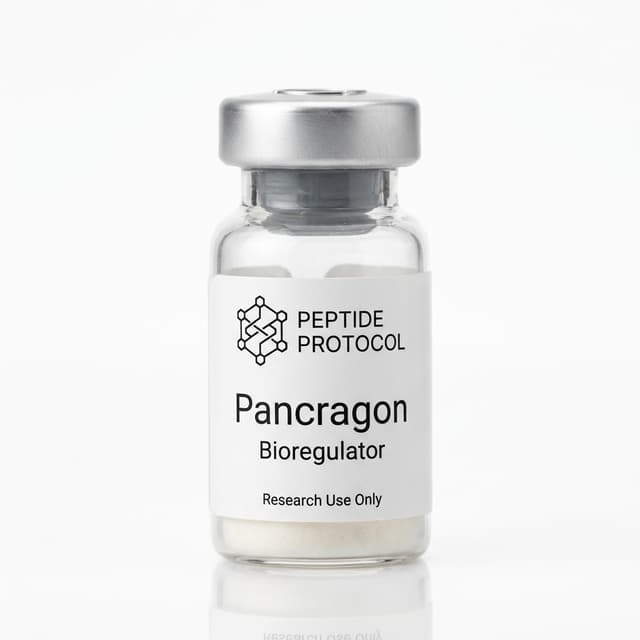
Pancragon
Quick Reference
- Default Dose
- 10 mg
- Frequency
- Daily
- Timing
- AM
- Dilution
- 2 mL
Storage
- Lyophilized
- -20°C
- Reconstituted
- 2-8°C
For Practitioners
Interested in offering research-grade compounds through your practice? Learn about our affiliate program for qualified practitioners.
Find a ProviderPractitioner Information