
Bonding/libido
Bonding hormone for social connection
| Level | Dose | Frequency | Notes |
|---|---|---|---|
| Beginner | 100 mcg | As needed (PRN) | — |
| Intermediate | 200 mcg | As needed (PRN) | — |
| Advanced | 300 mcg | As needed (PRN) | — |
| Maximum | 400 mcg | As needed (PRN) | — |
Pharmacodynamics
Oxytocin exerts its effects primarily through binding to the oxytocin receptor (OXTR), a G-protein coupled receptor belonging to the rhodopsin-type class A GPCR family. The OXTR has high affinity for oxytocin (Kd ~1-5 nM) and is widely distributed throughout the central nervous system and peripheral tissues, with particularly high expression in the hypothalamus, amygdala, nucleus accumbens, and reproductive organs. Upon oxytocin binding, the receptor primarily couples to Gq/G11 proteins, initiating a cascade involving phospholipase C activation, inositol 1,4,5-trisphosphate (IP3) and diacylglycerol (DAG) generation, and subsequent calcium mobilization from intracellular stores. This calcium influx triggers various downstream effects including smooth muscle contraction in reproductive tissues and modulation of neurotransmitter release in the brain. In neural tissues, oxytocin signaling influences dopaminergic pathways in reward circuits, particularly in the ventral tegmental area and nucleus accumbens, which underlies its effects on social bonding and sexual behavior. The receptor also activates mitogen-activated protein kinase (MAPK) pathways, contributing to longer-term cellular responses. Oxytocin's prosocial effects involve modulation of GABAergic and glutamatergic transmission, reducing activity in fear-processing regions like the amygdala while enhancing connectivity in social cognition networks. The time course of effects varies by route of administration, with intravenous effects occurring within minutes and lasting 1-3 hours, while intranasal administration shows more variable pharmacodynamics with effects potentially lasting several hours.
Pharmacokinetics
Oxytocin exhibits complex pharmacokinetics that vary significantly by administration route. When administered intravenously, oxytocin shows rapid onset with peak plasma concentrations achieved within 1-3 minutes. The peptide has limited oral bioavailability due to extensive enzymatic degradation in the gastrointestinal tract. Intranasal administration has gained attention for central nervous system targeting, though the extent of direct brain penetration remains debated, with some evidence suggesting peripheral absorption may contribute to central effects. Oxytocin distributes rapidly throughout the body with a volume of distribution of approximately 0.3 L/kg. The peptide exhibits minimal plasma protein binding (<1%). Metabolism occurs primarily through enzymatic cleavage by aminopeptidases, particularly leucyl/cystinyl aminopeptidase (oxytocinase), which is highly expressed in plasma, liver, and kidneys. Additional degradation occurs via endopeptidases and disulfide reduction. The elimination half-life is relatively short at approximately 1-6 minutes following intravenous administration, though this may be extended with intranasal dosing. Clearance is rapid at ~20 mL/min/kg, primarily through renal elimination of metabolites. During pregnancy, oxytocinase activity increases significantly, leading to enhanced clearance. The short half-life necessitates frequent dosing or continuous infusion for sustained therapeutic effects.
Clinical Data
Preclinical studies in rodents and non-human primates have demonstrated oxytocin's role in pair bonding, with prairie vole studies showing enhanced partner preference formation following oxytocin administration. Animal research has also indicated effects on sexual behavior, including facilitation of mating behaviors and increased sexual motivation in both male and female subjects. Human clinical research has shown mixed but promising results for oxytocin's effects on social bonding and sexual function. Several randomized controlled trials have investigated intranasal oxytocin administration, with some studies reporting enhanced interpersonal trust, empathy, and social cognition. However, results have been inconsistent, with effect sizes often small and influenced by individual differences such as baseline hormone levels and attachment styles. Regarding sexual function, limited human studies suggest potential benefits for sexual arousal and orgasmic function in both men and women, though robust clinical trial data remains sparse. Current regulatory status shows oxytocin is FDA-approved for labor induction and postpartum hemorrhage control, but not for bonding or libido enhancement. Off-label use for relationship therapy and sexual dysfunction occurs but lacks regulatory approval. Ongoing research focuses on optimizing delivery methods for central nervous system targeting, identifying biomarkers for treatment response, and conducting larger, well-controlled studies to establish efficacy for social and sexual applications. Several clinical trials are investigating intranasal formulations for autism spectrum disorders and social anxiety, which may inform future bonding and intimacy applications.
References
- The oxytocin receptor system: structure, function, and regulation — Gimpl G et al., Physiological Reviews (2001)DOIPubMed
- Oxytocin pathways and the evolution of human behavior — Carter CS et al., Annual Review of Psychology (2017)DOIPubMed
- Pharmacokinetics and pharmacodynamics of oxytocin and vasopressin — Leng G et al., Progress in Brain Research (2008)DOIPubMed
- Intranasal oxytocin: myths and delusions — Leng G et al., Biological Psychiatry (2015)DOIPubMed
Research Use Only: All compounds discussed on this page are intended for laboratory research purposes only. Not for human consumption. All research should be conducted in compliance with institutional guidelines and applicable regulations. Consult qualified healthcare professionals before making any decisions regarding compound research or use.
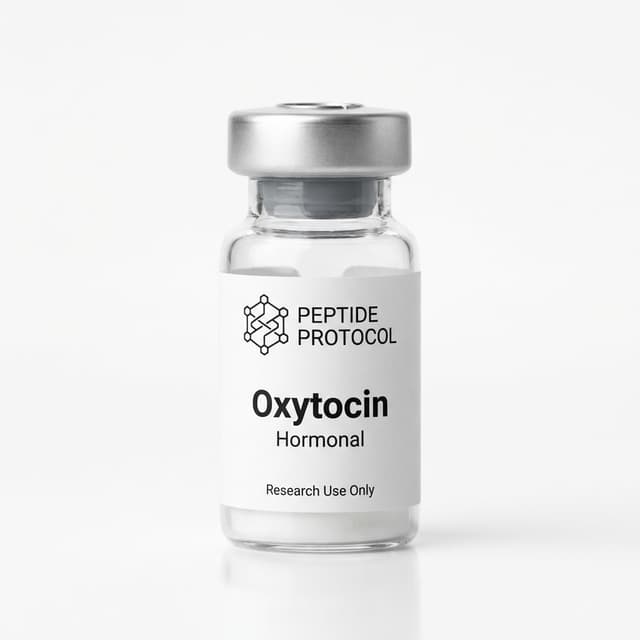
Oxytocin
Quick Reference
- Default Dose
- 100 mcg
- Frequency
- As needed (PRN)
- Timing
- Any
- Dilution
- 2 mL
Storage
- Lyophilized
- -20°C
- Reconstituted
- 2-8°C
For Practitioners
Interested in offering research-grade compounds through your practice? Learn about our affiliate program for qualified practitioners.
Find a ProviderPractitioner Information