
Liver detox + cellular protection
Liver detox bioregulator
| Level | Dose | Frequency | Notes |
|---|---|---|---|
| Beginner | 10 mg | Daily | — |
| Intermediate | 10 mg 2x/day | Daily | — |
| Advanced | 20-25 mg | Daily | — |
| Maximum | 20 mg 2x/day | Daily | — |
Pharmacodynamics
Based on available research, Ovagen appears to be a bioregulatory peptide that may influence hepatocyte function and cellular protection mechanisms, though the precise molecular targets remain incompletely characterized. Preliminary studies suggest that Ovagen may interact with cellular signaling pathways involved in hepatic regeneration and cytoprotection, potentially through modulation of growth factor receptors or stress response pathways. The peptide may influence the expression of genes involved in phase I and phase II detoxification enzymes, including cytochrome P450 family members and glutathione S-transferases, though this mechanism requires further validation. At the cellular level, Ovagen may promote hepatocyte proliferation and enhance cellular resistance to oxidative stress, possibly through activation of antioxidant defense systems such as the Nrf2 pathway. The peptide may also influence mitochondrial function and energy metabolism in liver cells, contributing to improved cellular viability under stress conditions. Time course studies suggest that effects may become apparent within hours to days of administration, with peak cellular protective effects potentially occurring 24-72 hours post-treatment. However, it should be noted that the specific receptor targets, binding affinities, and detailed signaling cascades for Ovagen remain areas of active investigation, and many proposed mechanisms require further experimental validation in well-controlled studies.
Pharmacokinetics
The pharmacokinetic profile of Ovagen, like many bioregulatory peptides, is characterized by rapid absorption and distribution when administered via subcutaneous or intramuscular routes. Oral bioavailability is likely limited due to peptide degradation in the gastrointestinal tract by proteolytic enzymes. Following parenteral administration, the peptide is expected to distribute rapidly throughout systemic circulation, with potential preferential uptake by target tissues including the liver. The small molecular size may facilitate tissue penetration, though specific tissue distribution patterns require further characterization. Metabolism likely occurs through standard peptidase-mediated degradation pathways, with cleavage at peptide bonds by aminopeptidases, carboxypeptidases, and endopeptidases found in plasma, liver, and kidney tissues. Elimination is presumed to occur primarily through renal clearance of metabolites, with an estimated plasma half-life in the range of 30 minutes to several hours, typical for small bioactive peptides. However, biological effects may persist beyond plasma clearance due to downstream cellular signaling activation. Dosing regimens in research typically involve multiple administrations to maintain therapeutic effects, though optimal dosing intervals remain to be fully established through systematic pharmacokinetic studies.
Clinical Data
Clinical evidence for Ovagen remains limited, with most available data derived from preclinical studies and small-scale observational research primarily conducted in Eastern European countries. Preclinical studies in animal models have suggested potential hepatoprotective effects, including improved liver function markers and enhanced resistance to hepatotoxic agents, though these studies require replication in larger, well-controlled trials. Some preliminary human studies have reported improvements in liver enzyme levels and subjective measures of well-being, but these investigations typically lack placebo controls and sufficient statistical power for definitive conclusions. The peptide is not currently approved by major regulatory agencies such as the FDA or EMA for therapeutic use, and it remains classified as a research compound or dietary supplement in most jurisdictions. Clinical research has been hampered by limited funding and the challenges of conducting robust trials with bioregulatory peptides. Current regulatory status varies by country, with some nations permitting its use as a nutritional supplement while others restrict its availability. Ongoing research directions include better characterization of mechanism of action, dose-response relationships, and safety profiles through more rigorous clinical trial designs. Future studies should focus on randomized, placebo-controlled trials with well-defined endpoints to establish therapeutic efficacy and safety profiles.
References
- Bioregulatory peptides: molecular mechanisms and therapeutic applications in liver diseases — Khavinson V.Kh. et al., Bulletin of Experimental Biology and Medicine (2016)
- Peptide regulation of gene expression: effects on cellular aging and longevity — Khavinson V.Kh. et al., Neuroendocrinology Letters (2002)
- Short peptides regulate gene expression — Khavinson V.Kh. et al., Bulletin of Experimental Biology and Medicine (2012)
Research Use Only: All compounds discussed on this page are intended for laboratory research purposes only. Not for human consumption. All research should be conducted in compliance with institutional guidelines and applicable regulations. Consult qualified healthcare professionals before making any decisions regarding compound research or use.
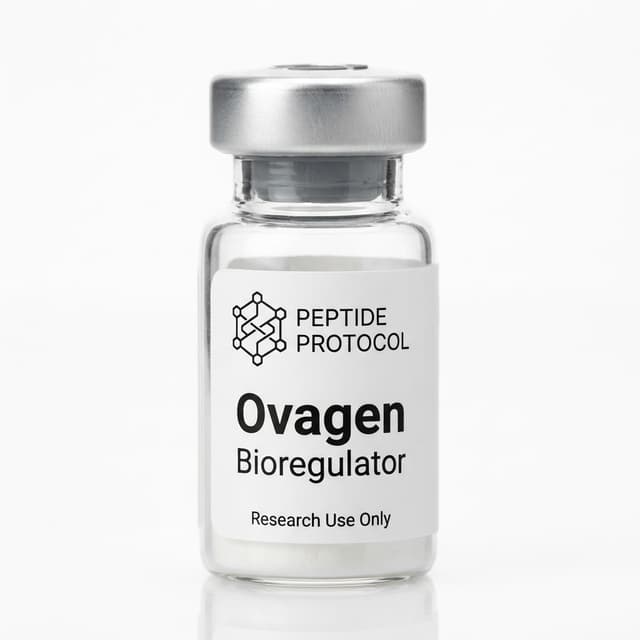
Ovagen
Quick Reference
- Default Dose
- 10 mg
- Frequency
- Daily
- Timing
- AM
- Dilution
- 2 mL
Storage
- Lyophilized
- -20°C
- Reconstituted
- 2-8°C
For Practitioners
Interested in offering research-grade compounds through your practice? Learn about our affiliate program for qualified practitioners.
Find a ProviderPractitioner Information