
Cellular energy
Cellular energy coenzyme for longevity
| Level | Dose | Frequency | Notes |
|---|---|---|---|
| Beginner | 25 mg | Daily | — |
| Intermediate | 50 mg | Daily | — |
| Advanced | 75 mg | Daily | >50 -100 IV only NOT IM |
| Maximum | 500 mg weekly | Daily | 250-750 IV only |
Pharmacodynamics
NAD+ (nicotinamide adenine dinucleotide) functions as a critical coenzyme in cellular energy metabolism and redox reactions. At the molecular level, NAD+ serves as an electron acceptor in glycolysis, the citric acid cycle, and oxidative phosphorylation, where it is reduced to NADH. This reduced form then donates electrons to the electron transport chain, enabling ATP synthesis. Beyond energy metabolism, NAD+ acts as a substrate for several important enzyme families including sirtuins (SIRT1-7), poly(ADP-ribose) polymerases (PARPs), and CD38. Sirtuin activation by NAD+ leads to deacetylation of key transcription factors and metabolic enzymes, promoting mitochondrial biogenesis, DNA repair, and cellular stress resistance. PARP enzymes utilize NAD+ for DNA repair processes and chromatin remodeling, while CD38 functions as both an enzyme and receptor, converting NAD+ to cyclic ADP-ribose and nicotinic acid adenine dinucleotide phosphate, important calcium-mobilizing messengers. The NAD+/NADH ratio serves as a cellular energy sensor, with high ratios indicating energy demand and activating catabolic pathways. Tissue-level effects include enhanced mitochondrial function, improved cellular resilience to oxidative stress, and maintenance of circadian rhythms through clock gene regulation. The time course of NAD+ effects varies by pathway, with immediate effects on energy metabolism occurring within minutes, while sirtuin-mediated transcriptional changes develop over hours to days.
Pharmacokinetics
NAD+ exhibits complex pharmacokinetic properties due to its large molecular size and charged phosphate groups, which limit direct cellular uptake. Oral administration of NAD+ results in poor bioavailability as the molecule is rapidly degraded by digestive enzymes and poorly absorbed across intestinal barriers. Intravenous administration bypasses absorption issues but faces rapid systemic degradation by CD38 and other NADases present in plasma and tissues. NAD+ does not readily cross cell membranes due to its hydrophilic nature and negative charges, requiring specific transporters or conversion to precursor molecules. Instead, cells typically synthesize NAD+ from precursors like nicotinamide riboside (NR), nicotinamide mononucleotide (NMN), or nicotinamide through salvage pathways. The half-life of NAD+ in circulation is relatively short, estimated at minutes to hours, due to enzymatic degradation. Distribution is primarily limited to extracellular spaces initially, with intracellular NAD+ levels dependent on cellular synthesis rather than direct uptake. Metabolism occurs through multiple pathways including conversion to NADH, consumption by sirtuins and PARPs, and degradation by CD38 and other NADases. Elimination occurs through renal excretion of metabolites including nicotinamide and other pyridine derivatives.
Clinical Data
Preclinical research has extensively demonstrated NAD+ depletion with aging and its restoration's beneficial effects in animal models. Studies in mice have shown that NAD+ supplementation or enhancement through precursors can improve mitochondrial function, extend lifespan, and protect against age-related diseases including neurodegeneration and metabolic dysfunction. Research has particularly focused on NAD+ precursors rather than NAD+ itself due to bioavailability limitations. Clinical studies with NAD+ precursors like nicotinamide riboside have shown modest increases in circulating NAD+ levels in healthy adults, though the clinical significance remains under investigation. Small-scale human studies have examined NAD+ metabolism in various disease states, revealing decreased levels in conditions such as heart failure, neurodegenerative diseases, and metabolic disorders. However, direct NAD+ supplementation studies in humans are limited due to practical administration challenges. The regulatory status of NAD+ itself varies by jurisdiction and intended use, with most therapeutic applications focusing on precursor molecules that can enhance endogenous NAD+ synthesis. Current research directions include developing improved delivery methods for NAD+, investigating tissue-specific NAD+ metabolism, and conducting larger clinical trials with NAD+ precursors to establish therapeutic efficacy in age-related conditions and metabolic diseases.
References
- NAD+ metabolism and the control of energy homeostasis: a balancing act between mitochondria and the nucleus — Canto C et al., Cell Metabolism (2015)DOI
- NAD+ in aging, metabolism, and neurodegeneration — Verdin E, Science (2015)DOI
- The NAD+ precursor nicotinamide riboside enhances oxidative metabolism and protects against high-fat diet-induced obesity — Canto C et al., Cell Metabolism (2012)DOI
- Declining NAD+ induces a pseudohypoxic state disrupting nuclear-mitochondrial communication during aging — Gomes AP et al., Cell (2013)DOI
Research Use Only: All compounds discussed on this page are intended for laboratory research purposes only. Not for human consumption. All research should be conducted in compliance with institutional guidelines and applicable regulations. Consult qualified healthcare professionals before making any decisions regarding compound research or use.
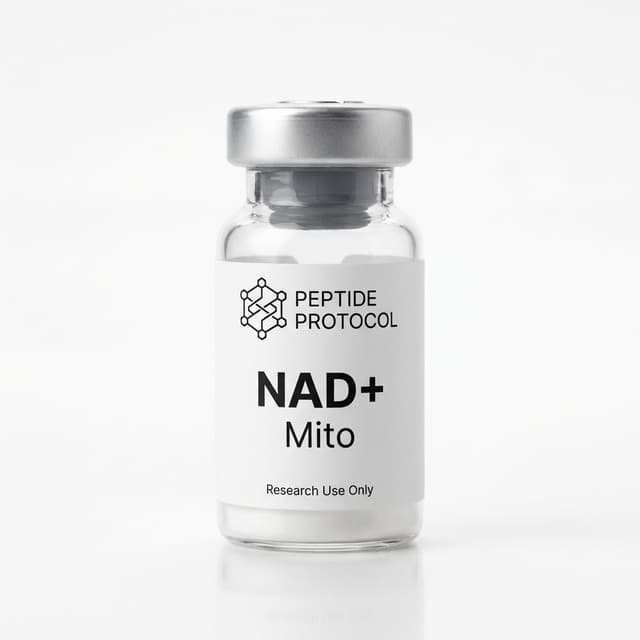
NAD+
Quick Reference
- Default Dose
- 25 mg
- Frequency
- Daily
- Timing
- AM
Storage
- Lyophilized
- -20°C
- Reconstituted
- 2-8°C
For Practitioners
Interested in offering research-grade compounds through your practice? Learn about our affiliate program for qualified practitioners.
Find a ProviderPractitioner Information