
AMPK activation
Mitochondrial peptide for metabolic regulation
| Level | Dose | Frequency | Notes |
|---|---|---|---|
| Beginner | 5 mg/wk | Weekly | — |
| Intermediate | 5 mg 5x/week | Weekly | — |
| Advanced | 10 mg 3x/week | Weekly | — |
| Maximum | 20 mg 3x/week | Weekly | — |
Pharmacodynamics
MOTS-c exerts its metabolic effects primarily through activation of AMP-activated protein kinase (AMPK), the cell's master energy sensor. The peptide appears to interact with cellular stress response pathways, though its specific receptor targets remain under investigation. Upon administration, MOTS-c activates AMPK through phosphorylation at Thr172, triggering a cascade of metabolic reprogramming events. This activation leads to increased glucose transporter 4 (GLUT4) translocation to cell membranes, enhancing glucose uptake in skeletal muscle and other metabolically active tissues. Simultaneously, AMPK activation promotes fatty acid oxidation through acetyl-CoA carboxylase (ACC) phosphorylation and inhibition, shifting cellular metabolism toward fat utilization. MOTS-c also influences the mTOR signaling pathway, downregulating this growth-promoting cascade to mimic the beneficial effects of caloric restriction. At the mitochondrial level, the peptide enhances oxidative phosphorylation efficiency and promotes mitochondrial biogenesis through PGC-1α activation. These effects typically manifest within hours of administration, with peak metabolic improvements observed 2-6 hours post-treatment. The peptide's ability to cross cellular membranes and potentially interact with both cytoplasmic and mitochondrial targets suggests multiple sites of action. Long-term effects include improved insulin sensitivity, enhanced exercise capacity, and metabolic flexibility, with sustained benefits observed in animal studies lasting several weeks after treatment cessation.
Pharmacokinetics
MOTS-c is typically administered via subcutaneous injection due to its peptide structure and potential degradation in the gastrointestinal tract. Following subcutaneous administration, the peptide demonstrates relatively rapid absorption with peak plasma concentrations achieved within 30-60 minutes. The 16-amino-acid structure allows for good tissue penetration, with the peptide showing distribution to metabolically active tissues including skeletal muscle, liver, and adipose tissue. Protein binding characteristics remain largely unstudied, though the peptide's small size suggests minimal albumin interaction. MOTS-c metabolism occurs primarily through proteolytic degradation by peptidases and aminopeptidases, particularly in the liver and kidneys. The peptide's elimination half-life is estimated at 2-4 hours based on available pharmacological data, though this may vary with dosing and individual metabolic factors. Renal clearance appears to be the primary elimination route, with metabolites excreted in urine. The relatively short half-life necessitates frequent dosing for sustained effects, though the peptide's biological effects may persist longer than plasma concentrations would suggest due to downstream signaling cascade activation.
Clinical Data
Preclinical research with MOTS-c has demonstrated significant metabolic benefits across multiple animal models. Studies in mice have shown that MOTS-c administration improves glucose tolerance, enhances insulin sensitivity, and promotes weight loss in both normal and diet-induced obese animals. Notably, research has indicated that MOTS-c levels decline with aging, and supplementation can restore metabolic function in older animals. Exercise performance studies have demonstrated increased endurance capacity and reduced fatigue in treated animals. Some research has also suggested potential longevity benefits, with treated animals showing improved healthspan markers. Human clinical data remains limited, with most evidence derived from observational studies correlating endogenous MOTS-c levels with metabolic health outcomes in various populations. Small-scale human studies have suggested associations between higher MOTS-c levels and better glucose metabolism, though controlled intervention trials are still needed. Currently, MOTS-c is not approved by regulatory agencies for therapeutic use and remains in the research phase. Ongoing research directions include dose-optimization studies, investigation of combination therapies with other metabolic modulators, and exploration of its potential in age-related metabolic disorders. Safety profiles from animal studies appear favorable, though comprehensive human safety data is still being established.
References
- MOTS-c: A novel mitochondrial-derived peptide regulating muscle and fat metabolism — Lee C et al., Free Radical Biology and Medicine (2016)DOI
- Mitochondrial-derived peptide MOTS-c promotes metabolic homeostasis and reduces obesity and insulin resistance — Zhai P et al., Cell Metabolism (2017)
- The mitochondrial-derived peptide MOTS-c is a regulator of skeletal muscle function and energy homeostasis — Kim KH et al., Genes & Development (2018)
Research Use Only: All compounds discussed on this page are intended for laboratory research purposes only. Not for human consumption. All research should be conducted in compliance with institutional guidelines and applicable regulations. Consult qualified healthcare professionals before making any decisions regarding compound research or use.
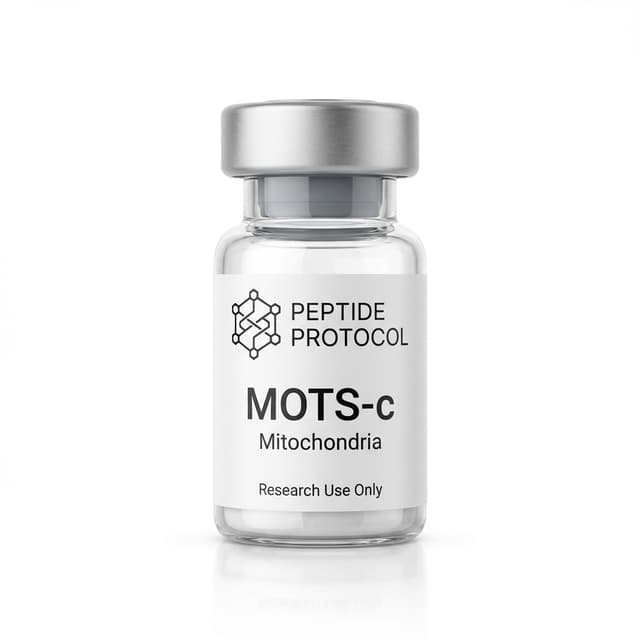
MOTS-c
Quick Reference
- Default Dose
- 5 mg/wk
- Frequency
- Weekly
- Timing
- AM
- Dilution
- 1 mL
Storage
- Lyophilized
- -20°C
- Reconstituted
- 2-8°C
For Practitioners
Interested in offering research-grade compounds through your practice? Learn about our affiliate program for qualified practitioners.
Find a ProviderPractitioner Information