
Tanning well-being
Melanocortin agonist for tanning
| Level | Dose | Frequency | Notes |
|---|---|---|---|
| Beginner | 250 mcg | Daily | — |
| Intermediate | 500 mcg | Daily | — |
| Advanced | 1 mg | Daily | — |
| Maximum | 2mg | Daily | — |
Pharmacodynamics
Melanotan I (MT-1) is a synthetic analog of α-melanocyte stimulating hormone (α-MSH) that exerts its primary effects through activation of melanocortin receptors, particularly MC1R and MC4R. The peptide binds to MC1R receptors located on melanocytes in the skin and hair follicles, triggering a cascade of intracellular signaling events. Upon receptor binding, MT-1 activates adenylyl cyclase through G-protein coupled receptor mechanisms, leading to increased cyclic adenosine monophosphate (cAMP) levels within the cell. This elevation in cAMP activates protein kinase A (PKA), which subsequently phosphorylates and activates the transcription factor CREB (cAMP response element-binding protein). Activated CREB promotes transcription of melanogenic enzymes, including tyrosinase, tyrosinase-related protein 1 (TRP-1), and tyrosinase-related protein 2 (TRP-2). These enzymes catalyze the conversion of tyrosine to melanin through the melanogenesis pathway. The increased melanin production and transfer to keratinocytes results in skin darkening and enhanced photoprotection. MT-1 also demonstrates binding affinity for MC4R receptors in the central nervous system, potentially influencing appetite regulation and energy homeostasis, though these effects are secondary to its melanogenic actions. The time course of visible tanning effects typically begins within 24-48 hours of administration, with peak effects observed after several days of repeated dosing. The melanogenic response is dose-dependent and shows individual variation based on baseline skin pigmentation and genetic factors affecting melanocortin receptor sensitivity.
Pharmacokinetics
MT-1 exhibits rapid absorption following subcutaneous administration, with peak plasma concentrations typically achieved within 1-2 hours. The peptide demonstrates limited oral bioavailability due to enzymatic degradation in the gastrointestinal tract, making parenteral routes the preferred method of delivery. Following systemic circulation, MT-1 distributes to target tissues including skin, where it accumulates in melanocyte-rich areas. The peptide shows moderate protein binding in plasma, primarily to albumin. Metabolism occurs through enzymatic cleavage by peptidases and proteases, particularly those found in liver, kidney, and peripheral tissues. The primary metabolic pathway involves sequential amino acid cleavage from both termini of the peptide chain. Elimination follows first-order kinetics with an estimated plasma half-life ranging from 20-30 minutes for the intact peptide, though biological effects persist significantly longer due to downstream signaling cascade activation. Renal clearance accounts for the majority of elimination, with both unchanged peptide and metabolites appearing in urine. The relatively short plasma half-life necessitates frequent dosing regimens to maintain therapeutic effects. Individual pharmacokinetic parameters may vary based on factors including body composition, renal function, and injection site characteristics.
Clinical Data
Preclinical studies in animal models have demonstrated MT-1's ability to induce melanogenesis and provide photoprotective effects against UV radiation. Research in mice and other laboratory animals has shown dose-dependent increases in skin pigmentation and reduced susceptibility to UV-induced skin damage. However, comprehensive human clinical trial data for MT-1 specifically remains limited in the peer-reviewed literature. Most available human data comes from small-scale studies and case reports rather than large, controlled clinical trials. The regulatory status of MT-1 varies by jurisdiction, with most regulatory agencies not approving it for cosmetic tanning purposes due to insufficient safety and efficacy data. The compound is not approved by the FDA for human use and is considered an investigational substance. Research has identified potential safety concerns including nausea, facial flushing, decreased appetite, and possible effects on libido, though the full safety profile requires further investigation. Current research directions focus on better understanding the long-term effects of melanocortin receptor activation, optimal dosing strategies, and potential therapeutic applications beyond cosmetic tanning. Some investigations are exploring its potential role in photoprotection for individuals with certain photosensitivity disorders, though this remains experimental. The lack of standardized manufacturing and quality control in non-regulated markets presents additional safety considerations for potential users.
References
- Melanocortin-1 receptor: structure, function, and regulation — Cone RD et al., Recent Progress in Hormone Research (1996)PubMed
- The melanocortin receptors: agonists, antagonists, and the hormonal control of pigmentation — Robbins LS et al., Recent Progress in Hormone Research (1993)PubMed
- Molecular basis of mouse Agouti gene expression: altered temporal and spatial expression in lethal yellow (Ay) mutants — Bultman SJ et al., Development (1994)PubMed
Research Use Only: All compounds discussed on this page are intended for laboratory research purposes only. Not for human consumption. All research should be conducted in compliance with institutional guidelines and applicable regulations. Consult qualified healthcare professionals before making any decisions regarding compound research or use.
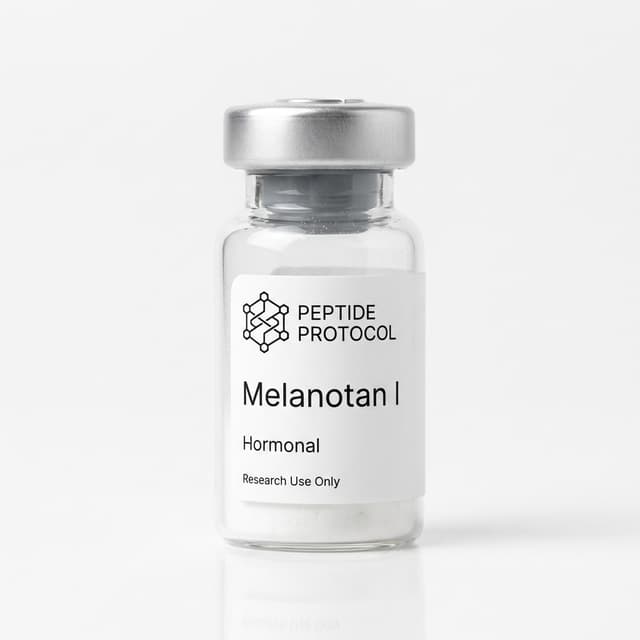
Melanotan I
Quick Reference
- Default Dose
- 250 mcg
- Frequency
- Daily
- Timing
- PM
- Dilution
- 2 mL
Storage
- Lyophilized
- -20°C
- Reconstituted
- 2-8°C
For Practitioners
Interested in offering research-grade compounds through your practice? Learn about our affiliate program for qualified practitioners.
Find a ProviderPractitioner Information