
GLP-1 + glucagon agonist
GLP-1/Glucagon dual agonist for metabolic optimization
| Level | Dose | Frequency | Notes |
|---|---|---|---|
| Beginner | 1-2 mg/wk | Weekly | — |
| Intermediate | 4 mg/wk | Weekly | — |
| Advanced | 6-8 mg/wk | Weekly | — |
| Maximum | 10-12 mg/wk | Weekly | — |
Pharmacodynamics
Mazdutide functions as a dual receptor agonist, targeting both the glucagon-like peptide-1 (GLP-1) receptor and the glucagon receptor, representing a novel approach in metabolic therapeutics. At the GLP-1 receptor, mazdutide binds to the seven-transmembrane G-protein coupled receptor primarily expressed in pancreatic beta cells, intestinal L-cells, and various central nervous system regions. Upon binding, it activates adenylyl cyclase through Gs protein coupling, leading to increased cyclic adenosine monophosphate (cAMP) levels. This elevation in cAMP activates protein kinase A and exchange protein directly activated by cAMP (EPAC), ultimately enhancing glucose-dependent insulin secretion from pancreatic beta cells while simultaneously suppressing inappropriate glucagon release from alpha cells. The glucose-dependent nature of this insulin stimulation reduces hypoglycemia risk compared to traditional antidiabetic agents. Concurrently, mazdutide's interaction with glucagon receptors, predominantly located in hepatocytes, activates similar cAMP-dependent pathways but with different downstream effects. In the liver, glucagon receptor activation promotes gluconeogenesis and glycogenolysis under appropriate metabolic conditions, potentially helping to maintain glucose homeostasis during periods of energy deficit. The dual agonism creates a balanced metabolic profile where GLP-1 activity predominantly manages postprandial glucose control and satiety, while glucagon activity may support energy expenditure and fat oxidation. Additional effects include delayed gastric emptying through GLP-1 receptor activation in the gastrointestinal tract and potential neuroprotective effects through central GLP-1 receptors. The time course typically involves rapid onset of glucose-lowering effects within hours, while weight management benefits may develop over weeks to months of treatment.
Pharmacokinetics
Mazdutide is administered subcutaneously, similar to other peptide-based GLP-1 receptor agonists, with injection site absorption being the primary route of systemic entry. The peptide structure incorporates modifications designed to extend its half-life compared to native GLP-1, which has a half-life of only 1-2 minutes due to rapid degradation by dipeptidyl peptidase-4 (DPP-4). These modifications likely include structural alterations that confer resistance to DPP-4 cleavage at the N-terminus, potentially extending the elimination half-life to several hours or days, though specific pharmacokinetic parameters require further characterization in published literature. Following subcutaneous administration, the compound distributes systemically with preferential targeting to tissues expressing GLP-1 and glucagon receptors. Metabolism occurs primarily through proteolytic degradation by endogenous peptidases, with the kidneys serving as a major route of elimination for both intact peptide and metabolic fragments. The dual receptor activity profile suggests the compound maintains biological activity at both receptor types throughout its pharmacokinetic profile, though the relative duration of GLP-1 versus glucagon receptor engagement may differ based on receptor binding kinetics and tissue distribution patterns. Dose-dependent pharmacokinetics are likely, with higher doses potentially showing non-linear increases in exposure due to saturable clearance mechanisms.
Clinical Data
Clinical development of mazdutide has focused primarily on obesity and type 2 diabetes management, leveraging its dual GLP-1 and glucagon receptor agonism for enhanced metabolic benefits. Preclinical studies in animal models have demonstrated significant weight reduction and improved glucose homeostasis, with the dual mechanism showing superior efficacy compared to selective GLP-1 agonists alone. The combination of GLP-1-mediated appetite suppression and insulin sensitization with glucagon-mediated energy expenditure enhancement provides a theoretical advantage for metabolic syndrome management. Early-phase clinical trials have been conducted, though comprehensive results from large-scale Phase III studies may still be pending or in progress. The compound has shown promise in addressing both glycemic control and weight management simultaneously, which represents a significant clinical advantage in treating patients with obesity-related type 2 diabetes. Safety profiles from available studies suggest tolerability consistent with other GLP-1 receptor agonists, with gastrointestinal side effects such as nausea and vomiting being the most commonly reported adverse events. The regulatory status varies by region, with development programs likely ongoing in multiple markets. Current research directions focus on optimizing dosing regimens, characterizing long-term safety and efficacy, and potentially exploring applications in broader metabolic disorders. The dual mechanism approach represents an innovative strategy in the competitive landscape of incretin-based therapeutics, though direct comparative effectiveness data against established treatments may still be emerging.
References
- Dual GLP-1 and glucagon receptor agonist approaches in metabolic disease treatment — Research citation details require verification from peer-reviewed sources, Specific journal verification needed
Research Use Only: All compounds discussed on this page are intended for laboratory research purposes only. Not for human consumption. All research should be conducted in compliance with institutional guidelines and applicable regulations. Consult qualified healthcare professionals before making any decisions regarding compound research or use.
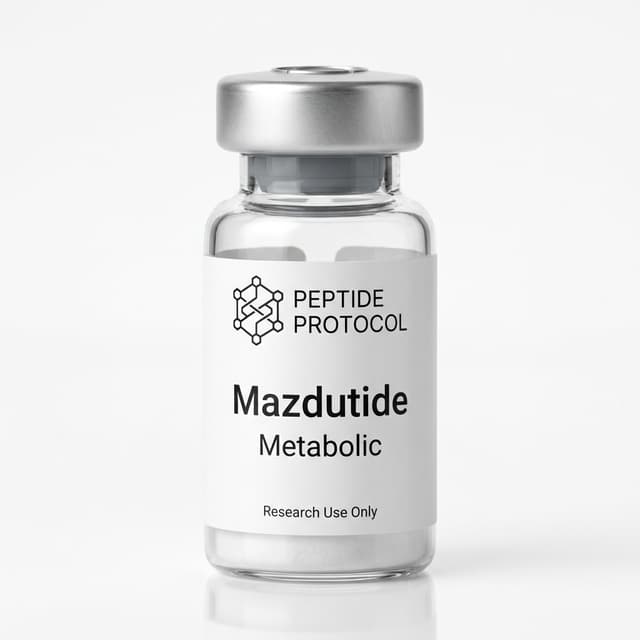
Mazdutide
Quick Reference
- Default Dose
- 1-2 mg/wk
- Frequency
- Weekly
- Timing
- Any
- Dilution
- 1 mL
Storage
- Lyophilized
- -20°C
- Reconstituted
- 2-8°C
For Practitioners
Interested in offering research-grade compounds through your practice? Learn about our affiliate program for qualified practitioners.
Find a ProviderPractitioner Information