
Pulsatile GH release
Selective GH secretagogue for clean GH pulses
Research Background
Ipamorelin is a synthetic growth hormone secretagogue peptide (GHS) designed to stimulate the body’s natural release of growth hormone (GH). It was developed in the late 1990s as part of a class of compounds intended to mimic the action of the hunger hormone Ghrelin without many of the unwanted hormonal side effects seen in earlier GH-stimulating drugs. Unlike first-generation secretagogues, Ipamorelin was engineered to be highly selective, targeting the Growth Hormone Secretagogue Receptor (GHS-R1a) in the pituitary and hypothalamus. This allows it to stimulate pulsatile growth hormone release while avoiding significant stimulation of other pituitary hormones such as cortisol or prolactin. Development History Ipamorelin was discovered through research into ghrelin-mimetic peptides aimed at increasing endogenous growth hormone production. Key milestones: • Developed by researchers at **Novo Nordisk and Zealand Pharma during work on ghrelin receptor agonists. • Designed as a third-generation GH secretagogue following earlier peptides like GHRP‑2 and GHRP‑6. • Early research focused on growth hormone deficiency, muscle wasting, and aging-related GH decline. • Demonstrated improved selectivity compared with older GHRPs, meaning fewer side-effects related to appetite stimulation or stress hormones. While widely used in research and wellness protocols today, Ipamorelin never progressed to full commercial pharmaceutical approval, largely because recombinant **Human Growth Hormone therapies dominated the market. Mechanism of Action Ipamorelin works by activating the ghrelin receptor (GHS-R1a), which triggers a signaling cascade leading to growth hormone secretion. Mechanistic sequence: Binding to GHS-R1a receptor in the hypothalamus and pituitary Stimulation of Growth Hormone Releasing Hormone (GHRH) signaling Pulsatile release of Growth Hormone (GH) from the anterior pituitary GH stimulates production of Insulin‑like Growth Factor 1 (IGF-1) primarily in the liver IGF-1 mediates systemic effects such as tissue repair, fat metabolism, and muscle protein synthesis Important feature: Ipamorelin mimics natural GH pulsatility, meaning it tends to enhance the body's own rhythmic hormone release rather than forcing constant supraphysiologic GH levels.
| Level | Dose | Frequency | Notes |
|---|---|---|---|
| Beginner | 150 mcg | Daily | AM |
| Intermediate | 300 mcg 1-2x/day | Daily | AM |
| Advanced | 300 mcg 2x/day | Daily | — |
| Maximum | 500 mcg 1-3x/day | Daily | 3x/day |
Pharmacodynamics
Ipamorelin exerts its primary effects through selective activation of the ghrelin receptor (GHSR-1a), a G-protein coupled receptor predominantly expressed on pituitary somatotroph cells. Upon binding to GHSR-1a, ipamorelin triggers activation of the Gq/11 signaling pathway, leading to phospholipase C activation and subsequent generation of inositol trisphosphate (IP3) and diacylglycerol (DAG). This cascade results in calcium mobilization from intracellular stores and protein kinase C activation, ultimately stimulating growth hormone (GH) release through exocytosis of secretory vesicles. Additionally, the receptor coupling involves cAMP-dependent pathways through Gs proteins, contributing to protein kinase A activation. The selectivity of ipamorelin for GHSR-1a is notable, as it demonstrates minimal cross-reactivity with other receptors involved in hormone regulation, such as those controlling cortisol and prolactin release. This selectivity translates to a more focused physiological response compared to earlier growth hormone releasing peptides. The downstream effects of GH release include hepatic stimulation of insulin-like growth factor-1 (IGF-1) production, which mediates many of the anabolic effects associated with ipamorelin administration. The pulsatile nature of GH release induced by ipamorelin mimics physiological secretion patterns, maintaining the natural feedback mechanisms that regulate growth hormone homeostasis. Peak GH levels typically occur 30-60 minutes post-administration, with effects lasting 2-3 hours, preserving the circadian rhythm of endogenous GH secretion.
Pharmacokinetics
Ipamorelin demonstrates limited oral bioavailability due to peptide degradation in the gastrointestinal tract, necessitating subcutaneous or intravenous administration for optimal efficacy. Following subcutaneous injection, the peptide shows rapid absorption with peak plasma concentrations achieved within 15-30 minutes. The distribution profile indicates moderate tissue penetration, with the compound readily crossing capillary barriers to reach target tissues. Plasma protein binding appears to be minimal based on the peptide's hydrophilic characteristics and small molecular size. Metabolism occurs primarily through enzymatic cleavage by peptidases and proteases, particularly dipeptidyl peptidase-IV (DPP-IV) and other serum peptidases that recognize specific amino acid sequences within the pentapeptide structure. The elimination half-life is relatively short, estimated at approximately 2-3 hours in human subjects, consistent with typical peptide pharmacokinetics. Clearance occurs through both renal filtration and hepatic metabolism, with degraded peptide fragments eliminated via normal amino acid metabolic pathways. The rapid clearance profile supports the need for frequent dosing to maintain therapeutic effects, though this characteristic also contributes to the favorable safety profile by minimizing accumulation and prolonged hormonal stimulation.
Clinical Data
Preclinical studies in animal models have demonstrated ipamorelin's ability to stimulate growth hormone release in a dose-dependent manner, with effects observed in rodent, porcine, and non-human primate models. These studies consistently showed increases in plasma GH levels 15-30 minutes post-administration, with corresponding elevations in IGF-1 observed over 24-48 hours. Safety assessments in animal models indicated minimal effects on cortisol, prolactin, and ACTH levels, distinguishing ipamorelin from earlier GHRP compounds that showed broader hormonal effects. Limited human studies have been conducted, primarily focusing on pharmacokinetic profiles and acute GH response in healthy volunteers. These preliminary human data confirm the peptide's ability to stimulate GH release with a time course similar to that observed in animal studies. Currently, ipamorelin is not approved by major regulatory agencies such as the FDA or EMA for therapeutic use, remaining classified as a research compound. The peptide has attracted attention in sports medicine and anti-aging research communities, though comprehensive clinical trials evaluating long-term efficacy and safety in specific patient populations are lacking. Ongoing research directions include investigations into potential applications for growth hormone deficiency, age-related muscle wasting, and recovery enhancement in athletic populations, though these studies remain in early phases.
References
- Ipamorelin, the first selective growth hormone secretagogue — Raun K et al., European Journal of Endocrinology (1998)
- In vitro and in vivo pharmacological characterization of ipamorelin, a new growth hormone-releasing peptide — Johansen PB et al., European Journal of Pharmacology (1999)
- Growth hormone secretagogues: characterization, efficacy, and minimal bioactive conformations — Ankersen M et al., Proceedings of the National Academy of Sciences (1998)
Research Use Only: All compounds discussed on this page are intended for laboratory research purposes only. Not for human consumption. All research should be conducted in compliance with institutional guidelines and applicable regulations. Consult qualified healthcare professionals before making any decisions regarding compound research or use.
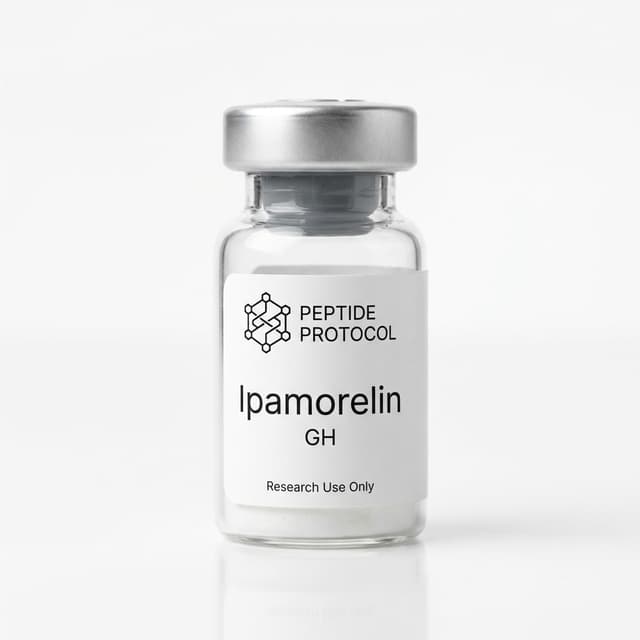
Ipamorelin
Quick Reference
- Default Dose
- 150 mcg
- Frequency
- Daily
- Timing
- AM + PM
- Dilution
- 2 mL
Storage
- Lyophilized
- -20°C
- Reconstituted
- 2-8°C
For Practitioners
Interested in offering research-grade compounds through your practice? Learn about our affiliate program for qualified practitioners.
Find a ProviderPractitioner Information