
Growth, hyperplasia
Long-acting IGF-1 for growth and hyperplasia
| Level | Dose | Frequency | Notes |
|---|---|---|---|
| Beginner | 25 mcg | Post-workout | — |
| Intermediate | 50 mcg | Post-workout | — |
| Advanced | 100 mcg | Post-workout | — |
| Maximum | 250 mcg | Post-workout | — |
Pharmacodynamics
IGF-1 LR3 (Long Arg3-Insulin-like Growth Factor-1) is a synthetic analog of human IGF-1 with modified amino acid sequences that significantly enhance its biological activity. The peptide binds primarily to the IGF-1 receptor (IGF-1R), a transmembrane tyrosine kinase receptor that initiates multiple downstream signaling cascades upon activation. The key modification in LR3 is the substitution of glutamic acid with arginine at position 3 and an N-terminal extension of 13 amino acids, which dramatically reduces its binding affinity to IGF-binding proteins (IGFBPs) that normally sequester and inactivate IGF-1. Upon binding to IGF-1R, the receptor undergoes autophosphorylation and recruits insulin receptor substrates (IRS-1 and IRS-2), which then activate two primary pathways: the PI3K/Akt/mTOR pathway responsible for protein synthesis, cell growth, and survival, and the MAPK/ERK pathway that promotes cell proliferation and differentiation. The PI3K/Akt signaling particularly drives mTOR activation, leading to increased ribosomal protein S6 kinase 1 (S6K1) and eukaryotic initiation factor 4E-binding protein 1 (4E-BP1) phosphorylation, ultimately enhancing protein translation. In muscle tissue, this results in increased myofibrillar protein synthesis and satellite cell activation, contributing to both hypertrophy (increased cell size) and hyperplasia (increased cell number). The peptide also promotes glucose uptake through GLUT4 translocation and enhances glycogen synthesis, while simultaneously promoting lipolysis in adipose tissue.
Pharmacokinetics
IGF-1 LR3 is typically administered via subcutaneous or intramuscular injection due to its peptide structure, which would be degraded by gastrointestinal enzymes if taken orally. Following injection, the peptide demonstrates rapid absorption into systemic circulation. The critical pharmacokinetic advantage of IGF-1 LR3 over native IGF-1 lies in its dramatically extended half-life of approximately 20-30 hours compared to 10-20 minutes for endogenous IGF-1. This extended duration results from its reduced binding affinity (approximately 100-fold lower) to IGF-binding proteins, particularly IGFBP-3, which normally sequester IGF-1 and facilitate its clearance. The peptide distributes systemically but shows preferential uptake in tissues with high IGF-1 receptor density, including skeletal muscle, liver, and various other tissues. Metabolism occurs primarily through proteolytic degradation by peptidases and proteases in the liver and kidneys. The reduced IGFBP binding also means more free, bioactive peptide remains available for receptor interaction throughout the circulation period. Elimination occurs through renal filtration and hepatic metabolism, with the extended half-life allowing for less frequent dosing compared to native IGF-1.
Clinical Data
Research on IGF-1 LR3 has been primarily conducted in preclinical animal models, with limited human clinical data available in peer-reviewed literature. Animal studies have demonstrated significant effects on muscle growth, with research in various species showing enhanced muscle fiber cross-sectional area and increased satellite cell proliferation. Studies in livestock and laboratory animals have consistently shown improvements in lean body mass and feed efficiency. However, comprehensive human clinical trials examining safety and efficacy profiles remain limited in the published literature. The regulatory status of IGF-1 LR3 varies by jurisdiction, but it is not approved by major regulatory agencies like the FDA or EMA for therapeutic use in humans. The peptide is primarily available through research chemical suppliers and is sometimes used in veterinary applications. Current research interests focus on understanding its potential therapeutic applications for muscle wasting conditions, age-related sarcopenia, and metabolic disorders, though these applications remain investigational. Safety considerations include potential effects on glucose homeostasis and concerns about long-term exposure to elevated IGF-1 signaling. The lack of extensive human safety data and long-term studies represents a significant limitation in the current research landscape.
References
- Long R3 insulin-like growth factor-I improves food utilization, body composition, and growth of turkeys — Goddard C et al., Journal of Applied Poultry Research (1999)
- Insulin-like growth factor-I receptor signaling in mammalian muscle regeneration — Barton ER et al., Journal of Applied Physiology (2002)PubMed
- The role of IGF-1 in muscle development and growth — Glass DJ, Novartis Foundation Symposium (2003)PubMed
Research Use Only: All compounds discussed on this page are intended for laboratory research purposes only. Not for human consumption. All research should be conducted in compliance with institutional guidelines and applicable regulations. Consult qualified healthcare professionals before making any decisions regarding compound research or use.
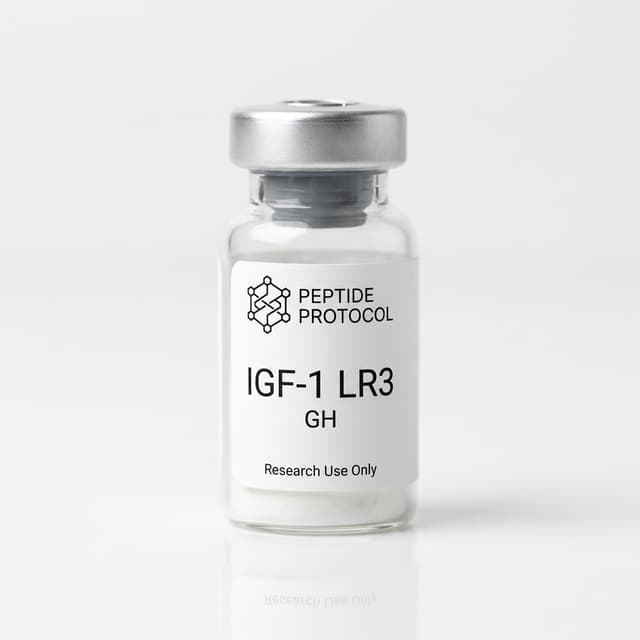
IGF-1 LR3
Quick Reference
- Default Dose
- 25 mcg
- Frequency
- Post-workout
- Timing
- Pre-workout
- Dilution
- 1 mL
Storage
- Lyophilized
- -20°C
- Reconstituted
- 2-8°C
For Practitioners
Interested in offering research-grade compounds through your practice? Learn about our affiliate program for qualified practitioners.
Find a ProviderPractitioner Information