
Muscle, fat loss, recovery
Human Growth Hormone for muscle, fat loss, and recovery
Research Background
HGH Fragment 176–191 is a modified peptide derived from the fat-burning region of human growth hormone. It contains the 176th through 191st amino acids of the Human Growth Hormone (HGH) molecule. Researchers isolated this section because it appeared to be responsible for HGH’s lipolytic (fat-breaking) activity while avoiding the hormone’s growth-promoting and insulin-disrupting effects. In simple terms: Full HGH → many effects (growth, IGF-1, insulin effects) Fragment 176-191 → mostly fat metabolism This peptide was later developed into a drug candidate called AOD-9604. Development History HGH Fragment research began as scientists attempted to isolate the metabolic portion of growth hormone without the side effects. Key milestones: • Developed by Metabolic Pharmaceuticals in Australia. • Studied extensively for obesity treatment. • Entered human clinical trials in the early 2000s. • Demonstrated fat-loss activity without affecting blood sugar or growth pathways. Because it does not significantly increase IGF-1, it avoids many of the safety concerns associated with HGH therapy. Mechanism of Action HGH Fragment primarily affects fat cells (adipocytes). Mechanism sequence: Stimulates lipolysis – the breakdown of stored triglycerides in fat cells Inhibits lipogenesis – prevents new fat storage Activates metabolic pathways involving Hormone-Sensitive Lipase Enhances fatty acid release from adipose tissue Important distinction: It does not significantly activate the GH receptor responsible for growth or IGF-1 elevation. This makes it metabolically targeted rather than anabolic.
| Level | Dose | Frequency | Notes |
|---|---|---|---|
| Beginner | 1 IU | 5 days on, 2 off | — |
| Intermediate | 2 IU | 5 days on, 2 off | — |
| Advanced | 3 IU | 5 days on, 2 off | — |
| Maximum | 4 IU | 5 days on, 2 off | — |
Pharmacodynamics
Human growth hormone (HGH), also known as somatropin, exerts its effects primarily through binding to the growth hormone receptor (GHR), a member of the cytokine receptor superfamily. The GHR is widely distributed across tissues including liver, muscle, adipose tissue, and bone. Upon binding, HGH induces receptor dimerization and activation of the JAK2-STAT5 signaling pathway. This leads to phosphorylation of STAT5, which translocates to the nucleus and activates transcription of insulin-like growth factor-1 (IGF-1) and other growth-promoting genes. IGF-1 production, primarily in the liver, mediates many of the anabolic effects of GH through autocrine and paracrine mechanisms. In muscle tissue, GH stimulates protein synthesis, amino acid uptake, and satellite cell activation, contributing to muscle growth and repair. The hormone also activates hormone-sensitive lipase in adipocytes, promoting lipolysis and fat oxidation while simultaneously inhibiting lipogenesis. GH exhibits direct anti-insulin effects on glucose metabolism, increasing gluconeogenesis and reducing glucose uptake in peripheral tissues. The temporal pattern of GH action involves both acute effects (within hours) such as lipolysis and metabolic changes, and chronic anabolic effects (days to weeks) mediated primarily through IGF-1. Peak tissue responses typically occur 4-8 hours post-administration, with sustained elevations in IGF-1 lasting 12-24 hours.
Pharmacokinetics
Somatropin is administered via subcutaneous injection due to its protein nature, which would be degraded if taken orally. Following subcutaneous administration, bioavailability ranges from 70-90%, with peak serum concentrations achieved within 2-6 hours. The hormone distributes rapidly throughout the body, with a volume of distribution of approximately 0.07 L/kg, indicating primarily extracellular distribution. Protein binding is minimal, allowing for rapid tissue penetration and receptor binding. GH metabolism occurs primarily in the liver and kidneys through proteolytic cleavage and deamidation. The elimination half-life varies by route of administration, with subcutaneous injection yielding a half-life of 3-5 hours, compared to 20-30 minutes following intravenous administration. Renal clearance accounts for approximately 0.4 L/hr/kg, with both glomerular filtration and active tubular secretion contributing to elimination. Age-related changes in pharmacokinetics include reduced clearance in elderly populations, while renal or hepatic impairment can significantly prolong elimination. The relatively short half-life necessitates daily administration for therapeutic applications, typically administered in the evening to mimic physiological nocturnal GH release patterns.
Clinical Data
Extensive clinical research has established somatropin's efficacy in FDA-approved indications including growth hormone deficiency in children and adults, with robust evidence for improved body composition, bone density, and quality of life measures. In adult GH deficiency studies, treatment consistently demonstrates reduced visceral adiposity, increased lean body mass, and improved exercise capacity over 6-12 months of therapy. Preclinical studies in animal models have shown enhanced muscle protein synthesis, accelerated wound healing, and improved metabolic parameters. However, clinical evidence for performance enhancement in healthy individuals remains limited and controversial, with studies showing modest improvements in lean mass but inconsistent effects on strength or athletic performance. The FDA has approved somatropin for specific medical conditions including Prader-Willi syndrome, Turner syndrome, chronic kidney disease, and muscle wasting in HIV patients. Long-term safety data from pediatric growth studies spanning decades indicate generally good tolerability, though potential risks include glucose intolerance, fluid retention, and joint pain. Current regulatory status restricts use to legitimate medical indications, with off-label use for anti-aging or performance enhancement lacking regulatory approval. Ongoing research focuses on optimizing dosing regimens, investigating combination therapies, and developing longer-acting formulations to improve patient compliance and outcomes.
References
- Growth hormone, IGF-I, and the metabolic syndrome — Bartke A et al., Journal of Clinical Investigation (2013)
- Consensus guidelines for the diagnosis and treatment of growth hormone deficiency in childhood and adolescence — Clayton PE et al., Hormone Research in Paediatrics (2007)
- Effects of human growth hormone in men over 60 years old — Rudman D et al., New England Journal of Medicine (1990)
- Growth hormone and physical performance — Meinhardt U et al., European Journal of Endocrinology (2010)
Research Use Only: All compounds discussed on this page are intended for laboratory research purposes only. Not for human consumption. All research should be conducted in compliance with institutional guidelines and applicable regulations. Consult qualified healthcare professionals before making any decisions regarding compound research or use.
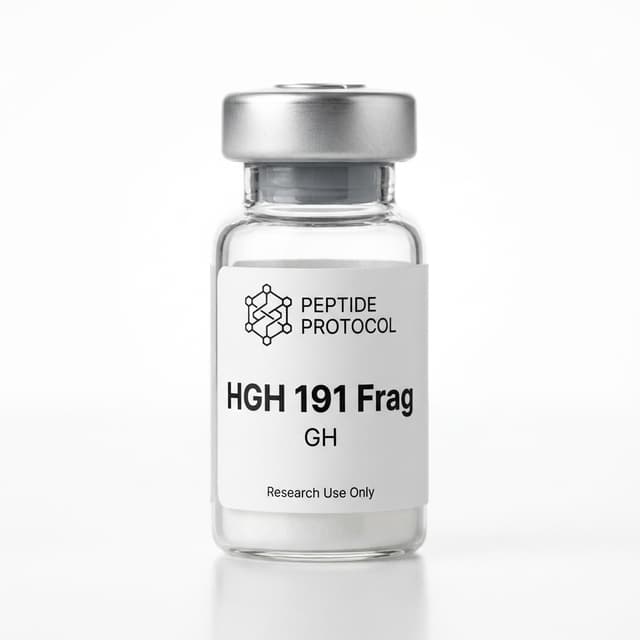
HGH 191 Frag
Quick Reference
- Default Dose
- 1 IU
- Frequency
- 5 days on, 2 off
- Timing
- PM
- Dilution
- 2 mL
Storage
- Lyophilized
- -20°C
- Reconstituted
- 2-8°C
For Practitioners
Interested in offering research-grade compounds through your practice? Learn about our affiliate program for qualified practitioners.
Find a ProviderPractitioner Information