
Master antioxidant
Master antioxidant for cellular protection
| Level | Dose | Frequency | Notes |
|---|---|---|---|
| Beginner | 250 mcg | Daily/IV | — |
| Intermediate | 0.5 mg | Daily/IV | — |
| Advanced | .75 mg | Daily/IV | IV only at end of drip |
| Maximum | 2 mg | Daily/IV | IV only at end of Drip |
Pharmacodynamics
Glutathione (GSH) functions as the cell's master antioxidant through multiple interconnected mechanisms at the molecular level. The tripeptide γ-L-glutamyl-L-cysteinyl-glycine exists predominantly in its reduced form and acts as the primary cellular defense against oxidative stress. At the molecular level, GSH directly scavenges reactive oxygen species (ROS) and reactive nitrogen species through its sulfhydryl group on the cysteine residue, which readily donates electrons to neutralize free radicals. This process converts GSH to its oxidized form (GSSG), which is subsequently reduced back to GSH by glutathione reductase using NADPH as a cofactor. GSH also serves as a cofactor for glutathione peroxidase enzymes, which catalyze the reduction of hydrogen peroxide and lipid hydroperoxides to water and corresponding alcohols. Beyond direct antioxidant activity, GSH plays crucial roles in phase II detoxification reactions through glutathione S-transferase enzymes, conjugating electrophilic compounds for elimination. The peptide modulates cellular signaling pathways including NF-κB, AP-1, and Nrf2 transcription factors, influencing gene expression related to antioxidant defense, inflammation, and cellular survival. GSH maintains protein structure through disulfide bond formation and reduction, supports immune cell function, and regulates nitric oxide homeostasis. Cellular GSH levels directly influence mitochondrial function, DNA repair mechanisms, and apoptotic signaling pathways. The time course of GSH action is rapid for direct ROS scavenging (seconds to minutes) but longer for transcriptional effects and cellular regeneration (hours to days).
Pharmacokinetics
Glutathione exhibits complex pharmacokinetic properties that limit its bioavailability when administered orally. Oral GSH supplementation faces significant challenges due to degradation by γ-glutamyltranspeptidase and peptidases in the gastrointestinal tract, resulting in poor systemic absorption of the intact tripeptide. Studies suggest that oral GSH bioavailability is extremely low, with most of the peptide being broken down into constituent amino acids before systemic absorption. Intravenous administration bypasses these limitations, providing direct systemic delivery with immediate tissue distribution. GSH readily crosses cell membranes through specific transport systems, including organic anion transporters, and distributes widely throughout tissues, with highest concentrations typically found in the liver, lungs, and kidneys. The peptide demonstrates rapid cellular uptake and intracellular regeneration through the γ-glutamyl cycle. Metabolism occurs primarily through enzymatic degradation by γ-glutamyltranspeptidase, cysteinylglycine dipeptidase, and various peptidases, converting GSH to its constituent amino acids for recycling. The plasma half-life of exogenously administered GSH is relatively short, typically measured in minutes to hours, due to rapid tissue uptake and enzymatic degradation. Elimination occurs through both enzymatic breakdown and renal excretion, with metabolites being recycled for endogenous GSH synthesis.
Clinical Data
Preclinical research has extensively documented glutathione's protective effects across multiple disease models, including studies demonstrating hepatoprotective effects in acetaminophen toxicity models, neuroprotective effects in models of Parkinson's disease and stroke, and cardiovascular protective effects in ischemia-reperfusion injury models. Animal studies have consistently shown that GSH supplementation can reduce oxidative damage markers and improve tissue function across various organ systems. Human clinical data remains more limited but includes several notable findings. Small clinical studies have investigated intravenous GSH therapy in Parkinson's disease patients, with some studies reporting improvements in motor symptoms, though larger controlled trials are needed for definitive conclusions. Research in patients with chronic obstructive pulmonary disease has shown that inhaled GSH may improve certain respiratory parameters. Studies in healthy individuals have demonstrated that while oral GSH supplementation may not significantly increase plasma GSH levels, it may influence other biomarkers of oxidative stress. The regulatory status of glutathione varies by jurisdiction and intended use, with GSH being available as a dietary supplement in many countries while also being investigated as a potential therapeutic agent. Current research directions focus on developing more bioavailable formulations, investigating optimal dosing regimens, and conducting larger randomized controlled trials in specific disease populations, particularly neurodegenerative diseases and conditions involving significant oxidative stress.
References
- Glutathione metabolism and its implications for health — Wu G et al., Journal of Nutrition (2004)DOIPubMed
- The role of glutathione in aging and age-related diseases — Sekhar RV et al., Journal of Clinical Medicine (2015)PubMed
- Glutathione supplementation in Parkinson's disease: a pilot study — Sechi G et al., Neurological Sciences (1996)PubMed
- Oral glutathione supplementation: systemic effects on oxidative stress — Richie JP Jr et al., European Journal of Clinical Nutrition (2015)DOIPubMed
Research Use Only: All compounds discussed on this page are intended for laboratory research purposes only. Not for human consumption. All research should be conducted in compliance with institutional guidelines and applicable regulations. Consult qualified healthcare professionals before making any decisions regarding compound research or use.
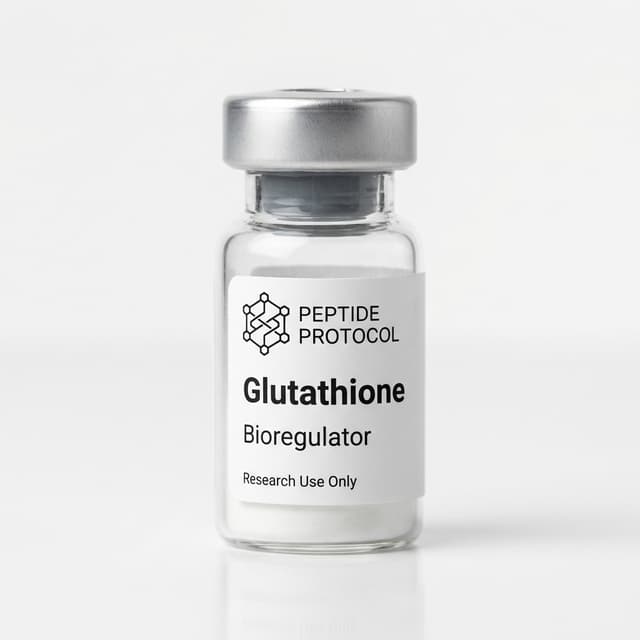
Glutathione
Quick Reference
- Default Dose
- 250 mcg
- Frequency
- Daily/IV
- Timing
- AM
Storage
- Lyophilized
- -20°C
- Reconstituted
- 2-8°C
For Practitioners
Interested in offering research-grade compounds through your practice? Learn about our affiliate program for qualified practitioners.
Find a ProviderPractitioner Information