
GH releasing peptide with appetite stimulation
GH releasing peptide with appetite stimulation
| Level | Dose | Frequency | Notes |
|---|---|---|---|
| Beginner | 200 mcg | 2-3x/day | — |
| Intermediate | 300 mcg | 2-3x/day | — |
| Advanced | 250 mcg 2x/day | 2-3x/day | — |
| Maximum | 500 mg 2-3x/day | 2-3x/day | — |
Pharmacodynamics
GHRP-6 (Growth Hormone Releasing Peptide-6) exerts its biological effects primarily through activation of the ghrelin receptor, also known as the growth hormone secretagogue receptor type 1a (GHSR-1a). This G-protein coupled receptor is expressed in both the hypothalamus and anterior pituitary gland. Upon binding to GHSR-1a, GHRP-6 triggers activation of Gq/11 proteins, leading to increased phospholipase C activity and subsequent elevation of intracellular calcium levels and protein kinase C activation. In the hypothalamus, GHRP-6 stimulates growth hormone-releasing hormone (GHRH) neurons while simultaneously inhibiting somatostatin release, creating a dual mechanism that promotes growth hormone secretion. At the pituitary level, GHRP-6 directly stimulates somatotroph cells to release growth hormone through calcium-dependent exocytosis. The peptide also activates appetite-regulating pathways in the arcuate nucleus, stimulating neuropeptide Y (NPY) and agouti-related peptide (AgRP) neurons while inhibiting pro-opiomelanocortin (POMC) neurons, resulting in increased food intake and appetite stimulation. The growth hormone released following GHRP-6 administration subsequently promotes hepatic insulin-like growth factor-1 (IGF-1) production, mediating many of the downstream anabolic effects. Peak growth hormone levels typically occur 15-60 minutes post-administration, with effects lasting 2-4 hours. The magnitude of response is dose-dependent and shows some variability based on age, nutritional status, and endogenous growth hormone reserves.
Pharmacokinetics
GHRP-6 is typically administered via subcutaneous or intravenous injection due to poor oral bioavailability resulting from peptide degradation in the gastrointestinal tract. Following subcutaneous administration, the peptide demonstrates relatively rapid absorption with peak plasma concentrations achieved within 15-30 minutes. The hexapeptide structure allows for good tissue penetration, though it does not readily cross the blood-brain barrier in significant quantities, relying instead on peripheral GHSR-1a activation to influence central pathways. GHRP-6 undergoes enzymatic degradation primarily through the action of dipeptidyl peptidase-IV (DPP-IV) and other peptidases, which cleave the peptide bonds and render the molecule biologically inactive. The elimination half-life is relatively short, estimated at approximately 0.5-1 hour in most studies, necessitating multiple daily administrations for sustained effects. Renal clearance plays a role in elimination of both intact peptide and metabolic fragments. The rapid clearance profile is typical of small peptide hormones and contributes to the relatively favorable safety profile, as the compound does not accumulate significantly with repeated dosing. Protein binding appears to be minimal, with most circulating GHRP-6 remaining in the free, active form.
Clinical Data
Preclinical studies in various animal models have consistently demonstrated GHRP-6's ability to stimulate growth hormone release and promote appetite. Rodent studies have shown significant increases in food intake, body weight gain, and growth hormone levels following GHRP-6 administration. In aging animal models, the peptide has demonstrated the ability to restore growth hormone responsiveness that typically declines with age. Human clinical data remains limited, with most studies being small-scale investigations focusing on growth hormone release and metabolic effects. Early human studies confirmed the peptide's ability to stimulate growth hormone secretion in healthy adults, with responses being more pronounced in younger individuals and those with normal pituitary function. Some clinical investigations have explored GHRP-6's potential in growth hormone deficiency states and age-related growth hormone decline, though larger controlled trials are needed to establish clinical efficacy and safety profiles. The peptide is not currently approved by major regulatory agencies such as the FDA or EMA for clinical use, remaining in research and investigational status. Current research directions include optimization of dosing regimens, exploration of combination therapies with other growth hormone secretagogues, and investigation of potential therapeutic applications in conditions characterized by growth hormone deficiency, muscle wasting, or appetite disorders. Safety data from available studies suggest a generally well-tolerated profile, though comprehensive long-term safety data is limited.
References
- Growth hormone-releasing peptide-6 stimulates brain glucose uptake in elderly subjects — Copinschi G et al., Journal of Clinical Endocrinology & Metabolism (1997)
- GHRP-6: a potent signal to the natural GH secretory process — Bowers CY et al., European Journal of Endocrinology (1995)
- Growth hormone secretagogues: characterization, efficacy, and minimal bioactive conformations — Smith RG et al., Endocrine Reviews (1997)
- The ghrelin receptor GHSR-1a mediates the growth hormone secretory responses to GHRP-6 — Howard AD et al., Nature Medicine (1996)
Research Use Only: All compounds discussed on this page are intended for laboratory research purposes only. Not for human consumption. All research should be conducted in compliance with institutional guidelines and applicable regulations. Consult qualified healthcare professionals before making any decisions regarding compound research or use.
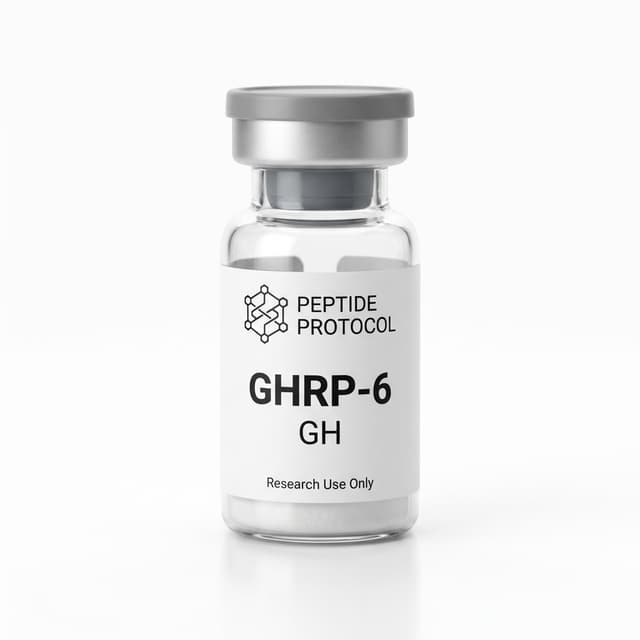
GHRP-6
Quick Reference
- Default Dose
- 200 mcg
- Frequency
- 2-3x/day
- Timing
- AM/PM
- Dilution
- 2 mL
Storage
- Lyophilized
- -20°C
- Reconstituted
- 2-8°C
For Practitioners
Interested in offering research-grade compounds through your practice? Learn about our affiliate program for qualified practitioners.
Find a ProviderPractitioner Information