
Senescent cell apoptosis
Senolytic peptide for cellular rejuvenation
| Level | Dose | Frequency | Notes |
|---|---|---|---|
| Beginner | 2.5 mg | Weekly | — |
| Intermediate | 5 mg | Weekly | — |
| Advanced | 5 mg 2x/week | Weekly | — |
| Maximum | 10 mg 3x/week | Weekly | — |
Pharmacodynamics
FOXO4-DRI (FOXO4-D-Retro-Inverso) is a synthetic peptide designed to selectively induce apoptosis in senescent cells by disrupting the interaction between FOXO4 and p53 transcription factors. Under normal conditions, senescent cells resist apoptosis partly through the nuclear sequestration of p53 by FOXO4, preventing p53 from activating pro-apoptotic pathways. FOXO4-DRI functions as a competitive antagonist, binding to p53 with higher affinity than endogenous FOXO4, thereby displacing FOXO4 from the FOXO4-p53 complex. This displacement allows p53 to translocate from the nucleus to mitochondria, where it initiates the intrinsic apoptotic cascade through interaction with pro-apoptotic proteins such as BAX and BAK. The peptide utilizes a D-retro-inverso modification, where amino acids are replaced with their D-enantiomers in reverse sequence, enhancing proteolytic stability while maintaining the original binding conformation. This modification significantly extends the peptide's half-life compared to the native L-amino acid sequence. The selectivity for senescent cells appears to stem from their higher expression of both FOXO4 and p53, as well as their increased dependence on anti-apoptotic mechanisms for survival. In non-senescent cells, lower expression levels of these targets and different cellular contexts result in minimal cytotoxic effects. The temporal dynamics suggest that apoptotic effects begin within hours of treatment, with maximum efficacy observed at 24-48 hours post-administration, though the exact time course may vary depending on cell type and senescent cell burden.
Pharmacokinetics
FOXO4-DRI has been primarily administered via intravenous and intraperitoneal routes in preclinical studies, though subcutaneous administration has also been explored. The D-retro-inverso modification significantly enhances proteolytic stability compared to conventional L-amino acid peptides, with resistance to common peptidases and proteases extending circulation time. The peptide demonstrates good tissue penetration, with distribution observed in multiple organ systems including liver, kidney, adipose tissue, and skin - tissues where senescent cell accumulation is commonly observed during aging. Protein binding characteristics have not been extensively characterized, though the modified amino acid structure may alter typical peptide-protein interactions. The peptide appears to cross cellular membranes efficiently, likely through endocytic mechanisms, though specific transporters involved remain unclear. Metabolism occurs primarily through peptidase-mediated degradation, though the D-amino acid modifications provide substantial protection against enzymatic cleavage. Elimination half-life estimates from rodent studies suggest a range of 4-8 hours, considerably longer than typical unmodified peptides of similar size. Renal clearance appears to be the primary elimination route, with some hepatic metabolism contributing to total body clearance. The improved pharmacokinetic profile supports less frequent dosing regimens compared to conventional peptide therapeutics, though human pharmacokinetic data remain limited.
Clinical Data
Preclinical research with FOXO4-DRI has demonstrated significant promise in multiple animal models of aging and age-related pathologies. In naturally aged mice, treatment resulted in improved physical fitness, coat condition, and renal function, along with reduced senescent cell markers in various tissues. Studies in prochemotherapy-treated mice showed that FOXO4-DRI could effectively clear chemotherapy-induced senescent cells, potentially reducing long-term treatment-related toxicities. Hair follicle studies demonstrated restoration of hair growth in aged mice, suggesting potential applications in age-related hair loss. The peptide has shown efficacy in models of obesity-related senescence, with improvements in metabolic parameters following senescent cell clearance in adipose tissue. Safety profiles in animal studies have been generally favorable, with selective toxicity toward senescent cells and minimal effects on healthy tissues. However, some studies noted transient effects on rapidly dividing cell populations, suggesting the need for careful dosing optimization. Currently, FOXO4-DRI remains in preclinical development with no reported human clinical trials. Regulatory status is investigational, and the compound has not received approval from any major regulatory agencies for therapeutic use. Ongoing research directions include optimization of delivery methods, combination therapies with other senolytic agents, and exploration of specific age-related disease applications. The development pathway toward clinical translation continues to focus on safety optimization and identification of the most promising therapeutic indications.
References
- Targeted apoptosis of senescent cells restores tissue homeostasis in response to chemotoxicity and aging — Baar MP et al., Cell (2017)DOIPubMed
- FOXO4-DRI alleviates age-related testosterone reduction by specifically inducing apoptosis of senescent Leydig cells — Xing H et al., Aging Cell (2020)DOIPubMed
- Senescent cells promote tissue NAD+ decline during ageing via the activation of CD38+ macrophages — Covarrubias AJ et al., Nature Metabolism (2020)DOIPubMed
- The role of senescent cells in ageing — van Deursen JM, Nature (2014)DOIPubMed
Research Use Only: All compounds discussed on this page are intended for laboratory research purposes only. Not for human consumption. All research should be conducted in compliance with institutional guidelines and applicable regulations. Consult qualified healthcare professionals before making any decisions regarding compound research or use.
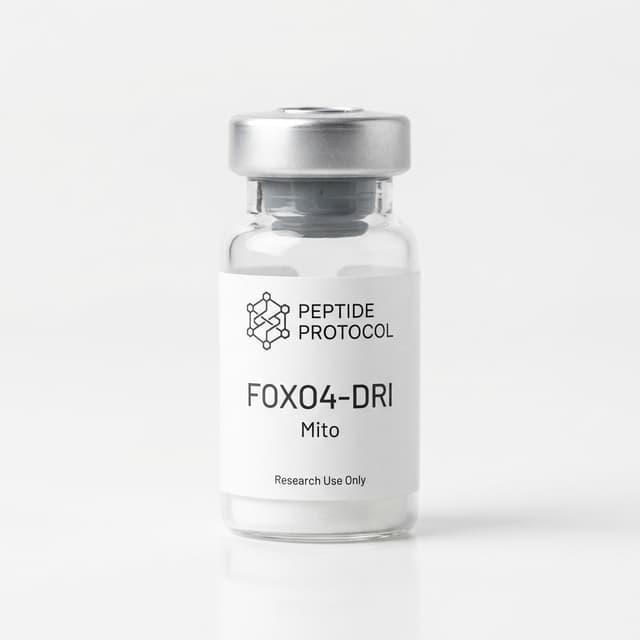
FOXO4-DRI
Quick Reference
- Default Dose
- 2.5 mg
- Frequency
- Weekly
- Timing
- AM
- Dilution
- 2 mL
Storage
- Lyophilized
- -20°C
- Reconstituted
- 2-8°C
For Practitioners
Interested in offering research-grade compounds through your practice? Learn about our affiliate program for qualified practitioners.
Find a ProviderPractitioner Information