
Telomerase activation
Telomerase activator for longevity
| Level | Dose | Frequency | Notes |
|---|---|---|---|
| Beginner | 1 mg | Daily | PM |
| Intermediate | 2 mg | Daily | PM |
| Advanced | 3 mg | Daily | PM |
| Maximum | 5 mg | Daily | PM |
Pharmacodynamics
Epitalon (Ala-Glu-Asp-Gly) exerts its biological effects through multiple interconnected mechanisms, though the precise molecular targets remain incompletely characterized. The primary mechanism involves activation of telomerase, the ribonucleoprotein complex responsible for maintaining telomere length. Epitalon appears to upregulate telomerase reverse transcriptase (TERT) expression and enhance telomerase enzymatic activity, leading to telomere elongation in various cell types including lymphocytes and somatic cells. This effect typically becomes apparent after several days to weeks of treatment. The peptide also modulates pineal gland function, enhancing the synthesis and secretion of melatonin through mechanisms that may involve regulation of N-acetyltransferase and hydroxyindole-O-methyltransferase, key enzymes in melatonin biosynthesis. At the cellular level, epitalon influences gene expression patterns related to circadian rhythm regulation, DNA repair mechanisms, and stress response pathways. The peptide appears to activate antioxidant defense systems, potentially through upregulation of superoxide dismutase and catalase activities. Downstream effects include improved cellular resistance to oxidative stress, enhanced DNA repair capacity, and restoration of normal circadian rhythms. The time course of effects varies by endpoint, with melatonin regulation occurring within days, while telomerase activation and telomere lengthening require weeks to months of treatment. The peptide's small size and hydrophilic nature suggest it may interact with cell surface receptors or be transported intracellularly, though specific receptor targets have not been definitively identified.
Pharmacokinetics
Epitalon's pharmacokinetic profile reflects its nature as a small, hydrophilic tetrapeptide. The compound is typically administered via subcutaneous or intramuscular injection, as oral bioavailability is likely poor due to peptidase degradation in the gastrointestinal tract. Following parenteral administration, epitalon demonstrates rapid absorption into systemic circulation. Distribution appears to be relatively broad, with the peptide capable of crossing tissue barriers and potentially the blood-brain barrier, given its effects on pineal gland function. Protein binding characteristics are not well-established but are likely minimal given the peptide's small molecular weight. Metabolism occurs primarily through enzymatic hydrolysis by peptidases and proteases present in plasma and tissues, following typical peptide degradation pathways. The elimination half-life is estimated to be relatively short, likely in the range of several hours, consistent with other small bioactive peptides. Clearance appears to occur primarily through renal filtration of metabolites and potentially some intact peptide. The short half-life necessitates frequent dosing regimens, typically involving daily administration over defined treatment cycles. Individual pharmacokinetic parameters may vary based on factors such as age, renal function, and overall health status.
Clinical Data
Research on epitalon spans several decades, primarily originating from Russian scientific institutions. Preclinical studies have demonstrated telomerase activation and telomere lengthening effects in various cell lines and animal models, including mice and rats. These studies have shown improvements in lifespan, immune function, and age-related parameters. Limited human studies, primarily conducted in Russia, have reported potential benefits including improved sleep quality, enhanced immune markers, and some evidence of telomere length preservation in elderly subjects. However, these human studies are generally small-scale and may not meet current international standards for clinical trial design and reporting. The peptide is not approved by major regulatory agencies such as the FDA or EMA for any therapeutic indication. It exists in a regulatory gray area in many countries, sometimes available as a research chemical or through specialized compounding pharmacies. Current research directions include better characterization of molecular mechanisms, standardization of analytical methods, and potential larger-scale clinical trials. The scientific community remains cautiously interested but emphasizes the need for more rigorous, well-controlled studies to substantiate the preliminary findings. Ongoing research focuses on optimizing dosing regimens, identifying biomarkers of efficacy, and exploring potential applications in age-related diseases.
References
- Epithalamin increases the lifespan of fruit flies, mice and rats — Anisimov VN et al., Mechanisms of Ageing and Development (2000)
- The pineal gland, circadian rhythms and aging — Reiter RJ et al., Biogerontology (2002)
- Telomerase activity and telomere length in human T lymphocytes during aging — Khavinson VKh et al., Bulletin of Experimental Biology and Medicine (2003)
Research Use Only: All compounds discussed on this page are intended for laboratory research purposes only. Not for human consumption. All research should be conducted in compliance with institutional guidelines and applicable regulations. Consult qualified healthcare professionals before making any decisions regarding compound research or use.
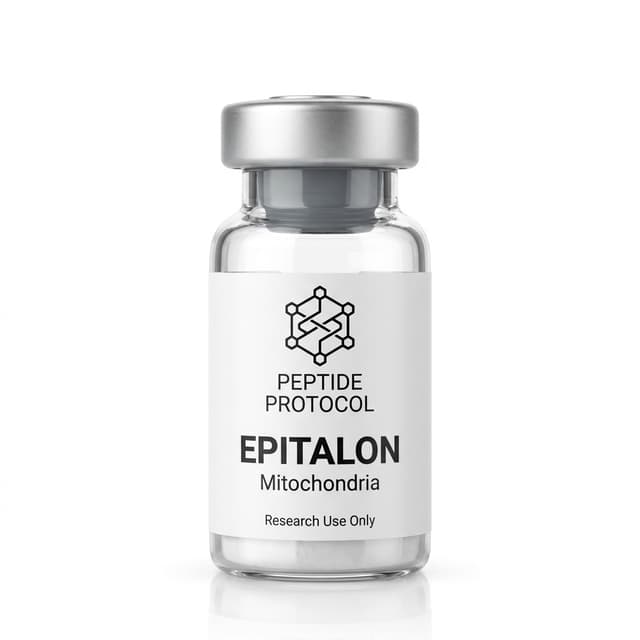
Epitalon
Quick Reference
- Default Dose
- 1 mg
- Frequency
- Daily (in cycles)
- Timing
- PM
- Dilution
- 2 mL
Storage
- Lyophilized
- -20°C
- Reconstituted
- 2-8°C
For Practitioners
Interested in offering research-grade compounds through your practice? Learn about our affiliate program for qualified practitioners.
Find a ProviderPractitioner Information