
Deep sleep
Delta Sleep-Inducing Peptide for deep sleep
| Level | Dose | Frequency | Notes |
|---|---|---|---|
| Beginner | 75 mcg | Nightly | — |
| Intermediate | 100 mcg | Nightly | — |
| Advanced | 300 mcg | Nightly | — |
| Maximum | 1000 mcg | Nightly | — |
Pharmacodynamics
DSIP's mechanism of action involves multiple neurotransmitter systems and sleep-wake regulatory pathways, though many molecular details remain incompletely understood. The peptide appears to modulate GABAergic neurotransmission in the central nervous system, potentially enhancing inhibitory signaling that promotes sleep initiation and maintenance. DSIP may interact with specific binding sites in the hypothalamus and brainstem regions critical for sleep regulation, though the exact receptor identity remains unclear. The peptide demonstrates the ability to cross the blood-brain barrier efficiently, allowing direct access to central nervous system targets. One proposed mechanism involves DSIP's influence on growth hormone-releasing hormone (GHRH) secretion from hypothalamic neurons, which could explain both its sleep-promoting effects and potential impacts on growth hormone release during slow-wave sleep phases. DSIP may also modulate the release of other neuropeptides including substance P and various monoamines that influence sleep architecture. The peptide appears to preferentially enhance delta wave activity during non-REM sleep stages, suggesting specific effects on thalamocortical circuits responsible for generating slow-wave oscillations. Some research indicates DSIP may influence circadian rhythm regulation through interactions with suprachiasmatic nucleus neurons, though this remains speculative. The time course of DSIP effects typically involves relatively rapid onset within 30-60 minutes of administration, with peak effects occurring during the first several hours of sleep. The peptide's stress-modulatory effects may involve hypothalamic-pituitary-adrenal axis regulation, potentially reducing cortisol release and promoting relaxation states conducive to sleep onset.
Pharmacokinetics
DSIP is typically administered via subcutaneous or intramuscular injection, as oral bioavailability is limited due to peptide degradation in the gastrointestinal tract. The peptide demonstrates relatively good absorption following parenteral administration, with detectable plasma levels achieved within 15-30 minutes. A key pharmacokinetic advantage of DSIP is its ability to cross the blood-brain barrier, though the specific transport mechanism remains unclear and may involve both passive diffusion and active transport processes. Distribution studies suggest DSIP concentrates primarily in hypothalamic and brainstem regions, consistent with its sleep-regulatory effects. The peptide shows moderate protein binding in plasma, allowing for both bound and free fractions to contribute to biological activity. Metabolism occurs primarily through enzymatic degradation by peptidases and proteases, with the liver and kidneys serving as major clearance organs. The elimination half-life of DSIP is estimated to be relatively short, approximately 15-30 minutes in plasma, though CNS levels may persist longer due to specific brain uptake and retention. This short systemic half-life necessitates timing of administration close to desired sleep onset. Renal excretion appears to be the primary elimination route for both intact peptide and metabolic fragments.
Clinical Data
Preclinical studies in various animal models have demonstrated DSIP's sleep-promoting properties, with rodent studies showing increased slow-wave sleep duration and reduced sleep latency following administration. Early human studies from the 1970s and 1980s reported promising results, including improved sleep efficiency, increased total sleep time, and enhanced subjective sleep quality in small cohorts of subjects. However, many of these early clinical trials had limited sample sizes and methodological constraints by current standards. Some studies have explored DSIP's potential in managing sleep disturbances associated with chronic pain conditions and substance withdrawal, though results remain preliminary. Research has also investigated DSIP's effects on growth hormone release during sleep, with some studies reporting enhanced nocturnal growth hormone secretion patterns. Currently, DSIP is not approved by major regulatory agencies like the FDA or EMA for therapeutic use, and it remains an investigational compound. The peptide is available through research chemical suppliers and some specialty compounding pharmacies, but clinical applications remain largely experimental. Ongoing research interests include better characterization of DSIP's receptor mechanisms, optimization of dosing regimens, and evaluation of potential therapeutic applications beyond primary sleep disorders. Future clinical development would require more rigorous controlled trials to establish efficacy and safety profiles meeting modern regulatory standards.
References
- The sleep-inducing peptide DSIP: possible mechanisms of action — Iyer KS et al., Life Sciences (1987)PubMed
- Delta sleep-inducing peptide (DSIP): a review of its sleep-promoting effects and mechanisms — Graf MV et al., Peptides (1982)PubMed
- Effects of delta sleep-inducing peptide on human sleep and growth hormone release — Schneider-Helmert D et al., Psychoneuroendocrinology (1981)PubMed
- Delta sleep-inducing peptide: synthesis and activity — Monnier M et al., Experientia (1977)PubMed
Research Use Only: All compounds discussed on this page are intended for laboratory research purposes only. Not for human consumption. All research should be conducted in compliance with institutional guidelines and applicable regulations. Consult qualified healthcare professionals before making any decisions regarding compound research or use.
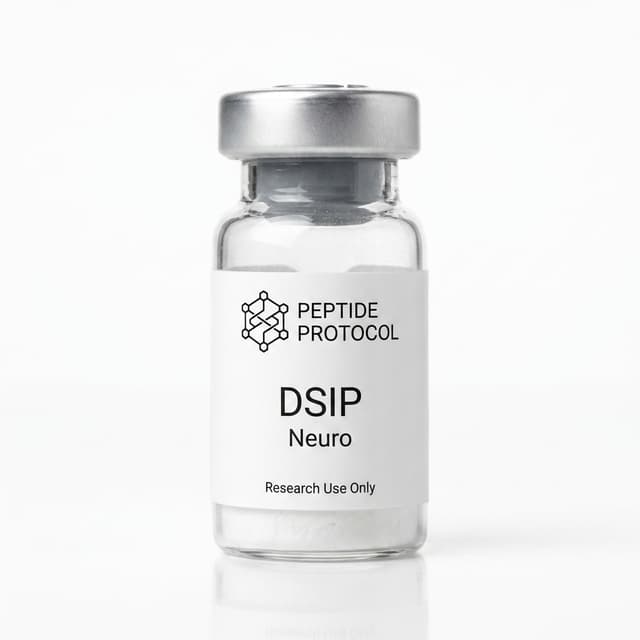
DSIP
Quick Reference
- Default Dose
- 75 mcg
- Frequency
- Nightly
- Timing
- PM
- Dilution
- 1 mL
Storage
- Lyophilized
- -20°C
- Reconstituted
- 2-8°C
For Practitioners
Interested in offering research-grade compounds through your practice? Learn about our affiliate program for qualified practitioners.
Find a ProviderPractitioner Information