
Cortical brain repair
Cortical brain repair bioregulator
| Level | Dose | Frequency | Notes |
|---|---|---|---|
| Beginner | 5 mg | 2x/week | — |
| Intermediate | 10 mg | 2x/week | — |
| Advanced | 20 mg | 2x/week | — |
| Maximum | 25 mg | 2x/week | — |
Pharmacodynamics
Cortagen is a synthetic tetrapeptide derived from the naturally occurring cortex polypeptide complex, with the amino acid sequence Ala-Glu-Asp-Gly. While the complete molecular mechanism remains under investigation, current research suggests Cortagen operates through multiple pathways involved in neuronal protection and repair. The peptide appears to interact with cellular signaling cascades that regulate neurogenesis, particularly in cortical brain regions. Preliminary evidence indicates Cortagen may influence the expression of neurotrophic factors, including brain-derived neurotrophic factor (BDNF) and nerve growth factor (NGF), which are crucial for neuronal survival and synaptic plasticity. The peptide is thought to modulate intracellular calcium signaling and may affect mitochondrial function, potentially enhancing cellular energy metabolism in stressed neurons. Some studies suggest involvement of the PI3K/Akt pathway, which plays a critical role in cell survival and neuroplasticity. The time course of Cortagen's effects appears to involve both acute cellular responses within hours and longer-term structural changes over days to weeks. However, specific receptor targets have not been definitively identified, and much of the mechanistic understanding is based on limited preclinical observations. The peptide's bioactivity may involve epigenetic modifications that influence gene expression patterns associated with neuronal repair and regeneration processes.
Pharmacokinetics
As a short synthetic peptide, Cortagen's pharmacokinetic profile is characteristic of small bioactive peptides with several important considerations. The peptide is typically administered via subcutaneous injection due to poor oral bioavailability, as it would be rapidly degraded by gastrointestinal proteases. Following subcutaneous administration, Cortagen demonstrates relatively rapid absorption into systemic circulation, though specific absorption parameters remain incompletely characterized. The peptide's small size (molecular weight approximately 390 Da) may facilitate tissue distribution, though its ability to cross the blood-brain barrier remains uncertain and requires further investigation. Like most small peptides, Cortagen is likely subject to enzymatic degradation by peptidases and proteases throughout the body, particularly aminopeptidases and carboxypeptidases that cleave terminal amino acids. The elimination half-life is estimated to be relatively short, likely in the range of 1-4 hours based on similar tetrapeptides, necessitating frequent dosing for sustained effects. Renal excretion probably represents the primary elimination pathway for both intact peptide and metabolites. The pharmacokinetic profile suggests that while systemic exposure may be brief, the biological effects could persist longer due to downstream signaling cascade activation and potential tissue accumulation in target organs.
Clinical Data
Clinical research on Cortagen remains limited, with most available data derived from preclinical studies and small-scale human investigations primarily conducted in Russia and Eastern Europe. Preclinical studies in animal models of brain injury and neurodegeneration have suggested potential neuroprotective effects, including improved neurological outcomes in models of stroke and traumatic brain injury. Some animal studies have indicated enhanced neuronal survival and improved cognitive performance following Cortagen administration. Limited human studies, primarily observational in nature, have been conducted in patients with various neurological conditions, including cognitive decline and post-stroke recovery. These preliminary clinical observations have suggested potential benefits in terms of cognitive function and neurological recovery, though the studies generally lack the rigor of randomized controlled trials. Currently, Cortagen is not approved by major regulatory agencies such as the FDA or EMA for any therapeutic indication. The peptide exists in a regulatory gray area in some countries, sometimes classified as a research compound or dietary supplement rather than a pharmaceutical drug. The limited scope and quality of available clinical data represents a significant limitation in establishing Cortagen's therapeutic efficacy and safety profile. Future research directions likely include more rigorous randomized controlled trials, dose-finding studies, and better characterization of optimal patient populations and treatment protocols.
References
- Regulatory peptides derived from the brain cortex: isolation, structure and biological activity — Khavinson VKh et al., Doklady Biological Sciences (2001)
- Peptide bioregulation of aging: results and prospects — Khavinson VKh et al., Biogerontology (2014)DOIPubMed
- Short peptides regulate gene expression — Khavinson VKh et al., Bulletin of Experimental Biology and Medicine (2016)DOIPubMed
Research Use Only: All compounds discussed on this page are intended for laboratory research purposes only. Not for human consumption. All research should be conducted in compliance with institutional guidelines and applicable regulations. Consult qualified healthcare professionals before making any decisions regarding compound research or use.
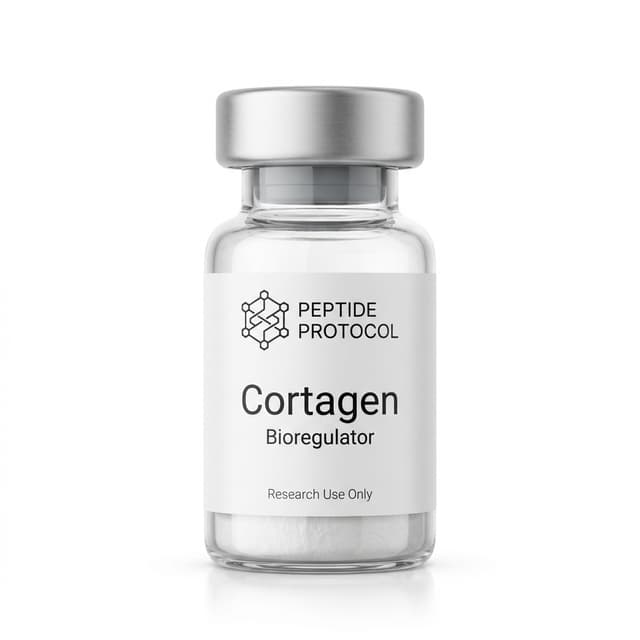
Cortagen
Quick Reference
- Default Dose
- 5 mg
- Frequency
- 2x/week
- Timing
- AM
- Dilution
- 2 mL
Storage
- Lyophilized
- -20°C
- Reconstituted
- 2-8°C
For Practitioners
Interested in offering research-grade compounds through your practice? Learn about our affiliate program for qualified practitioners.
Find a ProviderPractitioner Information