
Long GH elevation
Long-acting GHRH analog for sustained GH elevation
| Level | Dose | Frequency | Notes |
|---|---|---|---|
| Beginner | 1 mg | Weekly | — |
| Intermediate | 1 mg 2x/week | Weekly | — |
| Advanced | 2mg 2x/week | Weekly | — |
| Maximum | 2 mg 3x/week | Weekly | — |
Pharmacodynamics
CJC-1295 with Drug Affinity Complex (DAC) is a synthetic analog of growth hormone-releasing hormone (GHRH) designed to stimulate endogenous growth hormone (GH) secretion. The peptide binds to GHRH receptors located on somatotroph cells in the anterior pituitary gland. These receptors are G-protein coupled receptors that, upon activation, stimulate adenylyl cyclase activity leading to increased cyclic adenosine monophosphate (cAMP) levels. The elevated cAMP activates protein kinase A (PKA), which phosphorylates and activates transcription factors such as CREB (cAMP response element-binding protein). This cascade ultimately promotes the synthesis and release of growth hormone from pituitary somatotrophs. The DAC modification involves the conjugation of maleimidoproprionic acid, which allows the peptide to bind covalently to endogenous albumin in vivo. This albumin binding significantly extends the peptide's half-life by protecting it from enzymatic degradation and renal clearance. The prolonged circulation time results in sustained GHRH receptor stimulation, leading to more consistent and prolonged elevation of growth hormone levels compared to native GHRH. The increased GH subsequently stimulates hepatic and peripheral tissue production of insulin-like growth factor-1 (IGF-1), which mediates many of the anabolic and metabolic effects associated with growth hormone signaling. The time course typically shows GH elevation within hours of administration, with effects potentially lasting several days due to the albumin-binding mechanism.
Pharmacokinetics
CJC-1295 DAC is typically administered via subcutaneous injection due to its peptide nature, which would be degraded in the gastrointestinal tract if given orally. Following subcutaneous administration, the peptide is absorbed into systemic circulation with bioavailability that appears to be reasonable based on its biological activity profile, though specific absorption kinetics have not been comprehensively characterized in published literature. The key pharmacokinetic feature is the covalent binding to serum albumin through the maleimidoproprionic acid modification. This albumin conjugation dramatically alters the distribution and elimination profile compared to unmodified GHRH analogs. The peptide distributes throughout the vascular compartment while bound to albumin, with limited tissue penetration due to the large size of the albumin-peptide complex. Metabolism occurs primarily through proteolytic degradation, though the albumin binding provides significant protection from peptidases that would rapidly degrade free GHRH analogs. The elimination half-life is substantially extended, with estimates suggesting several days rather than minutes as seen with native GHRH. Clearance is reduced compared to non-albumin-binding analogs, contributing to the sustained pharmacological effects. The prolonged half-life allows for less frequent dosing compared to other GHRH analogs.
Clinical Data
Clinical research on CJC-1295 DAC remains limited in the peer-reviewed literature. The peptide was initially developed as a potential therapeutic for growth hormone deficiency and related conditions. Preclinical studies in animal models demonstrated the ability to sustain elevated growth hormone levels for extended periods following single injections, validating the albumin-binding approach for half-life extension. However, comprehensive phase II and III clinical trials have not been widely published in major medical journals. Some early-phase human studies suggested the compound could elevate GH and IGF-1 levels in healthy subjects, but detailed safety and efficacy data from large-scale trials are not readily available in the published literature. The regulatory status of CJC-1295 DAC is complex - it is not approved by major regulatory agencies like the FDA or EMA for therapeutic use. The compound exists in a regulatory gray area and is sometimes available through research chemical suppliers or compounding pharmacies, though this raises questions about quality control and standardization. Current research interest appears to focus on understanding the long-term effects of sustained GH elevation and potential applications in aging research, though much of this work remains in early stages. The limited clinical data highlights the need for more rigorous, peer-reviewed studies to establish safety and efficacy profiles for potential therapeutic applications.
References
- Growth hormone-releasing hormone receptor antagonists — Schally AV et al., Proceedings of the National Academy of Sciences (2001)PubMed
- Clinical applications of growth hormone-releasing hormone and its analogs — Alba M et al., Clinical Endocrinology (2009)PubMed
- Growth hormone releasing hormone: synthesis and signaling — Mayo KE et al., Recent Progress in Hormone Research (2000)PubMed
- Drug affinity complex technology: a versatile platform for the development of half-life extended therapeutics — Zorzi A et al., Expert Opinion on Drug Discovery (2017)PubMed
Research Use Only: All compounds discussed on this page are intended for laboratory research purposes only. Not for human consumption. All research should be conducted in compliance with institutional guidelines and applicable regulations. Consult qualified healthcare professionals before making any decisions regarding compound research or use.
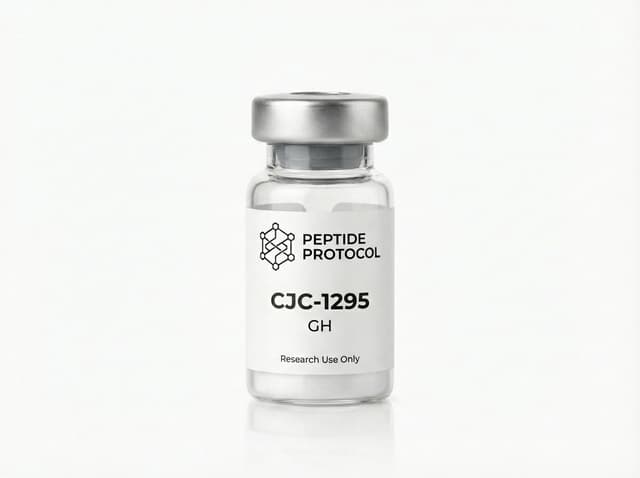
CJC-1295 (DAC)
Quick Reference
- Default Dose
- 1 mg
- Frequency
- Weekly
- Timing
- AM
- Dilution
- 2 mL
Storage
- Lyophilized
- -20°C
- Reconstituted
- 2-8°C
For Practitioners
Interested in offering research-grade compounds through your practice? Learn about our affiliate program for qualified practitioners.
Find a ProviderPractitioner Information