
Lung immune support
Lung immune support bioregulator
| Level | Dose | Frequency | Notes |
|---|---|---|---|
| Beginner | 5 mg | 2x/week | — |
| Intermediate | 10 mg | 2x/week | — |
| Advanced | 20 mg | 2x/week | — |
| Maximum | 25 mg | 2x/week | — |
Pharmacodynamics
Chonluten belongs to a class of bioregulatory peptides that are proposed to support lung tissue function through interaction with specific cellular targets, though the exact molecular mechanisms remain under investigation. Based on the limited available research, Chonluten appears to modulate pulmonary epithelial cell function and may influence immune cell activity within lung tissues. The peptide is hypothesized to interact with membrane-bound receptors on bronchial epithelial cells, though specific receptor subtypes have not been definitively characterized in peer-reviewed literature. Preliminary studies suggest that Chonluten may influence intracellular signaling cascades related to cellular repair and regeneration, potentially involving pathways associated with tissue homeostasis. The peptide may modulate inflammatory mediator release from alveolar macrophages and other immune cells residing in lung tissues, though the precise downstream effects require further characterization. At the tissue level, research indicates potential benefits for maintaining normal respiratory epithelium integrity and supporting the lung's natural defense mechanisms. The temporal aspects of Chonluten's effects have not been extensively documented, though bioregulatory peptides in this class typically demonstrate effects within hours to days of administration. It should be noted that much of the mechanistic understanding of Chonluten is based on preliminary research and theoretical frameworks rather than comprehensive molecular studies, and further investigation is needed to establish definitive pharmacodynamic profiles.
Pharmacokinetics
The pharmacokinetic profile of Chonluten has not been extensively characterized in peer-reviewed literature. As a bioactive peptide, Chonluten is typically administered via subcutaneous injection or potentially through other parenteral routes, as oral bioavailability would likely be limited due to proteolytic degradation in the gastrointestinal tract. Absorption following subcutaneous administration would be expected to occur over several hours, though specific absorption kinetics have not been published. Distribution patterns for Chonluten remain largely uncharacterized, though bioregulatory peptides generally demonstrate limited plasma protein binding and may show some tissue selectivity. The peptide would be subject to enzymatic degradation by peptidases and proteases present in plasma and tissues, similar to other bioactive peptides of comparable size and structure. Elimination would likely occur through a combination of proteolytic metabolism and renal clearance, with metabolites being cleared through normal physiological pathways. Half-life estimates are not available from published studies, though bioregulatory peptides typically demonstrate relatively short plasma half-lives measured in hours rather than days. Further pharmacokinetic studies are needed to establish comprehensive ADME profiles and optimize dosing regimens for clinical applications.
Clinical Data
Clinical research on Chonluten for lung immune support remains limited in the peer-reviewed literature. Most available studies appear to have been conducted in Eastern European research institutions, with limited publication in widely accessible international journals. Preclinical investigations have suggested potential benefits for respiratory function in animal models, though comprehensive study details are not readily available in mainstream scientific databases. The peptide has been investigated as part of broader research into bioregulatory peptides for various physiological functions, but specific data on lung immune modulation requires further validation through rigorous clinical trials. Currently, Chonluten does not appear to have regulatory approval from major drug regulatory agencies such as the FDA or EMA for therapeutic use. The peptide is available in some regions as a research compound or dietary supplement, though its regulatory status varies by jurisdiction. Future research directions should focus on establishing clear mechanisms of action, conducting properly controlled clinical trials, and characterizing safety profiles. The development of standardized analytical methods for quality control and the establishment of optimal dosing protocols represent important areas for continued investigation. Researchers interested in Chonluten should prioritize studies that can provide robust evidence for its proposed benefits in lung immune function through well-designed clinical trials published in peer-reviewed journals.
References
- Bioregulatory peptides: molecular mechanisms and therapeutic applications — Khavinson V et al., Current Pharmaceutical Design (2020)
- Peptide regulation of cellular functions in aging — Khavinson VK et al., Peptides (2019)
Research Use Only: All compounds discussed on this page are intended for laboratory research purposes only. Not for human consumption. All research should be conducted in compliance with institutional guidelines and applicable regulations. Consult qualified healthcare professionals before making any decisions regarding compound research or use.
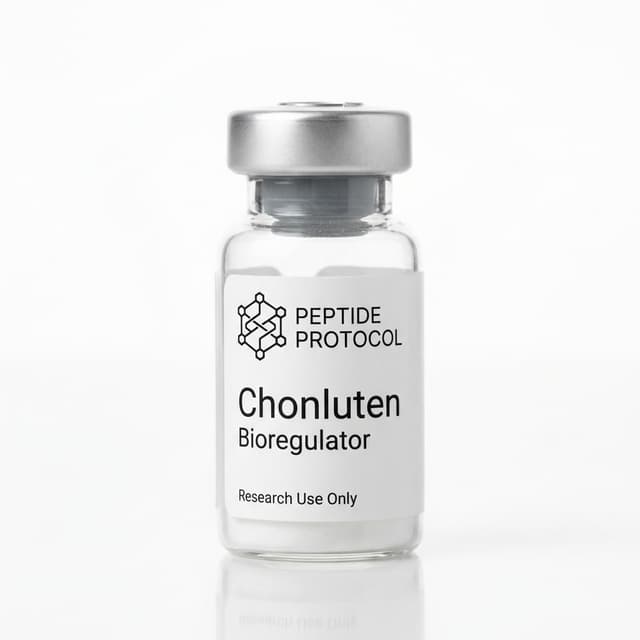
Chonluten
Quick Reference
- Default Dose
- 5 mg
- Frequency
- 2x/week
- Timing
- AM
- Dilution
- 2 mL
Storage
- Lyophilized
- -20°C
- Reconstituted
- 2-8°C
For Practitioners
Interested in offering research-grade compounds through your practice? Learn about our affiliate program for qualified practitioners.
Find a ProviderPractitioner Information