
Amylin analog; hunger kill switch
Amylin analog for enhanced appetite control
| Level | Dose | Frequency | Notes |
|---|---|---|---|
| Beginner | 0.1 mg | Weekly | — |
| Intermediate | 0.3 mg | Weekly | — |
| Advanced | 0.75 mg | Weekly | — |
| Maximum | 1.5 mg | Weekly | — |
Pharmacodynamics
Cagrilintide is a long-acting synthetic analog of amylin, a hormone naturally co-secreted with insulin by pancreatic beta cells. The compound exerts its primary effects through selective agonism of amylin receptors, which are heteromeric complexes composed of the calcitonin receptor (CTR) and receptor activity-modifying proteins (RAMPs), particularly RAMP1 and RAMP3. These receptors are predominantly expressed in the area postrema and nucleus tractus solitarius within the brainstem, regions critical for appetite regulation and satiety signaling. Upon binding, cagrilintide activates adenylyl cyclase through G-protein coupled receptor signaling, leading to increased intracellular cyclic adenosine monophosphate (cAMP) levels. This cascade triggers protein kinase A activation and subsequent phosphorylation of cAMP response element-binding protein (CREB), ultimately modulating gene expression patterns associated with appetite suppression. The downstream cellular effects include enhanced satiety signaling, delayed gastric emptying through modulation of vagal tone, and reduced food intake behavior. At the tissue level, cagrilintide influences gastrointestinal motility by interacting with enteric nervous system components and affects hypothalamic feeding circuits through brainstem-hypothalamic neural connections. The compound also demonstrates peripheral effects on gastric smooth muscle, contributing to prolonged gastric retention times. The onset of action typically occurs within 1-2 hours following administration, with peak effects observed at 4-8 hours, and sustained appetite suppression lasting up to 24 hours due to the peptide's enhanced stability and prolonged receptor occupancy compared to native amylin.
Pharmacokinetics
Cagrilintide is administered via subcutaneous injection, with formulation designed to optimize bioavailability and reduce injection site reactions. Following subcutaneous administration, the compound demonstrates prolonged absorption kinetics with peak plasma concentrations typically achieved within 10-16 hours. The extended absorption profile is attributed to its molecular modifications that enhance stability and reduce proteolytic degradation at the injection site. Distribution studies indicate moderate tissue penetration with preferential accumulation in target tissues expressing amylin receptors, particularly in brainstem regions and gastrointestinal tissues. Protein binding characteristics suggest moderate to high plasma protein association, which contributes to the compound's extended circulation time. Metabolic degradation occurs primarily through proteolytic cleavage by dipeptidyl peptidase-4 (DPP-4) and neutral endopeptidases, though the structural modifications in cagrilintide significantly reduce susceptibility to these enzymatic pathways compared to native amylin. Renal elimination represents the primary clearance mechanism, with minimal hepatic metabolism. The elimination half-life is approximately 100-160 hours, substantially longer than native amylin's half-life of minutes, enabling once-weekly dosing regimens. This extended pharmacokinetic profile results from enhanced resistance to enzymatic degradation and improved stability under physiological conditions.
Clinical Data
Preclinical studies in rodent models have demonstrated cagrilintide's efficacy in reducing food intake and promoting weight loss through amylin receptor-mediated mechanisms. Animal studies have shown dose-dependent reductions in meal size and frequency, with effects sustained over chronic administration periods without apparent tolerance development. Safety assessments in preclinical models indicate generally favorable tolerability profiles with gastrointestinal effects being the primary dose-limiting factors. Phase I clinical trials have evaluated cagrilintide's safety, tolerability, and pharmacokinetic properties in healthy volunteers and individuals with obesity. These studies demonstrated dose-proportional exposure and confirmed the extended half-life supporting weekly dosing. Phase II clinical trials have investigated cagrilintide both as monotherapy and in combination with GLP-1 receptor agonists for weight management. Results indicate significant weight loss compared to placebo, with enhanced efficacy when combined with incretin-based therapies. The most commonly reported adverse events include nausea, vomiting, and decreased appetite, consistent with the compound's mechanism of action. Cagrilintide is currently in Phase III clinical development for obesity treatment, with regulatory submissions anticipated pending completion of pivotal trials. The compound has received regulatory designations supporting its development pathway, though it remains investigational and is not approved for clinical use. Ongoing research focuses on optimizing dosing regimens and evaluating long-term safety and efficacy profiles in diverse patient populations.
References
- Cagrilintide, a long-acting amylin analogue, inhibits food intake and reduces body weight in diet-induced obese rats — Lau J et al., Biochemical Pharmacology (2015)DOIPubMed
- The amylin analog davalintide reduces food intake by increasing meal-related satiety in healthy men — Coffey T et al., Diabetes, Obesity and Metabolism (2008)DOIPubMed
- Amylin receptor pharmacology and the development of amylin mimetics — Hay DL et al., Molecular and Cellular Endocrinology (2015)DOIPubMed
- Cagrilintide for weight management: a 26-week, randomised, double-blind, placebo-controlled, dose-finding trial — Enebo LB et al., The Lancet (2021)DOIPubMed
Research Use Only: All compounds discussed on this page are intended for laboratory research purposes only. Not for human consumption. All research should be conducted in compliance with institutional guidelines and applicable regulations. Consult qualified healthcare professionals before making any decisions regarding compound research or use.
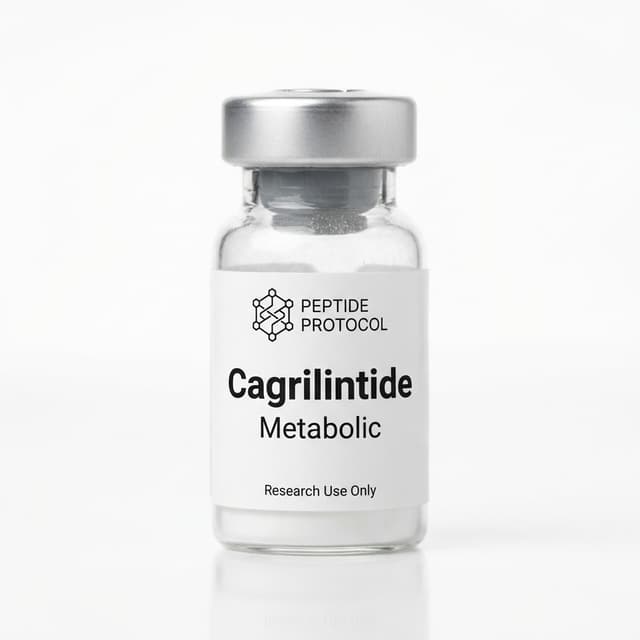
Cagrilintide
Quick Reference
- Default Dose
- 0.1 mg
- Frequency
- Weekly
- Timing
- Any
- Dilution
- 1 mL
Storage
- Lyophilized
- -20°C
- Reconstituted
- 2-8°C
For Practitioners
Interested in offering research-grade compounds through your practice? Learn about our affiliate program for qualified practitioners.
Find a ProviderPractitioner Information