
Systemic healing
Body Protective Compound for systemic healing and tissue repair
| Level | Dose | Frequency | Notes |
|---|---|---|---|
| Beginner | 250 mcg | Daily | — |
| Intermediate | 250 mcg 2x/day | Daily | — |
| Advanced | 500 mg 2x/day | Daily | — |
| Maximum | 1 mg 2x/day | Daily | — |
Pharmacodynamics
BPC-157's mechanism of action involves multiple interconnected pathways that promote tissue repair and healing. While the specific receptor targets remain incompletely characterized, research suggests BPC-157 interacts with growth factor signaling cascades and vascular regulatory pathways. The peptide appears to modulate the expression of vascular endothelial growth factor (VEGF), a key regulator of angiogenesis, leading to enhanced blood vessel formation in injured tissues. This angiogenic response typically occurs within hours to days of administration and is sustained throughout the healing process. BPC-157 also influences nitric oxide (NO) signaling pathways, promoting vasodilation and improved blood flow to injured areas. The peptide demonstrates anti-inflammatory properties by modulating cytokine production, particularly reducing pro-inflammatory mediators like TNF-α and IL-6 while promoting anti-inflammatory signals. At the cellular level, BPC-157 enhances fibroblast proliferation and collagen synthesis, which are critical for connective tissue repair. The peptide also appears to influence bone morphogenetic protein (BMP) pathways, supporting bone and cartilage healing. Neuroprotective effects have been observed, possibly through modulation of growth factors like brain-derived neurotrophic factor (BDNF). The temporal profile suggests initial anti-inflammatory effects within hours, followed by sustained tissue repair processes over days to weeks. These mechanisms collectively contribute to accelerated healing across multiple tissue types including muscle, tendon, bone, and gastrointestinal mucosa.
Pharmacokinetics
BPC-157's pharmacokinetic profile reflects its peptide nature and synthetic stability modifications. The compound can be administered via multiple routes including subcutaneous, intramuscular, intraperitoneal, and oral administration, with route selection often depending on the target tissue and research application. Subcutaneous and intramuscular routes appear to provide good systemic bioavailability. The peptide demonstrates notable stability compared to many naturally occurring peptides, attributed to its specific amino acid sequence and potential resistance to certain proteolytic enzymes. Distribution studies in animal models suggest BPC-157 can penetrate various tissues effectively, with particular accumulation noted in injured or inflamed areas. The peptide appears to have affinity for damaged tissues, which may contribute to its therapeutic selectivity. Metabolism occurs primarily through peptidase-mediated degradation, though the specific enzymatic pathways require further characterization. Half-life estimates from animal studies suggest a relatively short plasma half-life of several hours, typical for peptide therapeutics, though tissue residence time may be prolonged. Elimination occurs through standard peptide degradation pathways and renal clearance of amino acid metabolites. The pharmacokinetic profile supports multiple daily dosing regimens in research protocols, with effects often sustained beyond the apparent plasma half-life.
Clinical Data
BPC-157 research is primarily based on extensive preclinical animal studies demonstrating therapeutic efficacy across multiple injury models. Animal studies have shown significant benefits in tendon healing, muscle repair, bone fracture healing, and gastrointestinal protection. Research in rodent models demonstrates accelerated healing of Achilles tendon injuries, improved recovery from muscle crush injuries, and enhanced healing of bone defects. Gastrointestinal studies show protective effects against various types of ulcers and inflammatory bowel conditions. Cardiovascular research indicates benefits in models of heart attack, stroke, and blood vessel injury. Currently, BPC-157 is not approved by major regulatory agencies like the FDA or EMA for clinical use. The compound is available for research purposes only and is not classified as a dietary supplement or pharmaceutical drug in most jurisdictions. Limited human data exists, with most available information coming from anecdotal reports rather than controlled clinical trials. The regulatory status remains unclear, with ongoing discussions about appropriate classification. Several research groups are investigating BPC-157's potential for human therapeutic applications, though formal clinical development programs have not been widely publicized. Future research directions include standardized human clinical trials to establish safety, efficacy, and optimal dosing protocols for various therapeutic applications.
References
- Stable gastric pentadecapeptide BPC 157: novel therapy in gastrointestinal tract — Sikiric P et al., Current Pharmaceutical Design (2011)DOIPubMed
- BPC 157's beneficial effects on stomach lesions, blood pressure and thrombocytopenia. New therapeutic approach? — Sikiric P et al., Current Pharmaceutical Design (2010)DOIPubMed
- The influence of gastric pentadecapeptide BPC 157 on acute and chronic ethanol administration gastric lesions in rats — Belosic Halle Z et al., Journal of Physiology Paris (2001)PubMed
- Pentadecapeptide BPC 157 enhances the growth hormone receptor expression in tendon fibroblasts — Chang CH et al., Molecules (2014)DOIPubMed
Research Use Only: All compounds discussed on this page are intended for laboratory research purposes only. Not for human consumption. All research should be conducted in compliance with institutional guidelines and applicable regulations. Consult qualified healthcare professionals before making any decisions regarding compound research or use.
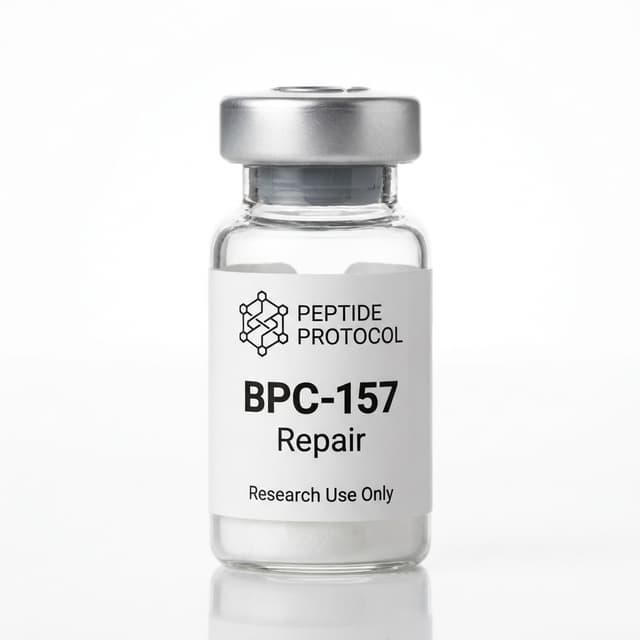
BPC-157
Quick Reference
- Default Dose
- 250 mcg
- Frequency
- Daily
- Timing
- AM
- Dilution
- 2 mL
Storage
- Lyophilized
- -20°C
- Reconstituted
- 2-8°C
For Practitioners
Interested in offering research-grade compounds through your practice? Learn about our affiliate program for qualified practitioners.
Find a ProviderPractitioner Information