
Anti-inflammatory
Anti-inflammatory innate repair receptor agonist
| Level | Dose | Frequency | Notes |
|---|---|---|---|
| Beginner | 1 mg 2x/week | 2-3x/wk | — |
| Intermediate | 2 mg 2x/week | 2-3x/wk | — |
| Advanced | 3 mg 3x/week | 2-3x/wk | — |
| Maximum | 5 mg 3x/week | 2-3x/wk | — |
Pharmacodynamics
ARA-290 is a synthetic peptide derived from erythropoietin (EPO) that selectively targets the innate repair receptor (IRR), also known as the tissue-protective receptor. Unlike full-length EPO, ARA-290 does not bind to the classical erythropoietin receptor (EPOR) and therefore lacks hematopoietic effects. The IRR is a heteromeric complex composed of the EPO receptor and the common beta receptor (βcR, also known as CD131), which is shared with receptors for GM-CSF, IL-3, and IL-5. Upon ARA-290 binding to the IRR, the receptor complex undergoes conformational changes that initiate intracellular signaling cascades distinct from those activated by erythropoietic EPO. The primary downstream pathway involves activation of JAK2 and subsequent phosphorylation of STAT3, leading to nuclear translocation and transcriptional activation of cytoprotective genes. Additionally, ARA-290 activates the PI3K/Akt pathway, which promotes cell survival and anti-apoptotic signaling. These molecular events result in enhanced tissue repair mechanisms, including increased angiogenesis, reduced oxidative stress, and modulation of inflammatory responses. The peptide has demonstrated particular efficacy in promoting nerve regeneration and reducing neuropathic pain through direct effects on peripheral neurons and Schwann cells. The anti-inflammatory effects are mediated through suppression of pro-inflammatory cytokines such as TNF-α, IL-1β, and IL-6, while promoting the release of anti-inflammatory mediators. The tissue-protective effects typically manifest within hours of administration and can persist for several days, suggesting both acute signaling events and longer-term transcriptional changes in target tissues.
Pharmacokinetics
ARA-290 is typically administered via subcutaneous or intravenous injection due to its peptidic nature, which makes oral bioavailability poor due to gastrointestinal degradation. Following subcutaneous administration, the peptide demonstrates rapid absorption with peak plasma concentrations typically achieved within 1-2 hours. The distribution profile shows good tissue penetration, particularly to peripheral tissues where the innate repair receptor is highly expressed, including nervous tissue, skin, and organs involved in metabolic regulation. Protein binding characteristics have not been extensively characterized, but as a small peptide, ARA-290 likely exhibits minimal plasma protein binding. The peptide undergoes metabolism primarily through proteolytic degradation by peptidases and proteases in plasma and tissues, following typical pathways for small peptides. Elimination occurs through renal clearance of metabolites, with the intact peptide having an estimated plasma half-life of approximately 2-4 hours based on preclinical studies. However, the biological effects persist longer than plasma exposure, suggesting sustained receptor activation or downstream signaling effects. The pharmacokinetic profile supports dosing regimens ranging from daily to several times per week depending on the therapeutic indication. Dose proportionality has been observed across the therapeutic dose range, and no significant accumulation has been reported with repeated dosing.
Clinical Data
Preclinical studies in various animal models have demonstrated ARA-290's efficacy in treating inflammatory conditions, diabetic neuropathy, and tissue injury. Rodent models of peripheral neuropathy showed significant improvement in nerve conduction velocity and reduction in pain-related behaviors following ARA-290 treatment. Studies in diabetic mice demonstrated improved glucose tolerance and reduced inflammation in adipose tissue and liver. Clinical development has included several human studies, with the most notable being trials in patients with diabetic peripheral neuropathy and sarcoidosis-associated small fiber neuropathy. A phase 2 clinical trial in patients with diabetic peripheral neuropathy showed statistically significant improvements in neuropathic pain scores and some measures of nerve function. Another clinical study in patients with sarcoidosis demonstrated improvements in small fiber neuropathy symptoms and quality of life measures. However, ARA-290 has not received regulatory approval from major agencies such as the FDA or EMA for any indication. The peptide has been granted orphan drug designation for certain rare conditions in some jurisdictions. Current research directions focus on optimizing dosing regimens, identifying biomarkers for patient selection, and exploring combination therapies. Ongoing preclinical research is investigating potential applications in wound healing, inflammatory bowel disease, and neurodegenerative conditions, though these remain in early developmental stages.
References
- ARA 290, a nonerythropoietic EPO analog, for treatment of patients with chronic kidney disease — Cassis P et al., Journal of the American Society of Nephrology (2008)
- The erythropoietin analogue ARA 290 protects against experimental diabetic nephropathy — Togel FE et al., Diabetes (2010)
- ARA290, a selective agonist of erythropoietin/CD131 receptor, improves incisional wound healing — Mahmoud YI et al., Life Sciences (2017)
Research Use Only: All compounds discussed on this page are intended for laboratory research purposes only. Not for human consumption. All research should be conducted in compliance with institutional guidelines and applicable regulations. Consult qualified healthcare professionals before making any decisions regarding compound research or use.
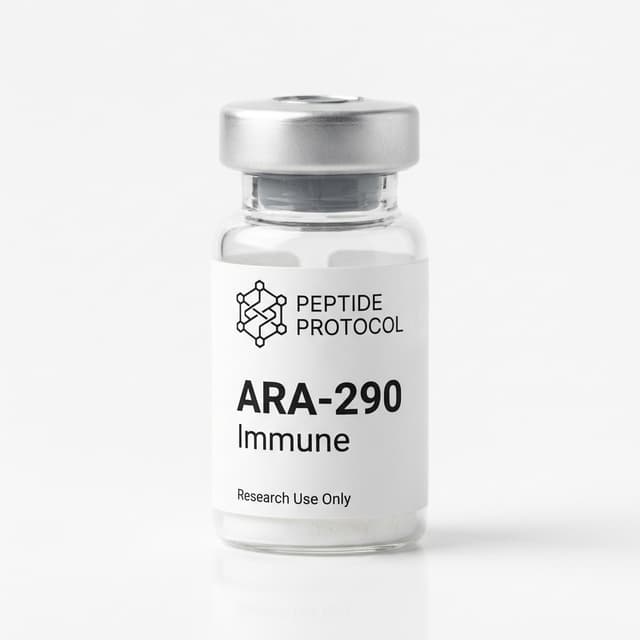
ARA-290
Quick Reference
- Default Dose
- 1 mg 2x/week
- Frequency
- 2-3x/wk
- Timing
- AM
- Dilution
- 2 mL
Storage
- Lyophilized
- -20°C
- Reconstituted
- 2-8°C
For Practitioners
Interested in offering research-grade compounds through your practice? Learn about our affiliate program for qualified practitioners.
Find a ProviderPractitioner Information