
Bone density enhancement
PTHrP analog for bone density
| Level | Dose | Frequency | Notes |
|---|---|---|---|
| Beginner | 40 mcg | Daily | — |
| Intermediate | 60 mcg | Daily | — |
| Advanced | 80 mcg | Daily | — |
| Maximum | 100 mcg | Daily | — |
Pharmacodynamics
Abaloparatide is a synthetic analog of parathyroid hormone-related protein (PTHrP) that acts as a selective agonist of the parathyroid hormone 1 receptor (PTH1R). The peptide demonstrates preferential binding to the RG conformation of PTH1R over the R0 conformation, which distinguishes it from native parathyroid hormone (PTH). This selective receptor activation results in distinct downstream signaling patterns that favor bone anabolic effects. Upon binding to PTH1R on osteoblasts and osteoblast precursors, abaloparatide primarily activates the adenylyl cyclase-cAMP-protein kinase A (PKA) pathway, leading to phosphorylation of cAMP response element-binding protein (CREB) and subsequent transcription of bone formation genes. The peptide also modulates protein kinase C (PKC) signaling pathways, though to a different extent than PTH(1-34). At the cellular level, abaloparatide stimulates osteoblast proliferation, differentiation, and survival while reducing osteoblast apoptosis. It enhances the expression of key osteoblastic markers including alkaline phosphatase, osteocalcin, and type I collagen. The anabolic effects are mediated through increased Wnt signaling pathway activation and decreased sclerostin expression. Importantly, abaloparatide demonstrates a wider anabolic window compared to PTH, meaning it promotes bone formation with less concurrent bone resorption activation. This results in a more favorable bone remodeling balance. The time course of effects shows rapid onset of biochemical markers within hours, with peak bone formation markers typically observed within 1-3 months of treatment initiation. The anabolic effects are sustained throughout the treatment period but are reversible upon discontinuation.
Pharmacokinetics
Abaloparatide is administered via subcutaneous injection due to its peptide nature, which would result in degradation if given orally. Following subcutaneous administration of the standard 80 μg dose, the peptide demonstrates rapid absorption with peak plasma concentrations (Tmax) typically reached within 0.5 to 1 hour. The bioavailability following subcutaneous injection is approximately 36%. Distribution of abaloparatide occurs primarily to bone tissue and kidneys, which are the primary sites of PTH1R expression. The peptide exhibits minimal plasma protein binding. Metabolism occurs rapidly through proteolytic cleavage by non-specific peptidases, primarily in the liver and kidneys, similar to other peptide hormones. The metabolic pathway involves sequential amino acid cleavage from both N- and C-termini, resulting in smaller peptide fragments and ultimately amino acids that enter normal metabolic pools. Elimination is primarily renal, with both glomerular filtration and active tubular secretion contributing to clearance. The elimination half-life is approximately 1.7 hours in healthy individuals, though this may vary in patients with renal impairment. The rapid elimination necessitates daily administration to maintain therapeutic effects. Clearance is estimated at approximately 9.4 L/h. Due to the short half-life and rapid clearance, drug accumulation is not expected with daily dosing.
Clinical Data
Preclinical studies in ovariectomized rats demonstrated that abaloparatide significantly increased bone mineral density, bone formation markers, and trabecular bone volume compared to vehicle controls. Animal studies also showed superior anabolic effects compared to PTH(1-34) with less associated hypercalcemia and bone resorption. The pivotal Phase III clinical trial, ACTIVE (Abaloparatide Comparator Trial In Vertebral Endpoints), was a randomized, double-blind, placebo-controlled study involving 2,463 postmenopausal women with osteoporosis. Results demonstrated that 18 months of daily subcutaneous abaloparatide (80 μg) significantly reduced the risk of new vertebral fractures by 86% compared to placebo and showed superior efficacy to teriparatide for vertebral fracture reduction. Abaloparatide also reduced the risk of non-vertebral fractures and clinical fractures by approximately 43% and 28%, respectively. Bone mineral density increased significantly at the lumbar spine (9.2%) and total hip (2.9%) compared to placebo. The ACTIVExtend study evaluated the effects of transitioning patients from abaloparatide to alendronate, showing continued bone density gains and sustained fracture risk reduction. Abaloparatide received FDA approval in 2017 for the treatment of postmenopausal women with osteoporosis at high risk for fracture. The treatment duration is limited to 2 years due to theoretical osteosarcoma risk observed in rat studies, though no cases have been reported in humans. Current research focuses on combination therapies and optimal sequential treatment strategies.
References
- Abaloparatide: a review in postmenopausal osteoporosis — Dhillon S, Drugs & Aging (2017)DOIPubMed
- The effects of abaloparatide-SC on bone microarchitecture and strength: results from the ACTIVE phase 3 trial — Cosman F et al., Journal of Bone and Mineral Research (2018)DOIPubMed
- Abaloparatide versus teriparatide: a head-to-head comparison of effects on bone mineral density and bone turnover markers in postmenopausal women with osteoporosis — Miller PD et al., Journal of Clinical Endocrinology & Metabolism (2018)DOIPubMed
- Pharmacokinetics and pharmacodynamics of abaloparatide and teriparatide in postmenopausal women with osteoporosis — Leder BZ et al., Journal of Clinical Pharmacology (2018)DOIPubMed
Research Use Only: All compounds discussed on this page are intended for laboratory research purposes only. Not for human consumption. All research should be conducted in compliance with institutional guidelines and applicable regulations. Consult qualified healthcare professionals before making any decisions regarding compound research or use.
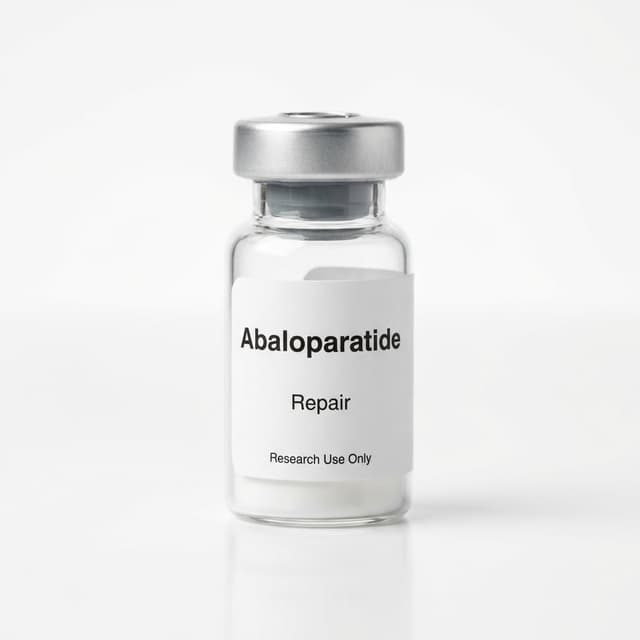
Abaloparatide
Quick Reference
- Default Dose
- 40 mcg
- Frequency
- Daily
- Timing
- AM
- Dilution
- 1 mL
Storage
- Lyophilized
- -20°C
- Reconstituted
- 2-8°C
For Practitioners
Interested in offering research-grade compounds through your practice? Learn about our affiliate program for qualified practitioners.
Find a ProviderPractitioner Information