
NNMT inhibitor for fat loss
NNMT inhibitor for enhanced fat oxidation
Research Background
5-Amino-1MQ (often written as 5-amino-1-methylquinolinium / 5A1MQ) is a cell-permeable small-molecule inhibitor of NNMT (nicotinamide N-methyltransferase)—and NNMT has become interesting because it sits at a metabolic “toll booth” connecting the NAD salvage pathway and the methylation (SAM) cycle. Mechanistically, NNMT uses nicotinamide as substrate and consumes SAM (S-adenosyl-methionine) to produce 1-methylnicotinamide; that combination matters because nicotinamide is feedstock for NAD⁺ regeneration, while SAM is a core methyl donor that influences broader cellular signaling. In adipose tissue and metabolic disease models, higher NNMT activity is repeatedly associated with metabolic inefficiency, and multiple reviews frame NNMT as a credible obesity / insulin resistance target—particularly because adipose NNMT appears to suppress NAD⁺ availability and downstream “energy regulation” pathways more than some other tissues. Where 5-Amino-1MQ earned its reputation is preclinical obesity work: in diet-induced obese mouse models, pharmacologic NNMT inhibition (including 5A1MQ-type compounds) has been reported to reduce body weight and white fat mass, shrink adipocyte size, and improve insulin sensitivity / glucose handling, often without the kind of dramatic appetite suppression you’d expect from GLP-1-class drugs. The story the animal data tells is less “stimulant fat burner” and more “turning up energy expenditure / metabolic throughput by removing a biochemical bottleneck,” with investigators pointing to changes in NAD⁺/SAM flux and downstream regulators (commonly discussed in the context of sirtuin biology and adipose energetics). That’s the upside. The hard stop is that these are mouse models, not robust human RCTs, so the translational confidence is limited even if the mechanism is elegant. On pharmacokinetics (why protocols obsess over split dosing): there’s published LC-MS/MS method + PK work in rats showing measurable exposure after IV and oral dosing and a terminal half-life on the order of hours (reported ~3.8 h IV and ~6.9 h oral in that rat study), with moderate oral bioavailability reported in that experiment. That “hours, not days” kinetics is the logical basis for BID dosing in the research community—if your goal is steadier NNMT inhibition across the day rather than a single spike. Bottom line: the scientific rationale is credible and increasingly discussed in the metabolic syndrome literature, but the evidence base for humans is still immature, so the honest posture is “promising target + strong animal signal + limited human proof.”
| Level | Dose | Frequency | Notes |
|---|---|---|---|
| Beginner | 10 mg | Daily | 10 mg vial + 1.0 mL BAC 2.5 mg → 25 units 4–6 weeks on / 2–4 off |
| Intermediate | 20 mg | Daily | 10 mg vial + 1.0 mL BAC 2.5 mg → 25 units 2x/day 4–6 weeks on / 2–4 off |
| Advanced | 50 mg | Daily | 10 mg vial + 1.0 mL BAC 5mg → 50 units 3–5 weeks on / 2–4 off |
| Maximum | 75 mg | Daily | 10 mg vial + 1.0 mL BAC 5mg → 50 units 2x/day 2–4 weeks on / 2–4 off |
Pharmacodynamics
5-Amino-1MQ functions as a selective inhibitor of nicotinamide N-methyltransferase (NNMT), an enzyme that plays a crucial role in cellular metabolism and energy homeostasis. NNMT catalyzes the N-methylation of nicotinamide using S-adenosyl-L-methionine as a methyl donor, producing 1-methylnicotinamide and S-adenosyl-L-homocysteine. By inhibiting this enzyme, 5-Amino-1MQ increases the availability of nicotinamide adenine dinucleotide (NAD+) precursors, particularly nicotinamide, which can be recycled back into the NAD+ salvage pathway. This mechanism is particularly relevant in adipose tissue, where NNMT expression is elevated in obesity. The inhibition of NNMT leads to increased NAD+ levels, which activates sirtuins (SIRT1-7), a family of NAD+-dependent deacetylases involved in metabolic regulation. Sirtuin activation promotes mitochondrial biogenesis, enhances fatty acid oxidation, and improves insulin sensitivity. Additionally, increased NAD+ availability supports the activity of poly(ADP-ribose) polymerases and other NAD+-consuming enzymes involved in DNA repair and cellular stress responses. The downstream effects include upregulation of genes involved in thermogenesis and lipid catabolism, particularly in brown and beige adipose tissue. The compound's effects on NNMT appear to be dose-dependent, with optimal inhibition occurring within specific concentration ranges that maintain cellular viability while maximizing metabolic benefits.
Pharmacokinetics
The pharmacokinetic profile of 5-Amino-1MQ is not extensively characterized in published literature, limiting definitive statements about its ADME properties. Based on its small molecular structure and amino acid-like composition, it is likely absorbed through amino acid transporters in the gastrointestinal tract when administered orally. The compound's distribution characteristics remain largely undefined, though it would presumably need to reach adipose tissue and other metabolically active tissues to exert its NNMT inhibitory effects. Protein binding affinity and tissue penetration profiles have not been thoroughly investigated in available studies. Metabolic stability and degradation pathways are similarly undercharacterized, though the compound's structure suggests potential susceptibility to standard amino acid metabolic processes. Elimination half-life data is not available from current research, making dosing optimization challenging. The lack of comprehensive pharmacokinetic data represents a significant knowledge gap that requires further investigation through dedicated ADME studies. Route of administration considerations would depend on bioavailability data, which appears limited in current literature. These pharmacokinetic uncertainties highlight the need for more detailed studies to establish optimal dosing regimens and administration protocols.
Clinical Data
Clinical data for 5-Amino-1MQ remains limited, with most evidence derived from preclinical studies. Animal studies have demonstrated the compound's ability to inhibit NNMT activity and influence metabolic parameters, though comprehensive safety and efficacy profiles in humans are not well-established in peer-reviewed literature. The regulatory status of 5-Amino-1MQ appears to be largely unregulated, as it is not approved as a pharmaceutical agent by major regulatory bodies such as the FDA or EMA. This compound exists in a regulatory gray area, often marketed as a research chemical rather than an approved therapeutic agent. The lack of robust clinical trial data raises important questions about safety, optimal dosing, and long-term effects in human subjects. Current research directions appear focused on better understanding NNMT's role in metabolic disease and obesity, with 5-Amino-1MQ serving as a research tool rather than an established therapeutic intervention. The scientific community has shown interest in NNMT inhibition as a potential therapeutic strategy, but translation from preclinical findings to clinical applications requires significant additional research. Without proper clinical trials, the safety profile, contraindications, and drug interactions remain largely unknown. This underscores the importance of conducting rigorous clinical studies before considering therapeutic applications.
References
- Nicotinamide N-methyltransferase knockdown protects against diet-induced obesity — Kraus D et al., Nature (2014)DOIPubMed
- NNMT promotes epigenetic remodeling in cancer by affecting the SAM and NAD+ pathways — Ulanovskaya OA et al., Nature (2013)DOIPubMed
- Nicotinamide N-methyltransferase in acquisition of stem cell properties and therapy resistance in cancer — Pozzi V et al., International Journal of Molecular Sciences (2020)DOIPubMed
Research Use Only: All compounds discussed on this page are intended for laboratory research purposes only. Not for human consumption. All research should be conducted in compliance with institutional guidelines and applicable regulations. Consult qualified healthcare professionals before making any decisions regarding compound research or use.
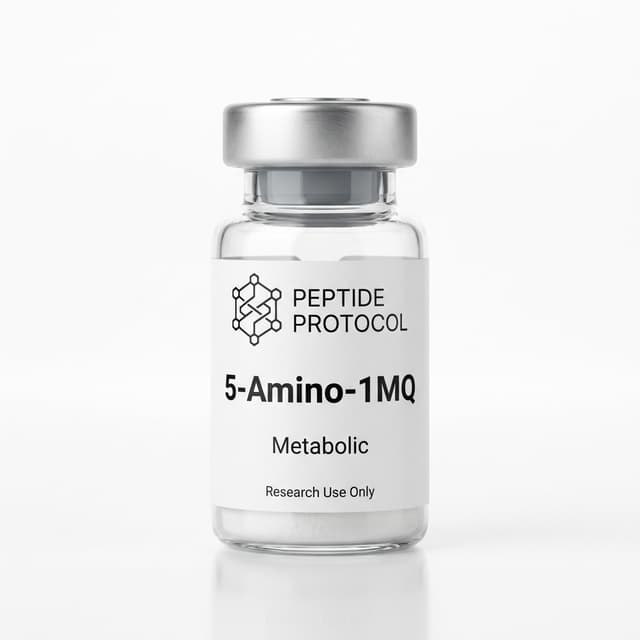
5-Amino-1MQ
Quick Reference
- Default Dose
- 10 mg
- Frequency
- Daily
- Timing
- AM
- Dilution
- 1 mL
Storage
- Lyophilized
- -20°C
- Reconstituted
- 2-8°C
For Practitioners
Interested in offering research-grade compounds through your practice? Learn about our affiliate program for qualified practitioners.
Find a ProviderPractitioner Information