99%+ Purity
COA Included
Sealed Vials
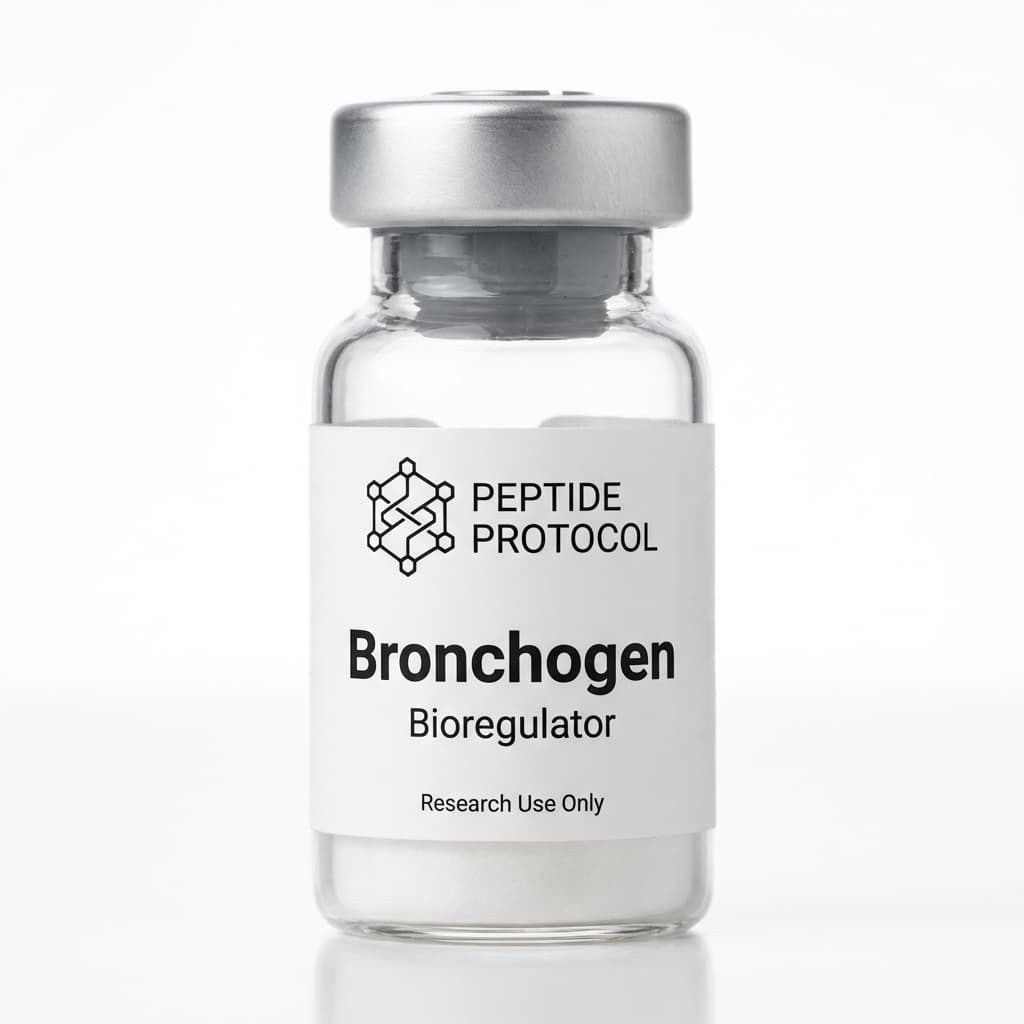
Bronchogen
Lung tissue restoration bioregulator
Lung tissue restoration
Key Benefits
- May support natural lung repair mechanisms
- Targets established growth factor pathways
- Supports healthy pneumocyte cellular function
- May promote vascular repair processes
- Supports inflammatory resolution pathways
- Based on regenerative medicine research
- Targets multiple tissue restoration mechanisms
Want to purchase this peptide?
Breathe Like Your Lungs Actually Work Again
Most people accept that lung damage is permanent—that once you've compromised your respiratory capacity, you're stuck with it forever. Bronchogen targets the actual cellular repair mechanisms in your lungs, supporting your body's ability to rebuild damaged tissue and restore function you thought was gone for good.
Pulmonary tissue regeneration / Pneumocyte repair pathways (EGF, FGF, Wnt signaling)
About Bronchogen
Bronchogen is a bioregulator peptide designed to support your lung's natural repair mechanisms at the cellular level. It targets the growth factor pathways that control pneumocyte function and vascular repair, while supporting the resolution of inflammatory processes that prevent proper healing. This creates an environment where damaged lung tissue can actually rebuild itself rather than just forming scar tissue.
Who It's For
Ideal for individuals dealing with compromised respiratory function who want to support their body's natural healing capacity rather than just managing symptoms. Bronchogen represents a shift from traditional approaches that only treat inflammation to actually supporting tissue restoration. It integrates well into comprehensive respiratory health protocols focused on long-term repair and functional improvement.
Research Background
Lung tissue restoration represents one of the most challenging areas in regenerative medicine due to the complex architecture and limited natural repair capacity of adult lungs. Unlike other organs with robust regenerative abilities, lung tissue relies primarily on resident stem cells and progenitor cells for maintenance and repair. Key research focuses on understanding how alveolar epithelial cells, particularly type II pneumocytes, function as progenitor cells to maintain the gas exchange surface. Scientists are also investigating how pulmonary vascular repair mechanisms work alongside epithelial regeneration to restore normal lung function.
Current therapeutic approaches include: 1) Growth factor therapies that stimulate natural repair pathways, 2) Stem cell-based treatments using the body's own regenerative cells, and 3) Bioengineered solutions involving tissue scaffolds. The challenge lies in coordinating multiple cellular processes simultaneously - from reducing harmful inflammation to promoting controlled tissue growth. Peptide therapeutics offer particular promise because they can target specific molecular pathways with precision while being less likely to trigger immune responses compared to larger protein drugs. However, achieving sustained therapeutic effects in the complex environment of damaged lung tissue remains a significant scientific challenge.
Dosing Protocol
| Level | Dose | |
|---|---|---|
Beginner | 5 mg | |
Intermediate | 10 mg | |
Advanced | 20 mg | |
Maximum | 25 mg |
Select a dosing level and click Calculate to plan your protocol.
Vials Required
12
240.0 mg needed ÷ 20 per vial
Total Investment
$900
$75.00 per vial
Per Dose
1.00 mL
100 units on U-100 syringe
Doses per Vial
2
20 ÷ 10.00 mg/dose
* Calculations based on standard reconstitution protocols. Consult research guidelines for specific applications.
Educational Resources
Download educational materials and research documentation for Bronchogen.
Bronchogen Cheat Sheet
Dosing protocols, reconstitution & storage guide
Compliance & Disclaimer
This product is intended for laboratory research purposes only. Not for human consumption. All products are sold with the understanding that the purchaser will comply with all applicable local, state, and federal laws regarding the purchase and use of research chemicals. Certificate of Analysis available upon request.